
Vegan Ice Cream Market to Reach US$1.17 Billion by 2034 as Plant-Based Desserts Win Over Global Consumers
Growing demand for dairy-free products, rising vegan lifestyles, and continuous product innovation are transforming the global vegan ice cream market into one of the fastest-growing segments of the frozen dessert industry.

Plant-Based Ice Cream Is Becoming a Mainstream Favorite
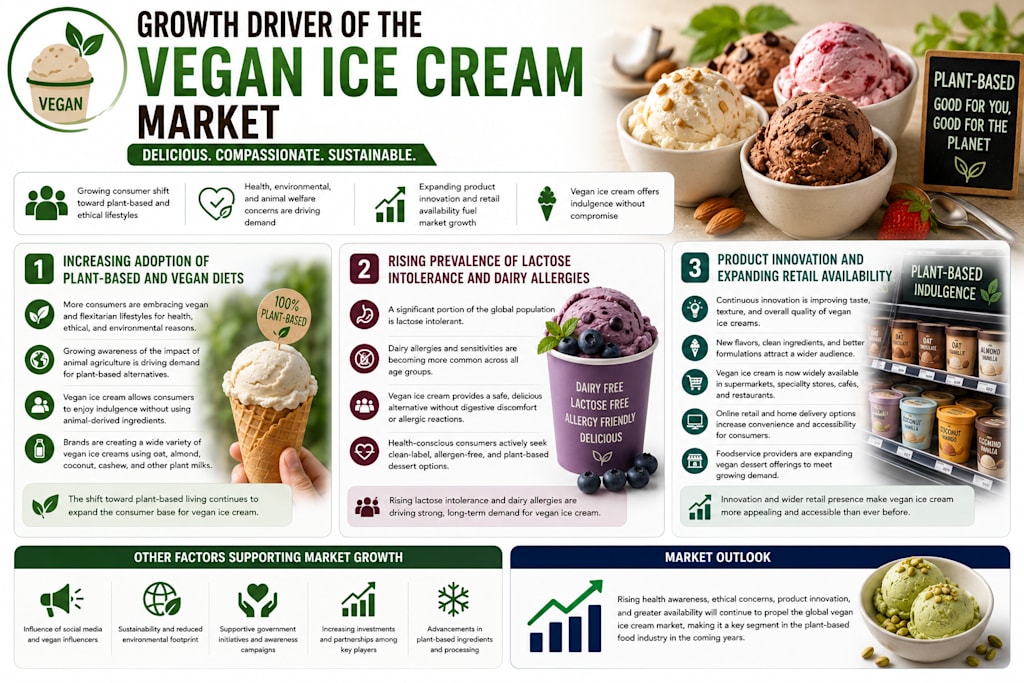
Ice cream has long been one of the world's favorite desserts, but changing consumer preferences are reshaping this traditional treat. Increasing health awareness, growing environmental concerns, and rising demand for plant-based foods have created strong momentum for vegan ice cream, transforming it from a niche product into a rapidly expanding global market.
Unlike conventional ice cream, vegan ice cream contains no dairy ingredients such as milk, cream, or eggs. Instead, manufacturers use plant-based alternatives including almond milk, oat milk, coconut milk, soy milk, and cashew milk to create creamy, flavorful frozen desserts that appeal to a broad range of consumers.
According to the latest market outlook, the Global Vegan Ice Cream Market is projected to grow from US$771.53 million in 2025 to US$1,167.47 million by 2034, registering a compound annual growth rate (CAGR) of 4.71% during 2026–2034. Growing consumer interest in plant-based diets, increasing lactose intolerance, expanding retail availability, and continuous product innovation are expected to drive long-term market growth.
Vegan Ice Cream Is Redefining Frozen Desserts
Vegan ice cream offers consumers the rich taste and creamy texture of traditional ice cream without using any animal-derived ingredients.
Manufacturers create these products using plant-based milk alternatives such as coconut, almond, oat, soy, and cashew milk, combined with natural flavors, sweeteners, fruits, nuts, and other ingredients that replicate the experience of conventional dairy ice cream.
The category serves not only individuals following vegan lifestyles but also consumers seeking healthier alternatives, people with lactose intolerance, dairy allergies, or those simply interested in sustainable food choices.
Today, vegan ice cream is available in supermarkets, cafés, restaurants, convenience stores, specialty food outlets, and online retail platforms around the world.
Plant-Based Diets Continue Driving Market Growth
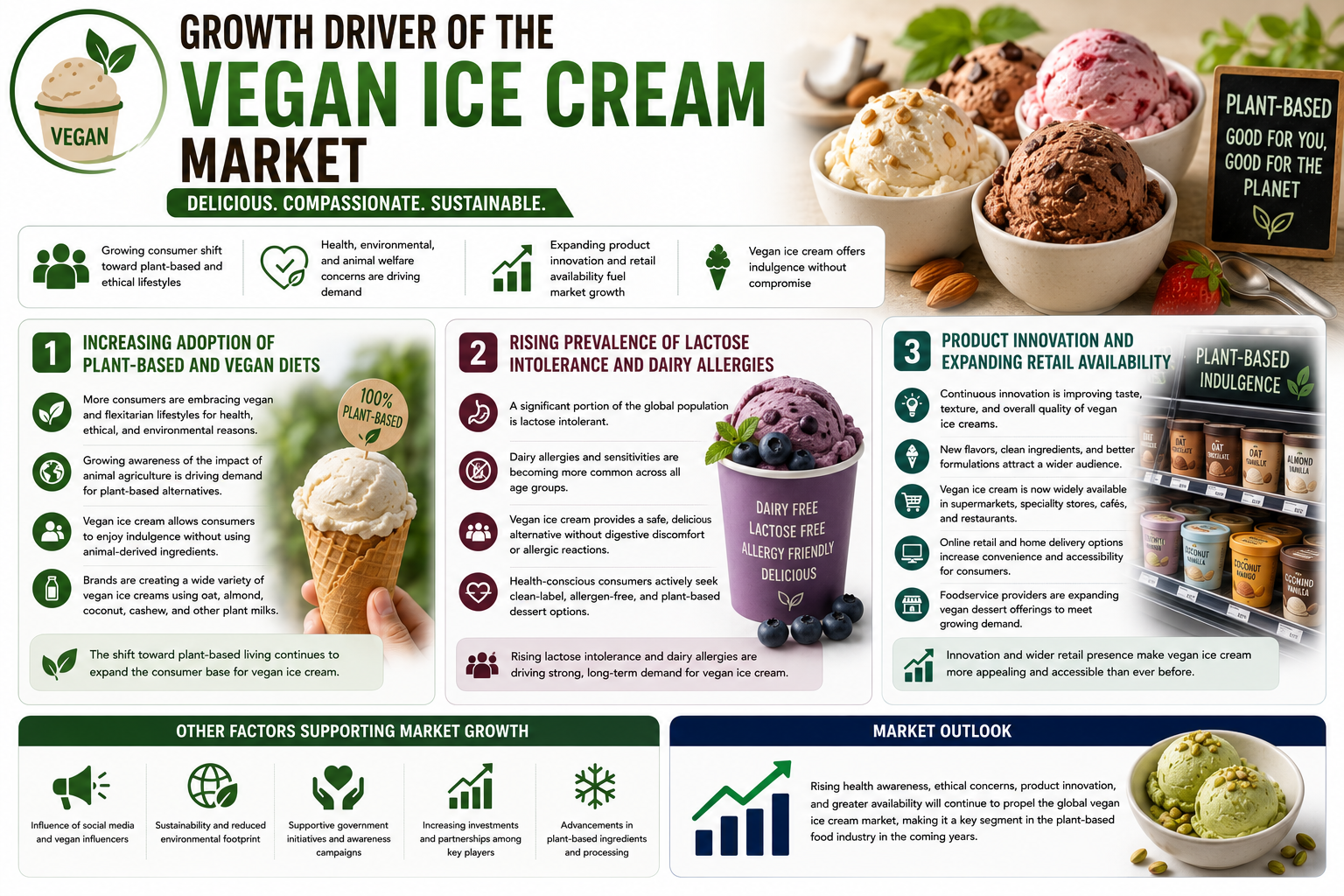
The rapid expansion of vegan and plant-based lifestyles remains the strongest driver behind the market.
Consumers are increasingly reducing animal-based food consumption because of health, environmental, and ethical considerations.
Many people now follow vegan or flexitarian diets while others simply incorporate more plant-based products into their daily meals.
This shift has encouraged manufacturers to introduce a wider range of dairy-free frozen desserts that appeal to both dedicated vegans and mainstream consumers.
As awareness of sustainable eating continues growing, plant-based ice cream is expected to attract an even larger customer base.
Lactose Intolerance Expands Consumer Demand
The increasing prevalence of lactose intolerance has significantly strengthened demand for vegan ice cream.
Millions of consumers worldwide experience digestive discomfort after consuming traditional dairy products, creating demand for enjoyable alternatives that eliminate lactose without sacrificing taste.
Plant-based frozen desserts provide these consumers with a comfortable and flavorful solution while also serving individuals with dairy allergies.
Growing public awareness regarding food sensitivities and digestive health continues encouraging consumers to explore dairy-free options across multiple food categories.
Product Innovation Continues Improving Quality
Innovation has become one of the defining characteristics of the vegan ice cream industry.
Manufacturers continuously improve formulations to create smoother textures, richer flavors, and creamier consistency that closely resemble conventional dairy ice cream.
Advances in plant-based ingredients have enabled companies to introduce premium products featuring oat milk, almond milk, coconut milk, soy milk, and blended plant proteins.
The market has also expanded beyond traditional flavors by offering gourmet combinations, seasonal varieties, functional ingredients, and clean-label formulations that appeal to health-conscious consumers.
Continuous innovation remains essential for attracting both new and returning customers.
Retail Expansion Improves Accessibility
The availability of vegan ice cream has expanded dramatically over recent years.
Consumers can now purchase plant-based frozen desserts through supermarkets, hypermarkets, convenience stores, specialty retailers, cafés, restaurants, and online grocery platforms.
Retailers increasingly dedicate freezer space to plant-based products as consumer demand continues rising.
Foodservice businesses have also responded by introducing vegan dessert options that appeal to changing customer preferences.
Greater product visibility and easier accessibility continue supporting overall market expansion.
Almond Milk Remains a Popular Base
Among various plant-based ingredients, almond milk has become one of the most widely used bases for vegan ice cream.
Its mild flavor, creamy consistency, low calorie content, and cholesterol-free composition make it particularly attractive for both manufacturers and consumers.
Almond-based products are available in numerous flavors including vanilla, chocolate, fruit, and premium gourmet varieties.
Growing demand for organic, clean-label, and naturally sourced ingredients has further strengthened this market segment.
Caramel and Premium Flavors Gain Popularity
Premium flavor innovation continues creating new growth opportunities.
Caramel has emerged as one of the most popular vegan ice cream flavors due to its rich taste and broad consumer appeal.
Manufacturers increasingly combine caramel with plant-based ingredients such as oat, almond, and coconut milk while introducing gourmet recipes featuring nuts, cookies, fruits, and chocolate.
Premium and artisanal flavors encourage consumers to view vegan ice cream as an indulgent dessert rather than simply a dietary alternative.
Impulse Products Continue Expanding
Impulse vegan ice cream products—including cones, sticks, bars, sandwiches, and mini cups—have become increasingly popular among busy consumers.
These single-serve products appeal particularly to younger shoppers seeking convenient snacks that can be enjoyed immediately after purchase.
Manufacturers continue improving packaging, branding, and flavor variety to encourage spontaneous purchases.
Convenience stores, entertainment venues, vending machines, and supermarkets remain important distribution channels for impulse products.
Convenience Stores Increase Market Reach
Convenience stores have become an increasingly important retail channel for vegan ice cream.
Urban consumers appreciate the ability to purchase plant-based frozen desserts quickly alongside everyday grocery items.
Retailers continue expanding their plant-based product selections as consumer demand grows.
Single-serving formats and premium offerings have helped convenience stores attract both health-conscious consumers and impulse buyers.
Improved retail distribution ensures that vegan ice cream becomes accessible to a wider audience.
Sustainability Influences Consumer Choices
Environmental awareness continues shaping purchasing behavior across the food industry.
Many consumers choose vegan ice cream because plant-based products generally require fewer natural resources than traditional dairy production.
Lower greenhouse gas emissions, reduced water consumption, and improved animal welfare align with the sustainability goals of environmentally conscious consumers.
Manufacturers increasingly emphasize responsible sourcing, recyclable packaging, and sustainable ingredient production to strengthen brand loyalty.
Challenges Remain
Despite impressive growth, several challenges continue affecting the vegan ice cream industry.
Premium Pricing
Plant-based ingredients, specialized production processes, and premium formulations often make vegan ice cream more expensive than conventional alternatives.
Price-sensitive consumers may hesitate to switch unless manufacturers improve affordability through economies of scale.
Consumer Expectations
Although product quality has improved significantly, some consumers still compare vegan ice cream directly with traditional dairy products.
Manufacturers must continue enhancing flavor, creaminess, texture, and shelf stability to meet evolving consumer expectations and encourage repeat purchases.
Regional Markets Continue Expanding
The United States remains one of the largest vegan ice cream markets, supported by growing health awareness, widespread plant-based diets, and continuous product innovation.
The United Kingdom continues experiencing strong growth as consumers increasingly embrace vegan lifestyles and sustainable food choices.
India has emerged as a promising market due to rising health consciousness, urbanization, growing disposable incomes, and expanding retail availability.
Saudi Arabia also continues witnessing increased demand as premium food products, healthier lifestyles, and modern retail infrastructure gain popularity.
Together, these regional markets continue driving worldwide expansion.
Innovation Will Shape the Future
The future of vegan ice cream will be driven by continuous innovation in ingredients, nutrition, sustainability, and product development.
Manufacturers are expected to introduce improved plant proteins, lower-sugar formulations, functional ingredients, probiotic varieties, and environmentally friendly packaging.
Artificial intelligence and consumer data analytics will also help companies better understand changing taste preferences while accelerating new product development.
As plant-based foods continue entering mainstream diets, vegan ice cream is likely to become an increasingly important category within the global frozen dessert market.
Final Thoughts
The global vegan ice cream market has evolved from a specialty niche into a rapidly expanding segment of the food industry.
The projected increase from US$771.53 million in 2025 to US$1,167.47 million by 2034, supported by a 4.71% CAGR, reflects growing consumer demand for healthier, sustainable, and dairy-free dessert alternatives.
Driven by plant-based lifestyles, rising lactose intolerance, continuous product innovation, expanding retail availability, and increasing environmental awareness, vegan ice cream is well positioned for long-term growth. Companies that continue investing in premium ingredients, innovative flavors, sustainable practices, and superior consumer experiences are expected to lead the next generation of frozen desserts.
About the Creator
Enjoyed the story? Support the Creator.
Subscribe for free to receive all their stories in your feed.
Comments
There are no comments for this story
Be the first to respond and start the conversation.