
US Threatens Sanctions Against Chinese AI Models Over Alleged IP Theft
Washington signals a tougher stance on China's AI industry as concerns over intellectual property, open-source models, and technological leadership continue to grow.

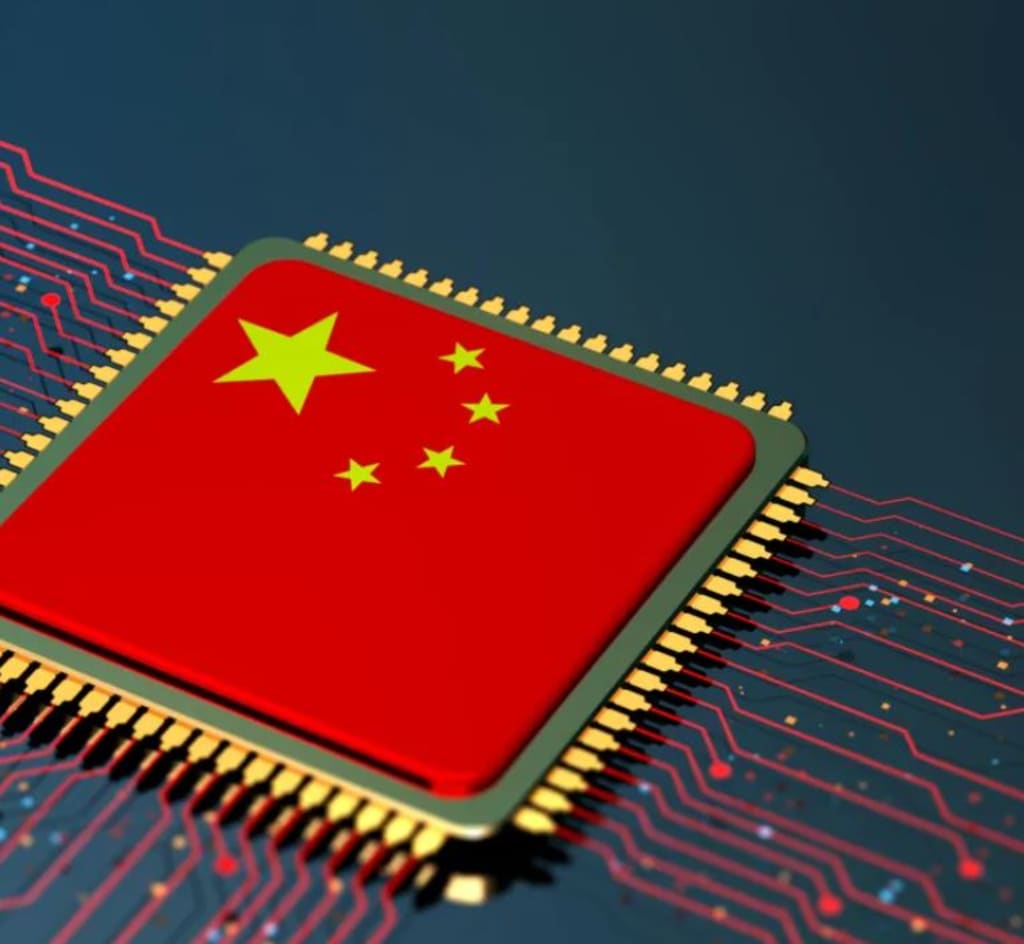
The race to dominate artificial intelligence has entered another chapter, and this time the spotlight is on intellectual property. The United States is considering sanctions against Chinese AI companies if it finds evidence that their AI models were developed using stolen intellectual property from American firms.
The warning came from U.S. Treasury Secretary Scott Bessent, who said the government will examine Chinese open-source AI models for signs of IP theft. His remarks reflect the growing concern within Washington that China's rapid AI progress may be benefiting from technologies developed by leading U.S. companies.
While no sanctions have been imposed yet, the comments signal that the U.S. is prepared to expand its AI strategy beyond export controls and semiconductor restrictions. Instead of focusing solely on the hardware powering AI systems, regulators may soon begin scrutinizing the software and models themselves.
A New Front in the AI Race
Speaking during an interview with Fox Business, Bessent said the U.S. supports open-source AI development but draws the line when innovation is achieved through intellectual property theft.
According to him, if investigations show that overseas AI models have copied or stolen technology from American companies, the government has the authority to impose sanctions.
The remarks come as Chinese AI developers continue releasing increasingly capable large language models. One of the latest examples is Moonshot AI's Kimi K3, which has attracted attention for delivering impressive performance while embracing an open-source approach.
Chinese models are becoming more competitive each year, raising concerns among American AI companies that they could lose both market share and investment advantages.
Open Source Doesn't Mean Free From Scrutiny
Open-source AI has become one of the biggest trends in artificial intelligence. By allowing developers to freely access and modify models, open-source projects encourage innovation and faster adoption.
However, U.S. officials argue that openness should not become a shield for unlawful practices.
The government's concern is that some models may have been trained or improved using copyrighted material or proprietary technologies without permission.
If investigators conclude that intellectual property theft occurred, Chinese developers could face sanctions similar to those already imposed on technology companies involved in national security concerns.
Such a move would represent a significant escalation in the ongoing technological rivalry between the world's two largest economies.
The Debate Over Model Distillation
At the center of this discussion is a technique known as model distillation.
Distillation allows developers to transfer knowledge from a larger, more advanced AI model into a smaller one. The resulting model can perform many of the same tasks while requiring fewer computing resources.
Supporters view distillation as a legitimate engineering technique that improves efficiency.
Critics argue that when performed without permission using another company's proprietary model, it can amount to intellectual property theft.
The issue remains legally and ethically unresolved.
Microsoft CEO Satya Nadella recently questioned whether model distillation should automatically be considered theft. He pointed out what he sees as an inconsistency within the AI industry.
Many AI companies argue they have fair use rights to train their models using publicly available internet data. Yet some of those same companies object when others use model distillation techniques to learn from their systems.
His comments highlight one of the industry's biggest unresolved questions: where should the line between inspiration and infringement actually be drawn?
Chinese AI Is Advancing for Multiple Reasons
Not everyone agrees that copying explains China's AI progress.
Some industry leaders argue that Chinese AI companies have earned their success through strong research capabilities, engineering talent, and a collaborative development culture.
Hugging Face CEO Clem Delangue recently said model distillation plays only a relatively small role in creating competitive AI systems.
According to him, Chinese research teams have invested heavily in developing their own technologies while embracing open collaboration across the AI community.
This suggests that China's rapid progress cannot simply be attributed to copying existing American models.
Instead, it reflects years of investment in AI research, infrastructure, and engineering expertise.
More Pressure on AI Companies
Ironically, American AI companies continue facing their own legal challenges involving intellectual property.
Anthropic recently received approval to begin compensating authors as part of a $1.5 billion legal settlement after a court ruled that the company had illegally downloaded and stored millions of copyrighted books during AI training.
The case illustrates that questions surrounding AI training data are not limited to China.
Across the industry, companies are facing growing scrutiny over how they collect data, train models, and respect copyright laws.
As governments begin establishing clearer legal standards, AI developers worldwide may need to become more transparent about how their systems are built.
Could Sanctions Slow China's AI Growth?
If sanctions are eventually imposed, they could limit Chinese AI companies' access to American technology, cloud services, financial systems, or international partnerships.
However, many analysts believe such measures may also encourage China to accelerate its efforts toward technological self-sufficiency.
The AI rivalry has already expanded beyond software.
The U.S. has introduced export controls on advanced AI chips, restricted semiconductor manufacturing equipment, and tightened regulations on technology transfers to China.
Adding AI models themselves to the list of restrictions would represent another significant escalation.
Artificial intelligence is quickly becoming one of the defining technologies of the decade, making competition between the United States and China increasingly intense.
The latest warning from Washington shows that future battles may not only be fought over chips and computing power but also over data ownership, training methods, and intellectual property.
Whether investigations ultimately uncover evidence of wrongdoing remains to be seen. But one thing is becoming increasingly clear: as AI capabilities continue advancing, governments are likely to pay far closer attention to how those systems are created.
For businesses, developers, and investors, the outcome could shape the future of global AI innovation, determining not only who builds the most powerful models, but also what rules will govern their creation.
About the Creator
Mark Lim
Hi I am mark an automotive student and a car, tech and food enthusiast ! Im gonna try and post daily & hope you enjoy what I write and do share my page with people you know. I would gladly appreciate it! Cheers
Enjoyed the story? Support the Creator.
Subscribe for free to receive all their stories in your feed.
Comments
There are no comments for this story
Be the first to respond and start the conversation.