
United States Outboard Motor Market Set to Reach US$ 2.45 Billion by 2033 as Recreational Boating and Marine Innovation Accelerate
Growing boating participation, cleaner engine technologies, and expanding commercial marine activities are steering the U.S. outboard motor industry toward sustained growth through 2033.

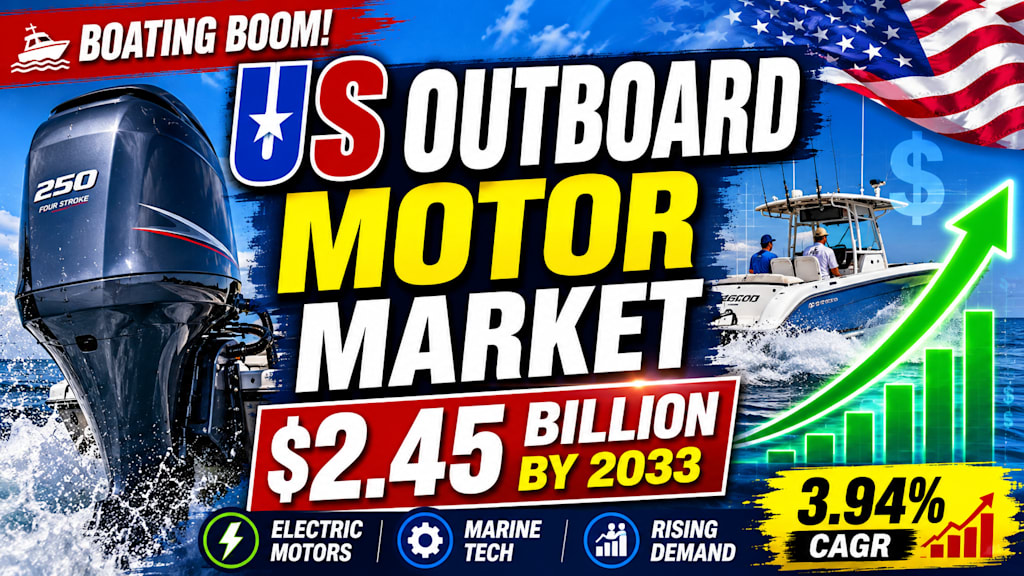
United States Outboard Motor Market Outlook
The United States outboard motor market is entering a period of steady expansion, supported by rising recreational boating participation, technological improvements in marine propulsion systems, and growing demand from commercial marine operators.
According to Renub Research, the United States Outboard Motor Market is expected to increase from US$ 1.73 Billion in 2024 to US$ 2.45 Billion by 2033, growing at a CAGR of 3.94% during 2025–2033.
Outboard motors remain among the most widely used propulsion systems for boats due to their versatility, affordability, ease of maintenance, and operational efficiency. Whether powering fishing boats, recreational vessels, ferries, or commercial watercraft, these engines continue to play a crucial role in America's marine ecosystem.
As environmental regulations become stricter and consumer expectations evolve, manufacturers are increasingly investing in cleaner, quieter, and more fuel-efficient propulsion technologies. This transformation is reshaping the competitive landscape while opening new opportunities for innovation.
What Is an Outboard Motor?
An outboard motor is a self-contained propulsion unit mounted externally on the transom of a boat. It combines the engine, gearbox, and propeller into a single compact system.
Unlike inboard engines, outboard motors offer several advantages:
Easy installation and replacement
Lower maintenance requirements
Better maneuverability
Enhanced fuel efficiency
Portability and storage convenience
Suitable for multiple boat sizes
These benefits have made outboard motors the preferred choice for recreational boaters, fishing enthusiasts, commercial operators, and water sports participants across the United States.
The increasing popularity of boating activities and technological enhancements in engine performance are expected to maintain strong demand throughout the forecast period.
Recreational Boating Continues to Drive Market Growth
One of the most significant factors contributing to market expansion is the growing popularity of recreational boating throughout the United States.
Millions of Americans participate in boating activities every year, ranging from fishing and cruising to wakeboarding, waterskiing, and leisure tourism. The COVID-era surge in outdoor recreation introduced many new consumers to boating, and participation levels have remained strong.
Many coastal and lakefront states actively promote marine tourism, encouraging investments in personal watercraft and recreational vessels. The increasing number of boat registrations demonstrates the resilience of boating culture in America.
Outboard motors have become the propulsion system of choice because they provide:
Excellent fuel economy
Reliable performance
Lower ownership costs
Ease of operation
Adaptability across different vessel categories
Manufacturers are responding by introducing new product lines that combine performance with environmental sustainability.
For example, Brunswick expanded its electric boating portfolio through its Bayliner brand, highlighting the industry's growing commitment to cleaner marine transportation.
As more families seek outdoor recreation experiences, recreational boating is expected to remain the largest revenue-generating application segment.
Technological Innovation Is Transforming Marine Propulsion
Technological advancements are reshaping the future of the outboard motor industry.
Modern consumers are no longer focused solely on horsepower. They increasingly prioritize:
Fuel efficiency
Reduced emissions
Quiet operation
Smart connectivity
Enhanced safety features
Lower maintenance costs
Manufacturers are incorporating advanced electronics and digital technologies into marine engines. Features such as GPS integration, digital throttle systems, engine monitoring software, and smartphone connectivity are becoming more common.
The emergence of electric and hybrid outboard motors represents one of the most important developments in the industry.
Electric propulsion systems offer several advantages:
Zero tailpipe emissions
Reduced noise pollution
Lower operating costs
Improved sustainability
These benefits are attracting environmentally conscious consumers and marina operators seeking greener alternatives.
The launch of TEMO USA in 2024 reflects the growing confidence in the American electric marine propulsion market. The company's success with lightweight electric motors demonstrates increasing acceptance of alternative propulsion technologies among U.S. boat owners.
As battery technology improves and charging infrastructure expands, electric outboard motors are expected to gain significant market share.
Commercial Marine Activities Strengthen Industry Demand
While recreational boating dominates market revenues, commercial applications continue to provide a stable source of demand.
Commercial users rely on outboard motors for various activities, including:
Commercial fishing
Aquaculture operations
Passenger transportation
Coastal logistics
Rescue services
Tourism excursions
States such as Alaska, Florida, Washington, and Louisiana depend heavily on marine industries for economic activity.
Commercial operators value outboard motors because they offer:
Durability
Reliability
Cost efficiency
Ease of maintenance
Strong performance in challenging conditions
The growing aquaculture industry is creating additional opportunities for motor manufacturers. Fish farms and coastal aquaculture facilities increasingly require dependable propulsion systems for daily operations.
Furthermore, investments in sustainable commercial fishing technologies are encouraging innovation throughout the marine sector.
The Alaska Longline Fishermen's Association's collaboration with federal energy programs to explore vessel hybridization illustrates how sustainability initiatives are influencing commercial marine transportation.
Environmental Regulations Present Both Challenges and Opportunities
Environmental compliance remains one of the most important challenges facing outboard motor manufacturers.
Federal and state authorities continue implementing stricter regulations designed to reduce:
Air pollution
Carbon emissions
Water contamination
Noise pollution
California, in particular, has established some of the most rigorous marine emissions standards in the country.
While these regulations increase production costs, they also encourage technological innovation.
Manufacturers must invest heavily in:
Cleaner combustion technologies
Electric propulsion systems
Hybrid engine solutions
Improved fuel management systems
Large manufacturers with significant research and development resources are often better positioned to adapt to these requirements. Smaller companies may face greater financial pressure when meeting compliance standards.
Nevertheless, environmental regulations are accelerating the industry's transition toward more sustainable marine transportation.
Seasonal Demand Remains a Market Constraint
Despite positive growth prospects, the industry remains vulnerable to seasonal fluctuations.
Outboard motor sales typically peak during spring and summer months when boating activity increases significantly.
During colder seasons, demand often slows, creating inventory management challenges for manufacturers and retailers.
The industry is also sensitive to broader economic conditions.
When consumer confidence declines, purchases of recreational equipment are often postponed. Since boats and marine engines are generally considered discretionary purchases, economic uncertainty can directly affect market performance.
Manufacturers must therefore balance production capacity with changing seasonal and economic conditions.
Commercial Outboard Motor Segment Outlook
The commercial outboard motor segment continues to benefit from expanding marine industries across the country.
Fishing fleets, ferry operators, and aquaculture businesses increasingly require reliable propulsion systems capable of supporting demanding workloads.
High-power engines dominate commercial applications because they provide:
Greater operational efficiency
Improved load-carrying capacity
Enhanced reliability
Longer service life
Public and private investments in coastal infrastructure are expected to support continued demand for commercial marine equipment throughout the forecast period.
Recreational Outboard Motor Segment Outlook
The recreational segment remains the largest contributor to overall market revenues.
Consumers purchasing fishing boats, pontoons, runabouts, and personal watercraft frequently select outboard motors because of their flexibility and lower ownership costs.
Several trends are supporting segment growth:
Increased outdoor recreation participation
Growing interest in water sports
Expansion of marine tourism
Rising disposable incomes
Growing awareness of electric boating technologies
Manufacturers continue introducing products specifically designed for recreational users seeking improved performance and convenience.
Portable Outboard Motor Market Gaining Momentum
Portable outboard motors are becoming increasingly popular among first-time boat owners and casual boating enthusiasts.
These compact engines are particularly suited for:
Inflatable boats
Dinghies
Small fishing boats
Rental fleets
Their lightweight construction and easy transportation make them attractive for consumers seeking flexibility.
Electric portable motors are emerging as a rapidly growing niche due to increasing environmental awareness and stricter emissions regulations.
High-Power Outboard Motor Market Expands
High-power outboard motors are becoming more sophisticated and efficient.
Traditionally associated with commercial vessels and larger recreational boats, these engines now deliver greater fuel economy while maintaining superior performance.
Key applications include:
Offshore fishing vessels
Rescue boats
Luxury recreational boats
Commercial marine operations
Technological improvements are enabling manufacturers to offer more horsepower while simultaneously reducing environmental impact.
Regional Market Analysis
Washington
Washington benefits from a thriving commercial fishing industry and active recreational boating community. Access to coastal waters and inland waterways supports consistent demand for outboard motors.
Growing environmental awareness is encouraging adoption of electric and low-emission propulsion systems.
California
California remains one of the most influential markets due to its extensive coastline and strict environmental regulations.
The state's focus on sustainability is accelerating adoption of electric and hybrid outboard motors, making California a major testing ground for marine innovation.
New York
New York's market is supported by recreational boating on the Hudson River, Great Lakes, and numerous inland waterways.
Strong tourism activity and environmental initiatives are driving demand for modern, efficient propulsion technologies.
10 Recent Developments Among Leading Outboard Motor Companies
1. Brunswick Corporation
Expanded electric boating initiatives through Bayliner and continued investments in Mercury Marine's advanced propulsion technologies.
2. Yamaha Motor Co. Ltd
Enhanced digital integration features across multiple outboard motor models, improving user experience and performance monitoring.
3. Honda Motor Co. Ltd
Focused on cleaner marine engine technologies and expanded fuel-efficient outboard offerings.
4. Suzuki Motor Corporation
Introduced advanced fuel-saving technologies and improved corrosion-resistant marine engine components.
5. Tohatsu Corporation
Strengthened its lightweight portable outboard motor lineup targeting recreational boating customers.
6. DEUTZ Aktiengesellschaft
Increased investments in alternative propulsion systems and sustainable engine development initiatives.
7. TEMO USA
Established U.S. operations in Delaware and Maine to accelerate electric outboard motor adoption.
8. LEHR LLC
Continued expanding environmentally friendly marine propulsion solutions for recreational users.
9. Parsun Power Machine Co. Ltd
Enhanced international distribution capabilities and broadened product availability in North America.
10. Selva SpA
Focused on performance optimization and product innovation to strengthen competitiveness in global marine markets.
Competitive Landscape
The U.S. outboard motor market remains highly competitive, with manufacturers competing on:
Product innovation
Fuel efficiency
Emissions compliance
Reliability
Brand reputation
Dealer networks
Customer service
Major companies covered in the market include:
DEUTZ Aktiengesellschaft
Honda Motor Co. Ltd
Brunswick Corporation
Tohatsu Corporation
LEHR LLC
Suzuki Motor Corporation
Yamaha Motor Co. Ltd
Hidea Power Machinery Co. Ltd
Parsun Power Machine Co. Ltd
Selva SpA
These companies continue investing heavily in research and development to capture future growth opportunities in both traditional and electric propulsion segments.
Final Thoughts
The United States Outboard Motor Market is positioned for sustained growth through 2033, driven by rising recreational boating participation, technological innovation, and expanding commercial marine applications.
As the industry evolves, electric and hybrid propulsion technologies are expected to play an increasingly important role. Environmental regulations, while challenging, are encouraging manufacturers to develop cleaner and more efficient solutions that align with consumer expectations and sustainability goals.
With the market projected to rise from US$ 1.73 Billion in 2024 to US$ 2.45 Billion by 2033, industry participants that prioritize innovation, environmental compliance, and customer-focused product development will be best positioned to capitalize on future opportunities.
About the Creator
Enjoyed the story? Support the Creator.
Subscribe for free to receive all their stories in your feed.
Comments
There are no comments for this story
Be the first to respond and start the conversation.