
United States Motorcycle Market Expected to Reach US$ 14.64 Billion by 2033 as Recreational Riding and Electric Bikes Gain Popularity
Rising interest in fuel-efficient transportation, adventure touring, and electric motorcycles is reshaping America’s motorcycle industry

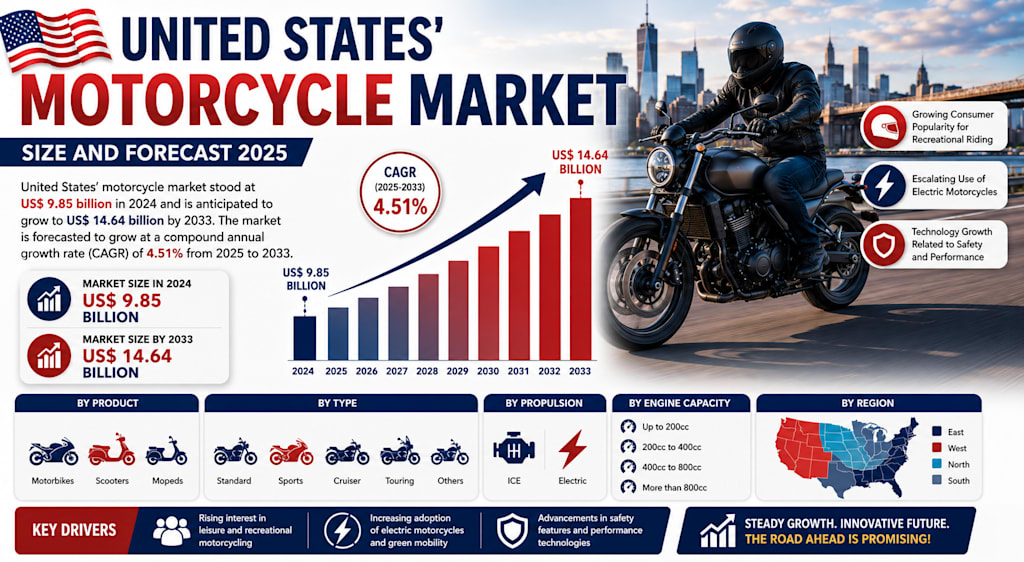
The United States motorcycle market is accelerating into a new era driven by changing consumer lifestyles, technological innovation, and the growing popularity of recreational riding. From fuel-efficient commuter bikes to high-performance sports motorcycles and electric two-wheelers, motorcycles are becoming more than just transportation — they are increasingly viewed as lifestyle products and symbols of freedom, adventure, and individuality.
According to Renub Research, the United States motorcycle market was valued at US$ 9.85 billion in 2024 and is projected to reach US$ 14.64 billion by 2033, expanding at a CAGR of 4.51% from 2025 to 2033. Market growth is being supported by rising demand for recreational motorcycling, increasing adoption of electric motorcycles, and continuous improvements in motorcycle safety and performance technologies.
As motorcycle culture continues evolving across the country, manufacturers are introducing advanced models that combine speed, efficiency, sustainability, and smart technology.
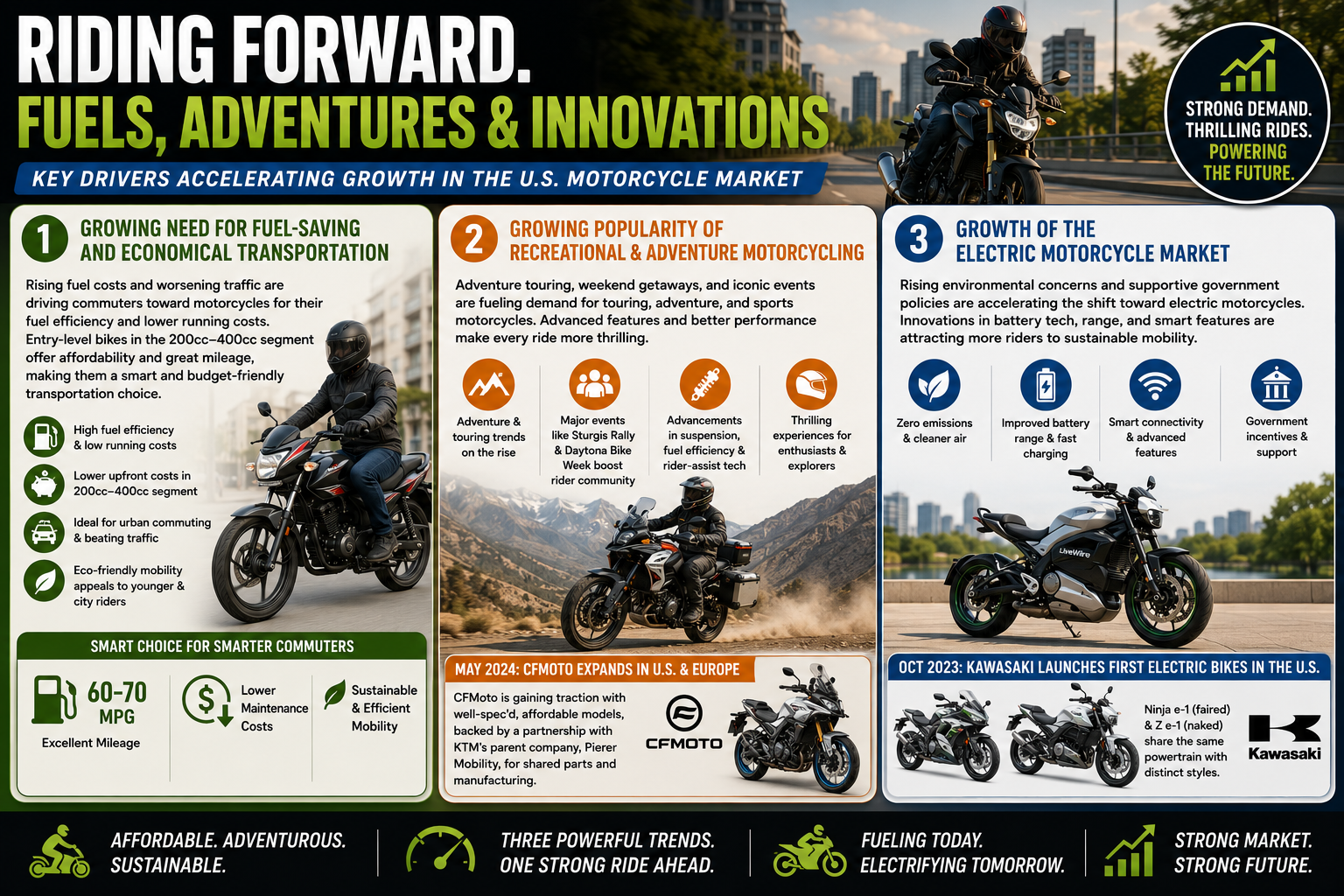
Motorcycles Continue to Hold a Strong Place in American Culture
Motorcycles have long been part of American identity and lifestyle culture. From open highways and cross-country road trips to racing tracks and biker festivals, motorcycles symbolize freedom and adventure for millions of riders across the country.
The United States is home to some of the world’s most iconic motorcycle brands, including:
Harley-Davidson, Indian Motorcycle, Honda, Yamaha, Kawasaki, BMW, and Ducati.
Motorcycles are widely used for:
Daily commuting, recreational riding, long-distance touring, racing, off-road adventures, and group travel experiences.
Events such as Daytona Bike Week and the Sturgis Motorcycle Rally continue attracting thousands of motorcycle enthusiasts every year, strengthening the country’s strong riding culture.
Younger riders are also entering the market due to growing interest in motorcycle customization, performance upgrades, and affordable mobility solutions.
With rising innovation and expanding riding communities, motorcycles remain an important part of America’s transportation and recreational landscape.
Fuel Efficiency Is Driving Motorcycle Demand
One of the biggest growth drivers in the U.S. motorcycle market is the increasing demand for affordable and fuel-efficient transportation.
As fuel prices continue fluctuating and traffic congestion worsens in urban areas, many consumers are turning to motorcycles as cost-effective alternatives to cars.
Motorcycles offer several advantages, including:
Lower fuel consumption, reduced maintenance costs, affordable pricing, easier parking, and greater maneuverability in traffic.
Entry-level motorcycles in the 200cc to 400cc category are especially attractive to first-time riders, students, and city commuters because they balance affordability with performance.
Urban residents and younger consumers increasingly view motorcycles as practical transportation solutions that also provide flexibility and excitement.
The shift toward environmentally conscious mobility is also encouraging consumers to explore two-wheeled transportation options that consume less fuel and generate fewer emissions.
Recreational and Adventure Riding Is Becoming More Popular
Beyond commuting, recreational motorcycling has become one of the strongest forces driving market growth.
Consumers are increasingly investing in:
Touring motorcycles, adventure bikes, sports motorcycles, and off-road models for leisure travel and outdoor experiences.
Weekend road trips, motorcycle tourism, and adventure touring have become increasingly popular among riders seeking freedom and outdoor exploration.
Modern motorcycles now include advanced features such as:
Smart navigation systems, rider-assistance technologies, improved suspension systems, cruise control, and enhanced fuel efficiency.
These improvements are making long-distance riding more comfortable and accessible for both experienced and beginner riders.
In May 2024, CFMoto expanded its presence in the U.S. market by offering affordable motorcycles with premium features through partnerships with KTM’s parent company, Pierer Mobility.
As travel and outdoor recreation continue growing in popularity, adventure and touring motorcycles are expected to remain key growth segments.
Electric Motorcycles Are Transforming the Industry
The electric motorcycle market is growing rapidly across the United States as consumers become more environmentally conscious and governments encourage sustainable transportation.
Electric motorcycles offer several benefits, including:
Zero emissions, lower maintenance costs, quieter operation, reduced fuel expenses, and smart connectivity features.
Manufacturers are investing heavily in battery technology, fast charging systems, and extended riding ranges to improve performance and consumer confidence.
Leading companies in the electric motorcycle segment include:
Zero Motorcycles, Harley-Davidson’s LiveWire, Energica, and Kawasaki.
In October 2023, Kawasaki launched its first electric motorcycles in the United States, the Ninja e-1 and Z e-1 models, marking an important step in the company’s electric mobility strategy.
Electric motorcycles are especially popular among urban commuters seeking eco-friendly transportation solutions with modern digital features.
As charging infrastructure continues improving nationwide, electric motorcycles are expected to become a major force in the future of the motorcycle industry.
Sports Motorcycles Continue Attracting Performance Enthusiasts
Sports motorcycles remain one of the most exciting and performance-driven segments in the U.S. motorcycle market.
These motorcycles are known for:
High-speed engines, aerodynamic designs, lightweight frames, aggressive styling, and advanced suspension systems.
Brands such as Yamaha, Kawasaki, Ducati, and Suzuki continue dominating this segment through high-performance motorcycles designed for racing enthusiasts and thrill-seeking riders.
The popularity of track-day events, motorcycle racing competitions, and performance biking culture continues supporting strong demand for sports bikes.
At the same time, manufacturers are introducing smaller displacement sports motorcycles that make performance riding more affordable and accessible for younger riders.
Entry-level sports bikes are helping expand the customer base while maintaining excitement around the segment.
Touring Motorcycles Are Gaining Momentum
Touring motorcycles are becoming increasingly popular among riders interested in long-distance travel and comfort-focused riding experiences.
These motorcycles are specifically designed for:
Cross-country travel, highway cruising, group tours, and motorcycle vacations.
Touring motorcycles often feature:
Large fuel tanks, spacious seating, storage compartments, entertainment systems, navigation tools, and cruise control technology.
Brands such as Harley-Davidson and BMW continue leading the touring segment by offering premium motorcycles equipped with luxury features and advanced rider comfort systems.
The growing popularity of motorcycle tourism and scenic road travel in states such as California, Arizona, Florida, and Colorado is helping boost demand for touring motorcycles.
As more riders seek travel-focused experiences, touring motorcycles are expected to remain a strong growth category.
The 200cc to 400cc Segment Is Expanding Rapidly
Motorcycles in the 200cc to 400cc category are experiencing strong demand across the United States.
This segment appeals to:
New riders, urban commuters, college students, budget-conscious consumers, and first-time motorcycle buyers.
These motorcycles are attractive because they offer:
Affordable pricing, easy handling, fuel efficiency, manageable weight, and balanced performance.
Manufacturers such as Honda, Yamaha, KTM, and Kawasaki continue introducing lightweight motorcycles designed specifically for entry-level consumers.
As more younger consumers enter the market, this segment is expected to continue growing steadily.
Mid-Range Motorcycles Are Becoming More Popular
The 400cc to 800cc category is gaining popularity among intermediate riders who want stronger performance without moving into heavyweight touring bikes.
These motorcycles provide:
Better highway performance, improved acceleration, enhanced comfort, and greater versatility.
Riders upgrading from beginner motorcycles often choose mid-range bikes because they offer a balance between speed, comfort, and fuel efficiency.
Manufacturers such as Triumph, Suzuki, and Kawasaki continue expanding offerings in this category to attract experienced riders seeking practical yet exciting motorcycles.
The segment is expected to benefit from rising consumer interest in recreational riding and long-distance travel.
Safety Concerns Continue Challenging the Industry
Despite strong market growth, safety concerns remain one of the biggest challenges facing the motorcycle industry.
Motorcycles are generally considered riskier than passenger vehicles because riders have less physical protection during accidents.
Factors affecting consumer confidence include:
Road safety concerns, accident rates, helmet regulations, licensing requirements, and rider training standards.
Government agencies are also implementing stricter safety and emissions regulations that manufacturers must comply with.
To address these concerns, motorcycle companies are introducing advanced safety technologies such as:
Anti-lock braking systems (ABS), traction control, rider-assistance systems, smart sensors, and improved stability management tools.
While these innovations are improving rider safety, public perception around motorcycle risks remains a challenge for the industry.
High Costs of Premium Motorcycles Affect Affordability
Premium motorcycles, especially touring bikes and high-performance models, often come with expensive price tags.
Motorcycles in the 400cc to 800cc and above-800cc categories typically require:
Advanced engineering, premium materials, luxury features, and sophisticated electronics.
In addition to purchase costs, insurance, maintenance, and repair expenses can discourage price-sensitive consumers.
Although financing options have improved, affordability remains a challenge for some buyers considering luxury motorcycles.
Manufacturers are increasingly focusing on offering entry-level and mid-range options to attract a broader consumer base.
Regional Trends Across the United States
Motorcycle preferences vary significantly across different U.S. regions depending on climate, geography, and riding culture.
Eastern United States
The Eastern market is heavily influenced by urban commuting and recreational riding.
Cities such as New York and Boston show strong demand for:
Motorbikes, scooters, and electric motorcycles because of traffic congestion and compact urban environments.
Meanwhile, states such as Florida and North Carolina remain strong markets for cruisers and touring motorcycles due to scenic highways and favorable weather conditions.
Western United States
The western region is one of the strongest motorcycle markets in the country.
California, Arizona, and Colorado have thriving motorcycle cultures focused on:
Adventure touring, off-road riding, sports bikes, and electric motorcycles.
The region’s scenic highways, mountain roads, and desert landscapes make it especially attractive for recreational riders.
California also remains a major center for electric motorcycle innovation and sustainable transportation trends.
Why the Future of the Motorcycle Market Looks Strong
The long-term outlook for the U.S. motorcycle market remains highly positive as technology, sustainability, and lifestyle trends continue driving consumer interest.
Several major factors are expected to support future growth, including:
Increasing fuel costs, growing demand for recreational travel, rising electric motorcycle adoption, expanding charging infrastructure, advanced safety technologies, and younger consumer interest in customization and adventure riding.
Motorcycles are increasingly becoming lifestyle-oriented products that combine mobility, entertainment, and personal expression.
Manufacturers investing in electric mobility, smart connectivity, and affordable performance motorcycles are likely to dominate future market growth.
Final Thoughts
The United States motorcycle market is evolving rapidly as consumers seek fuel-efficient transportation, outdoor adventure experiences, and environmentally friendly mobility solutions.
From affordable commuter bikes and powerful sports motorcycles to luxury touring models and electric two-wheelers, the industry is becoming more diverse and technologically advanced than ever before.
According to Renub Research, the market is projected to grow from US$ 9.85 billion in 2024 to US$ 14.64 billion by 2033, reflecting strong long-term opportunities for manufacturers, investors, and technology providers.
As innovation continues reshaping the industry, motorcycle companies that focus on sustainability, safety, affordability, and smart riding experiences are expected to lead the future of the market.
The road ahead for America’s motorcycle industry appears fast, connected, and increasingly electric
About the Creator
Enjoyed the story? Support the Creator.
Subscribe for free to receive all their stories in your feed.
Comments
There are no comments for this story
Be the first to respond and start the conversation.