
United States Liquid Biopsy Market Set to Reach US$4.86 Billion by 2034 as Precision Oncology and Non-Invasive Cancer Testing Gain Momentum
Rising cancer incidence, advances in genomic diagnostics, and growing adoption of personalized medicine are accelerating demand for liquid biopsy technologies across the United States.

Introduction: Transforming Cancer Diagnosis Through a Simple Blood Test
Cancer diagnosis has traditionally relied on tissue biopsies, which often require invasive procedures, surgical intervention, and extended recovery periods. While effective, these methods can be challenging for patients and may not always be suitable for repeated monitoring.
Today, healthcare providers are increasingly turning to liquid biopsy technologies as a faster, safer, and less invasive alternative. By analyzing cancer-related biomarkers found in blood and other bodily fluids, liquid biopsies provide valuable insights into disease detection, progression, treatment response, and recurrence monitoring.
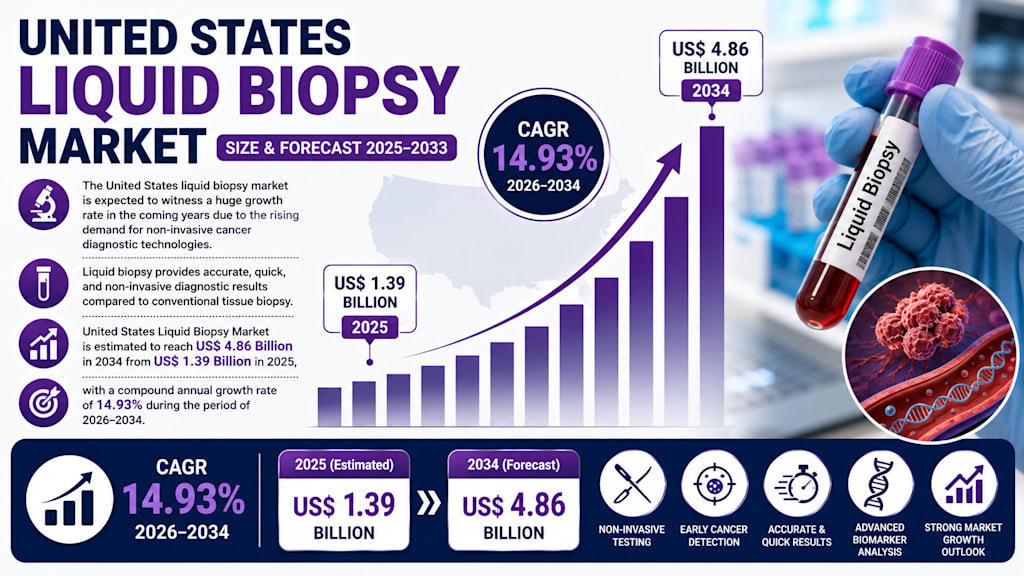
According to Renub Research, the United States Liquid Biopsy Market is projected to grow from US$ 1.39 billion in 2025 to US$ 4.86 billion by 2034, registering a compound annual growth rate (CAGR) of 14.93% between 2026 and 2034. Growth is being fueled by increasing cancer prevalence, advances in genomic technologies, and the rising adoption of precision medicine across healthcare systems.
As healthcare shifts toward personalized treatment strategies and minimally invasive diagnostics, liquid biopsy is emerging as one of the most important innovations in modern oncology.
Understanding Liquid Biopsy Technology
Liquid biopsy is a diagnostic technique that identifies disease-related biomarkers circulating in bodily fluids, particularly blood. These biomarkers may include circulating tumor DNA (ctDNA), circulating tumor cells (CTCs), extracellular vesicles, and other molecular indicators associated with disease.
Unlike traditional tissue biopsies, which require the removal of tissue samples through invasive procedures, liquid biopsy only requires a blood sample. This makes the process safer, more convenient, and easier to repeat over time.
Healthcare providers use liquid biopsy to detect cancer, monitor treatment effectiveness, identify genetic mutations, assess recurrence risk, and guide personalized treatment decisions.
Its ability to provide real-time insights into disease progression has made it an increasingly valuable tool in precision medicine.
Rising Cancer Cases Continue to Drive Market Growth
One of the strongest growth drivers for the U.S. liquid biopsy market is the increasing prevalence of cancer.
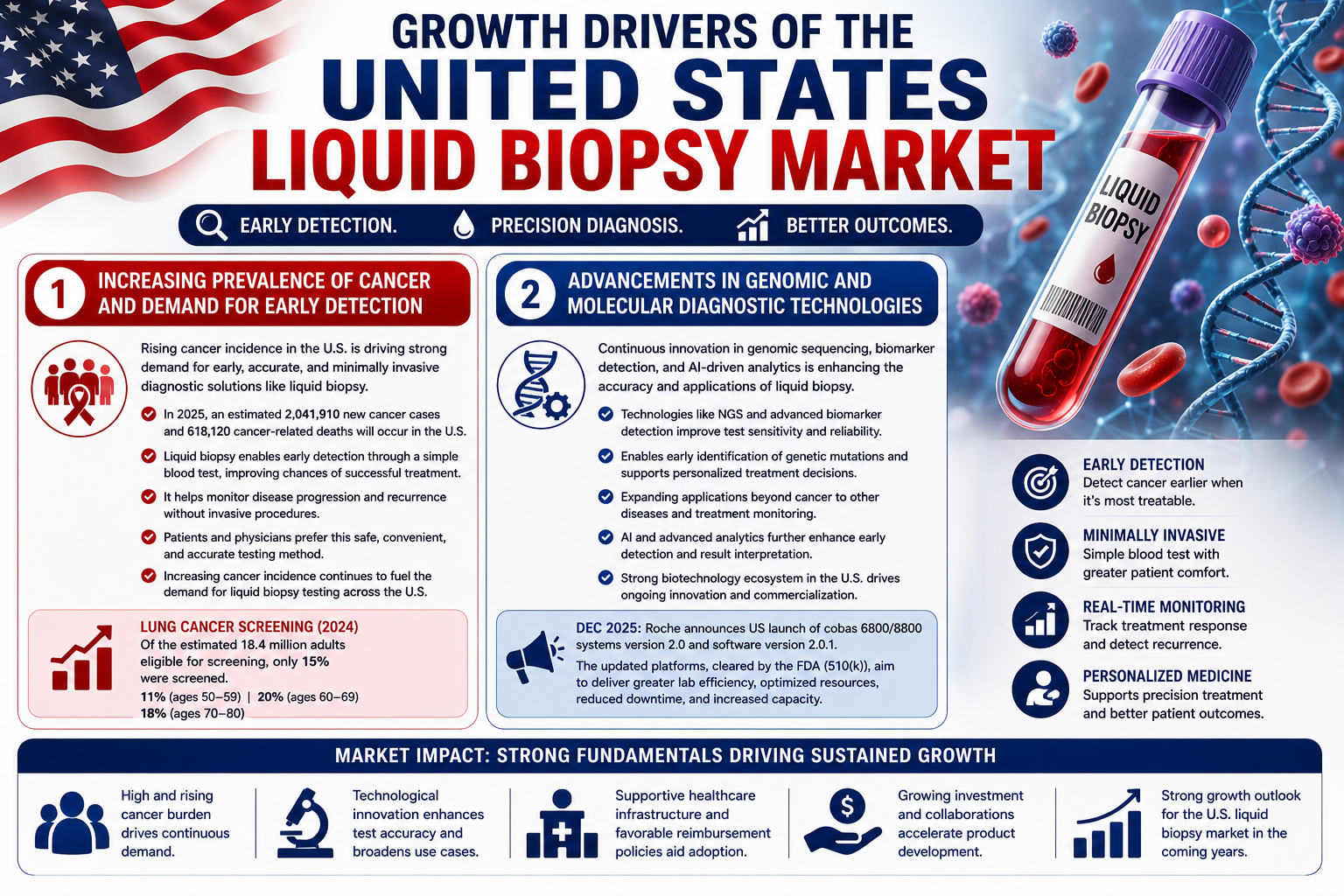
According to estimates highlighted in the report, the United States is expected to record approximately 2,041,910 new cancer cases and 618,120 cancer-related deaths in 2025. These figures underscore the urgent need for earlier diagnosis and more effective disease management strategies.
Early detection significantly improves treatment outcomes and survival rates for many forms of cancer. Liquid biopsy enables physicians to identify cancer-related biomarkers before symptoms become severe, helping facilitate earlier intervention.
The technology also allows repeated testing without requiring invasive procedures, making it particularly useful for monitoring disease progression and recurrence.
As cancer incidence continues rising nationwide, demand for advanced diagnostic technologies such as liquid biopsy is expected to increase substantially.
Early Detection Is Becoming a Healthcare Priority
Healthcare providers increasingly recognize that early detection remains one of the most effective ways to improve cancer outcomes.
Liquid biopsy supports this objective by providing rapid access to molecular information that may reveal cancer at earlier stages than traditional diagnostic approaches. The ability to perform testing through a simple blood draw makes screening more accessible and less burdensome for patients.
The report notes that approximately 15% of the estimated 18.4 million adults eligible for lung cancer screening underwent screening in 2024, highlighting both growing awareness and significant opportunities for expanding early detection initiatives.
As healthcare systems continue prioritizing preventive care and cancer screening, liquid biopsy is expected to play an increasingly important role in early diagnosis programs.
Advances in Genomic Technologies Are Enhancing Accuracy
Rapid progress in genomic sequencing and molecular diagnostics is significantly improving the performance of liquid biopsy technologies.
Techniques such as next-generation sequencing (NGS) enable healthcare providers to identify genetic mutations and molecular alterations with remarkable precision. These capabilities support both cancer detection and the selection of targeted therapies tailored to individual patient profiles.
Advances in biomarker detection are also improving sensitivity, allowing clinicians to identify disease-related signals even when they are present in extremely small quantities.
Artificial intelligence and advanced data analytics further strengthen diagnostic accuracy by helping researchers interpret complex genomic information more efficiently.
The report highlights Roche's launch of updated cobas 6800 and 8800 molecular diagnostic systems designed to improve laboratory efficiency and testing capacity, demonstrating continued innovation within the sector.
These technological advancements are expected to remain key drivers of market growth.
Personalized Medicine Is Expanding Clinical Applications
The growing adoption of personalized medicine is creating substantial opportunities for liquid biopsy technologies.
Precision medicine seeks to tailor treatments based on an individual's genetic characteristics, disease profile, and biological markers. Liquid biopsy plays a central role in this approach by identifying mutations and biomarkers that influence treatment selection.
By understanding the genetic makeup of a patient's cancer, physicians can choose therapies that are more likely to be effective while minimizing unnecessary side effects.
Pharmaceutical companies increasingly rely on liquid biopsy data to support targeted therapy development and patient stratification.
The report highlights Labcorp's expansion of its precision oncology portfolio, including solutions designed to assess recurrence risk and identify patients who may benefit from targeted therapies.
As personalized healthcare continues expanding, liquid biopsy is expected to become an increasingly important clinical tool.
Lung Cancer Applications Lead Market Demand
The lung cancer segment represents one of the most important applications within the U.S. liquid biopsy market.
Lung cancer remains one of the leading causes of cancer-related mortality in the country, making early detection and treatment optimization critical priorities. Liquid biopsy offers significant advantages because it enables clinicians to identify genetic mutations through blood samples rather than invasive tissue collection procedures.
This approach is particularly valuable for patients who may not be suitable candidates for traditional biopsies.
Liquid biopsy also supports ongoing monitoring of disease progression and treatment response throughout the patient's care journey.
As awareness of precision oncology grows, demand for liquid biopsy in lung cancer management is expected to remain strong.
Kits and Reagents Support Expanding Diagnostic Activity
The liquid biopsy kits and reagents segment continues to experience substantial growth.
These products are essential for collecting, processing, and analyzing biological samples to detect circulating tumor DNA, tumor cells, and other disease-related biomarkers. Biotechnology companies, research institutions, and diagnostic laboratories rely on high-quality kits and reagents to ensure accurate and reproducible test results.
Continued innovation in molecular diagnostics is improving product performance while supporting broader adoption of liquid biopsy testing.
As demand for precision medicine and cancer diagnostics increases, this segment is expected to remain a major contributor to overall market growth.
Patient Monitoring Applications Are Expanding
Liquid biopsy has become an increasingly valuable tool for patient monitoring.
Healthcare providers use repeated testing to evaluate treatment effectiveness, track disease progression, and detect cancer recurrence. Because liquid biopsy requires only a simple blood sample, monitoring can be performed more frequently than traditional tissue biopsies.
This capability is particularly important in managing advanced and metastatic cancers where treatment strategies often require continuous adjustment.
The growing emphasis on personalized treatment pathways is further supporting adoption within patient monitoring applications.
As cancer care becomes increasingly data-driven, liquid biopsy is expected to play an even greater role in long-term disease management.
Circulating Tumor DNA Remains a Key Biomarker
Circulating tumor DNA (ctDNA) represents one of the most significant biomarker categories within the liquid biopsy market.
These DNA fragments are released into the bloodstream by cancer cells and contain valuable genetic information about tumors and disease progression. By analyzing ctDNA, healthcare providers can detect cancer, identify mutations, monitor treatment response, and evaluate recurrence risk.
The rapid advancement of next-generation sequencing technologies has significantly enhanced ctDNA detection capabilities.
Research institutions and biotechnology companies continue investing heavily in ctDNA-based diagnostic solutions as they seek to expand precision medicine applications.
Its clinical value continues making ctDNA one of the most important components of liquid biopsy testing.
Hospitals Remain the Largest End Users
Hospitals represent the largest end-user segment within the U.S. liquid biopsy market.
These institutions perform a substantial portion of cancer diagnosis, treatment planning, and patient monitoring activities. Hospitals benefit from advanced laboratory infrastructure, specialized oncology departments, and access to highly trained healthcare professionals.
Many healthcare systems are integrating liquid biopsy into routine cancer care pathways to improve patient experiences and diagnostic efficiency.
Collaborations between hospitals, biotechnology companies, and research institutions are further accelerating innovation and adoption.
As healthcare providers continue embracing precision medicine, hospitals are expected to remain central to market growth.
Regional Markets Continue Expanding
California
California remains one of the most influential liquid biopsy markets in the United States.
The state's strong biotechnology ecosystem, world-class research institutions, and extensive healthcare infrastructure create favorable conditions for innovation and adoption. High cancer prevalence and growing awareness of early detection continue supporting market expansion.
New York
New York benefits from advanced healthcare facilities, leading cancer treatment centers, and significant investments in medical research.
Healthcare providers increasingly utilize liquid biopsy to improve diagnostic accuracy and support precision medicine initiatives.
New Jersey
New Jersey's strong pharmaceutical and biotechnology sectors contribute significantly to market development.
Partnerships between healthcare providers and life sciences companies continue supporting innovation in liquid biopsy technologies and clinical applications.
Washington
Washington continues experiencing growth due to increasing acceptance of advanced diagnostics, strong research capabilities, and growing interest in personalized healthcare.
Healthcare providers increasingly recognize the advantages of liquid biopsy in cancer management and patient monitoring.
Challenges Continue to Affect Market Adoption
Despite its significant potential, the liquid biopsy market faces several challenges.
One major concern is the relatively high cost of testing. Advanced genomic sequencing technologies and specialized laboratory infrastructure contribute to elevated expenses that may limit accessibility for some patients. Insurance coverage and reimbursement policies continue evolving but remain inconsistent across healthcare systems.
Regulatory and clinical validation requirements also present challenges. Diagnostic tests must undergo extensive evaluation to demonstrate safety, reliability, and clinical effectiveness before receiving regulatory approval.
Manufacturers must invest heavily in research, clinical studies, and validation efforts to meet these requirements.
Addressing these barriers will be essential for achieving broader adoption.
Leading Companies Driving Innovation
The U.S. liquid biopsy market includes several prominent biotechnology, diagnostics, and life sciences organizations focused on advancing molecular diagnostics and precision medicine.
Key companies highlighted in the report include Thermo Fisher Scientific Inc., Roche Diagnostics, Bio-Rad Laboratories Inc., Biocept Inc., Biocartis, Myriad Genetics Inc., Exact Sciences, NeoGenomics Laboratories, and Quest Diagnostics Inc. These companies continue investing in genomic technologies, biomarker research, and advanced diagnostic platforms.
Their innovations are helping shape the future of cancer diagnosis and personalized healthcare.
Final Thoughts
The United States liquid biopsy market is entering a period of rapid growth driven by rising cancer incidence, technological innovation, and increasing adoption of precision medicine.
With the market projected to expand from US$ 1.39 billion in 2025 to US$ 4.86 billion by 2034, liquid biopsy is becoming one of the most transformative diagnostic technologies in modern healthcare. Its ability to provide accurate, non-invasive, and repeatable testing is creating significant value for patients, physicians, and healthcare systems alike.
About the Creator
Enjoyed the story? Support the Creator.
Subscribe for free to receive all their stories in your feed.
Comments
There are no comments for this story
Be the first to respond and start the conversation.