
United States Endoscope Cleaning Timers Market Set for Strong Growth as Infection Control Standards Tighten
Rising endoscopic procedures, stricter FDA compliance rules, and advanced automated cleaning systems are driving the U.S. Endoscope Cleaning Timers Market toward significant expansion through 2033.

The healthcare sector in the United States is witnessing a rapid transformation driven by patient safety concerns, technological innovation, and stricter regulatory requirements. One niche yet increasingly critical segment benefiting from these developments is the endoscope cleaning timers market.
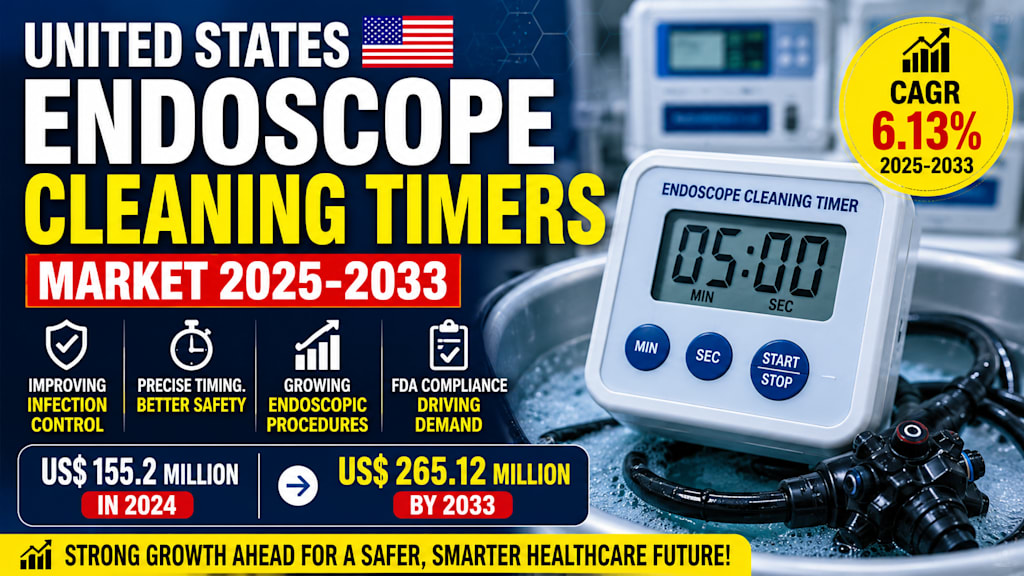
According to recent market analysis by Renub Research, the United States Endoscope Cleaning Timers Market is projected to grow from US$ 155.2 million in 2024 to US$ 265.12 million by 2033, expanding at a CAGR of 6.13% during the forecast period from 2025 to 2033.
The rise in minimally invasive procedures, growing awareness regarding infection prevention, and stronger government regulations surrounding reusable medical devices are collectively fueling market growth.
Why Endoscope Cleaning Timers Matter More Than Ever
Endoscopes are widely used in hospitals and surgical centers for procedures involving the digestive tract, respiratory system, and other internal organs. Since these devices are reused repeatedly, proper cleaning and sterilization are essential to avoid cross-contamination and healthcare-associated infections.
This is where endoscope cleaning timers play a major role.
Cleaning timers help medical staff accurately monitor every stage of the cleaning and disinfection process, ensuring that endoscopes remain exposed to cleaning agents for the manufacturer-recommended duration. These devices help reduce human error while maintaining strict compliance with healthcare safety standards.
In today’s healthcare environment, even a small lapse in sterilization can lead to severe consequences for both patients and healthcare providers. As a result, hospitals are investing more heavily in automated and intelligent timer systems designed specifically for endoscope reprocessing.
Growing Number of Endoscopic Procedures Accelerating Demand
One of the biggest drivers behind market growth is the increasing number of endoscopic procedures across the United States.
The aging population, rising prevalence of gastrointestinal diseases, colorectal cancer screenings, and demand for minimally invasive diagnostics are all contributing to higher procedure volumes. Endoscopy has become a preferred medical approach because it minimizes recovery time, reduces hospital stays, and improves diagnostic accuracy.
However, increased procedure volumes also mean healthcare facilities must clean and sterilize more endoscopes every day.
Manual cleaning systems alone are no longer sufficient in high-volume healthcare environments. Hospitals and clinics now require highly reliable timing systems that can standardize workflows, maintain cleaning accuracy, and support staff efficiency.
As procedure counts continue rising, the need for dependable cleaning timer systems is expected to increase steadily over the next decade.
FDA Regulations and Infection Control Policies Fueling Market Expansion
Regulatory pressure is another major growth catalyst for the U.S. endoscope cleaning timers industry.
Organizations such as the U.S. Food and Drug Administration (FDA) and the Centers for Disease Control and Prevention (CDC) have introduced stringent guidelines for cleaning reusable medical instruments. Hospitals and surgical centers are now under immense pressure to maintain accurate documentation and ensure every step of the reprocessing cycle is completed properly.
Healthcare facilities that fail to comply with sterilization standards may face penalties, lawsuits, reputational damage, and increased infection risks.
As a result, healthcare providers are increasingly adopting automated timer systems that offer features such as:
Digital countdown monitoring
Automated alerts and alarms
Data recording and tracking
Integration with hospital management systems
Real-time cleaning verification
Audit-ready documentation
These technologies help facilities improve compliance while enhancing operational consistency.
The growing focus on infection prevention following global healthcare crises has further strengthened demand for advanced sterilization monitoring solutions.
Technological Advancements Transforming the Industry
Technology is rapidly reshaping the U.S. Endoscope Cleaning Timers Market.
Traditional manual timers are gradually being replaced by smart digital systems integrated with Automated Endoscope Reprocessors (AERs). These modern solutions reduce human intervention and improve overall process efficiency.
New-generation timer systems can now:
Synchronize with electronic medical records
Provide predictive maintenance alerts
Enable remote monitoring
Maintain automated cleaning logs
Improve workflow optimization
Reduce staff workload
Healthcare administrators increasingly prefer automated systems because they lower the likelihood of errors while improving accountability.
Advanced digitalization is also helping healthcare facilities streamline accreditation audits and internal quality control processes.
As hospitals continue modernizing their infrastructure, intelligent cleaning timer technologies are expected to become standard equipment across surgical centers and diagnostic facilities.
Rising Healthcare Spending Supporting Market Growth
The United States continues to spend more on healthcare infrastructure and patient safety technologies than most countries globally.
Both private and public healthcare institutions are increasing investments in infection control systems to improve patient outcomes and reduce long-term operational risks.
Outpatient surgical centers, ambulatory clinics, and specialized gastroenterology centers are expanding rapidly across the country. These facilities require efficient endoscope reprocessing systems capable of handling high patient volumes safely and consistently.
The combination of healthcare modernization and growing procedural demand is creating strong opportunities for endoscope cleaning timer manufacturers.
Challenges Facing the Market
Despite promising growth, the market still faces several operational challenges.
Staff Training and Compliance Issues
Even the most advanced timer systems require proper staff training. In busy hospital environments, improper use of cleaning timers can lead to missed sterilization steps or inaccurate cycle timing.
Healthcare facilities must continuously train staff to ensure adherence to safety protocols. High employee turnover rates can make maintaining consistent compliance difficult.
Without proper training, hospitals may still face infection risks despite investing in advanced technology.
Risk of Human Error Remains a Concern
Although automation reduces mistakes, some systems still rely partially on manual inputs and monitoring.
Incorrect timer settings, delayed activation, or overlooked cleaning cycles can compromise the disinfection process. In high-pressure healthcare environments, multitasking often increases the possibility of procedural mistakes.
This challenge is encouraging manufacturers to develop more intelligent systems with automated verification and reduced manual intervention.
California Emerging as a Major Market Hub
California remains one of the strongest regional markets for endoscope cleaning timers in the United States.
The state’s advanced healthcare infrastructure, strict regulatory environment, and high volume of outpatient procedures contribute significantly to demand growth.
Healthcare facilities across California are increasingly adopting digital timer systems equipped with real-time monitoring and electronic data recording capabilities.
The state’s early adoption of medical technology innovation also positions it as a leader in automated sterilization systems.
Texas Healthcare Expansion Driving Market Demand
Texas is another rapidly growing regional market.
The state’s expanding hospital network and increasing number of surgical facilities are creating strong demand for advanced endoscope reprocessing technologies.
Healthcare providers in Texas are focusing heavily on operational efficiency and patient safety, encouraging wider adoption of automated cleaning systems.
As minimally invasive procedures continue increasing throughout the state, the demand for dependable cleaning timer solutions is expected to rise substantially.
New York Strengthening Infection Control Infrastructure
New York’s large healthcare ecosystem makes it one of the most important contributors to the market.
Hospitals and outpatient centers across the state are under growing pressure to maintain strict infection prevention standards. As a result, healthcare providers are investing heavily in advanced sterilization monitoring equipment.
The rise in endoscopic procedures combined with evolving compliance requirements continues to support steady market growth throughout New York.
Major Industry Development: FDA Clears Nanosonics CORIS System
One of the most notable industry developments occurred in March 2025 when the U.S. FDA granted de novo clearance to Nanosonics’ CORIS automated endoscope cleaning system.
The approval represented a major advancement in flexible endoscope reprocessing technology, particularly for colonoscopy-related procedures.
The CORIS system was initially approved for use with Olympus Evis Exera III video endoscopes, and the company plans to expand coverage to additional flexible endoscope categories in the future.
This development reflects the growing industry shift toward automated, intelligent, and highly standardized sterilization solutions.
Top Companies Operating in the Market
Several leading medical technology and healthcare solution providers are actively competing in the U.S. Endoscope Cleaning Timers Market, including:
Boston Scientific
Steris plc
Ecolab Inc
Health Mark Industries
Medline Industries, LP
Optum, Inc
Cantel Medical
Stericool Technologies
These companies continue investing in innovation, automation, and regulatory compliance technologies to strengthen their market presence.
10 Recent Developments by Leading Companies
1. Boston Scientific Expanded Endoscopy Product Integration
Boston Scientific continued improving compatibility between endoscopy devices and advanced reprocessing systems to enhance procedural safety.
2. Steris plc Increased Automation Investments
Steris expanded its automated sterilization and reprocessing solutions portfolio to support hospital workflow optimization.
3. Ecolab Introduced Enhanced Infection Prevention Solutions
Ecolab strengthened its healthcare hygiene offerings with upgraded disinfection monitoring technologies.
4. Health Mark Industries Focused on Staff Training Tools
The company launched improved educational solutions for healthcare workers involved in endoscope reprocessing.
5. Medline Industries Expanded Hospital Supply Distribution
Medline increased its supply chain capabilities for infection prevention and sterilization products nationwide.
6. Optum Advanced Digital Healthcare Integration
Optum expanded healthcare data integration capabilities supporting operational efficiency and compliance monitoring.
7. Cantel Medical Enhanced Reprocessing Technologies
Cantel continued improving automated cleaning systems aimed at reducing human error during endoscope sterilization.
8. Stericool Technologies Introduced Smart Monitoring Features
The company added real-time digital tracking and alert functions to its sterilization monitoring solutions.
9. Nanosonics Received FDA Clearance for CORIS System
The FDA approval of CORIS marked a major milestone in automated endoscope cleaning technology.
10. Healthcare Facilities Increased Adoption of Smart Timers
Hospitals across the United States accelerated investments in intelligent timer systems to improve infection control protocols.
Final Thoughts
The United States Endoscope Cleaning Timers Market is becoming an increasingly important segment within the broader healthcare technology industry.
As hospitals prioritize patient safety, infection prevention, and operational accuracy, demand for intelligent sterilization monitoring systems is expected to rise steadily.
Technological innovation, regulatory pressure, and the growing popularity of minimally invasive procedures are collectively reshaping the market landscape.
With healthcare facilities continuing to modernize reprocessing workflows, automated endoscope cleaning timers are likely to become essential components of future-ready medical environments.
The industry’s projected growth to US$ 265.12 million by 2033 reflects not only rising demand but also the healthcare sector’s broader commitment to safety, precision, and advanced patient care.
About the Creator
Enjoyed the story? Support the Creator.
Subscribe for free to receive all their stories in your feed.
Comments
There are no comments for this story
Be the first to respond and start the conversation.