
United States Electric Vehicle Market Accelerates Toward a Sustainable Future as Adoption Reaches New Heights
Government incentives, expanding charging infrastructure, and rapid technological advancements are transforming electric vehicles from an emerging trend into a mainstream transportation solution across America.

The automotive industry in the United States is experiencing one of the most significant transformations in its history. For more than a century, gasoline-powered vehicles dominated roads across the country. Today, however, a new era of transportation is rapidly taking shape as electric vehicles (EVs) move from niche products to mainstream mobility solutions.
Driven by environmental concerns, rising fuel prices, technological innovation, and strong government support, electric vehicles are reshaping how Americans think about transportation. What was once viewed as a futuristic concept has become a practical reality for millions of consumers seeking cleaner, more efficient, and technologically advanced alternatives to traditional vehicles.
The momentum behind electric vehicles is no longer limited to environmentally conscious buyers. Families, businesses, fleet operators, and government agencies are increasingly embracing EVs for their economic benefits, lower maintenance costs, and impressive technological capabilities.
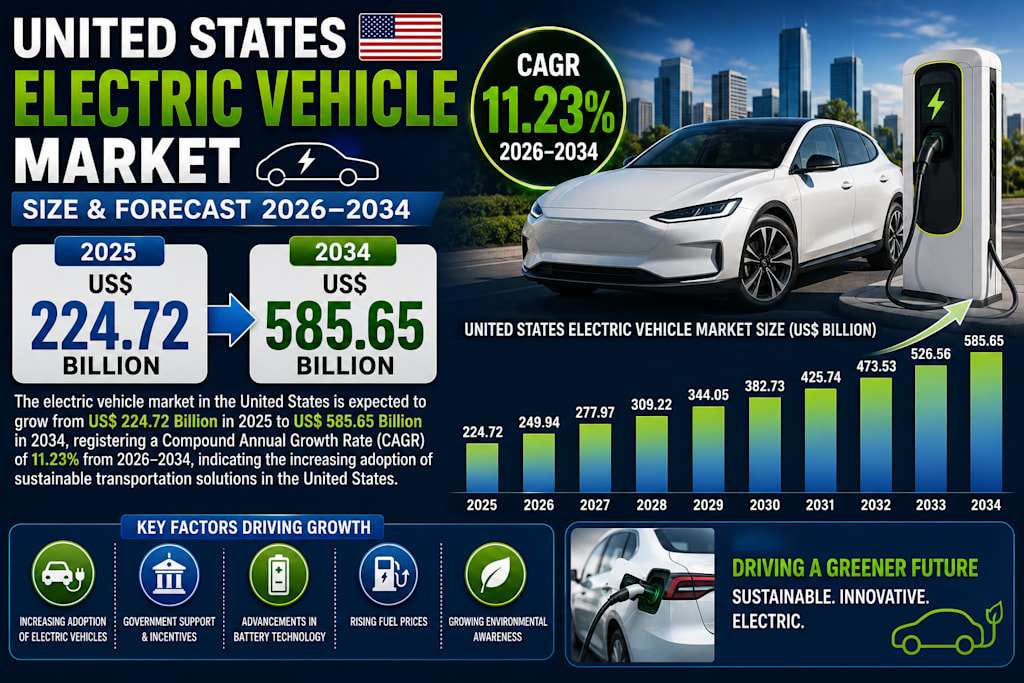
According to Renub Research, the United States Electric Vehicle Market is projected to grow from US$224.72 billion in 2025 to US$585.65 billion by 2034, registering a remarkable compound annual growth rate (CAGR) of 11.23% between 2026 and 2034. This strong growth reflects the nation's accelerating shift toward sustainable transportation and clean energy solutions.
Electric Vehicles Are Changing the Automotive Landscape
Electric vehicles differ fundamentally from traditional gasoline-powered automobiles.
Instead of relying on internal combustion engines, EVs use electric motors powered by rechargeable battery systems. This design significantly reduces tailpipe emissions while offering quieter operation, smoother driving experiences, and lower operating costs.
The market consists primarily of three categories:
Battery Electric Vehicles (BEVs), which operate entirely on electricity.
Plug-in Hybrid Electric Vehicles (PHEVs), which combine electric power with gasoline engines.
Hybrid Electric Vehicles (HEVs), which utilize both technologies to improve efficiency.
Among these categories, battery electric vehicles have emerged as the dominant force driving industry growth.
Consumers are increasingly attracted to EVs because they offer not only environmental benefits but also advanced technology, improved performance, and long-term cost savings.
As awareness continues to grow, electric vehicles are becoming a central component of America's transportation future.
Government Support Remains a Powerful Growth Driver
One of the strongest factors supporting EV adoption in the United States is government support.
Federal, state, and local governments have implemented a wide range of programs designed to encourage electric vehicle purchases and accelerate infrastructure development.
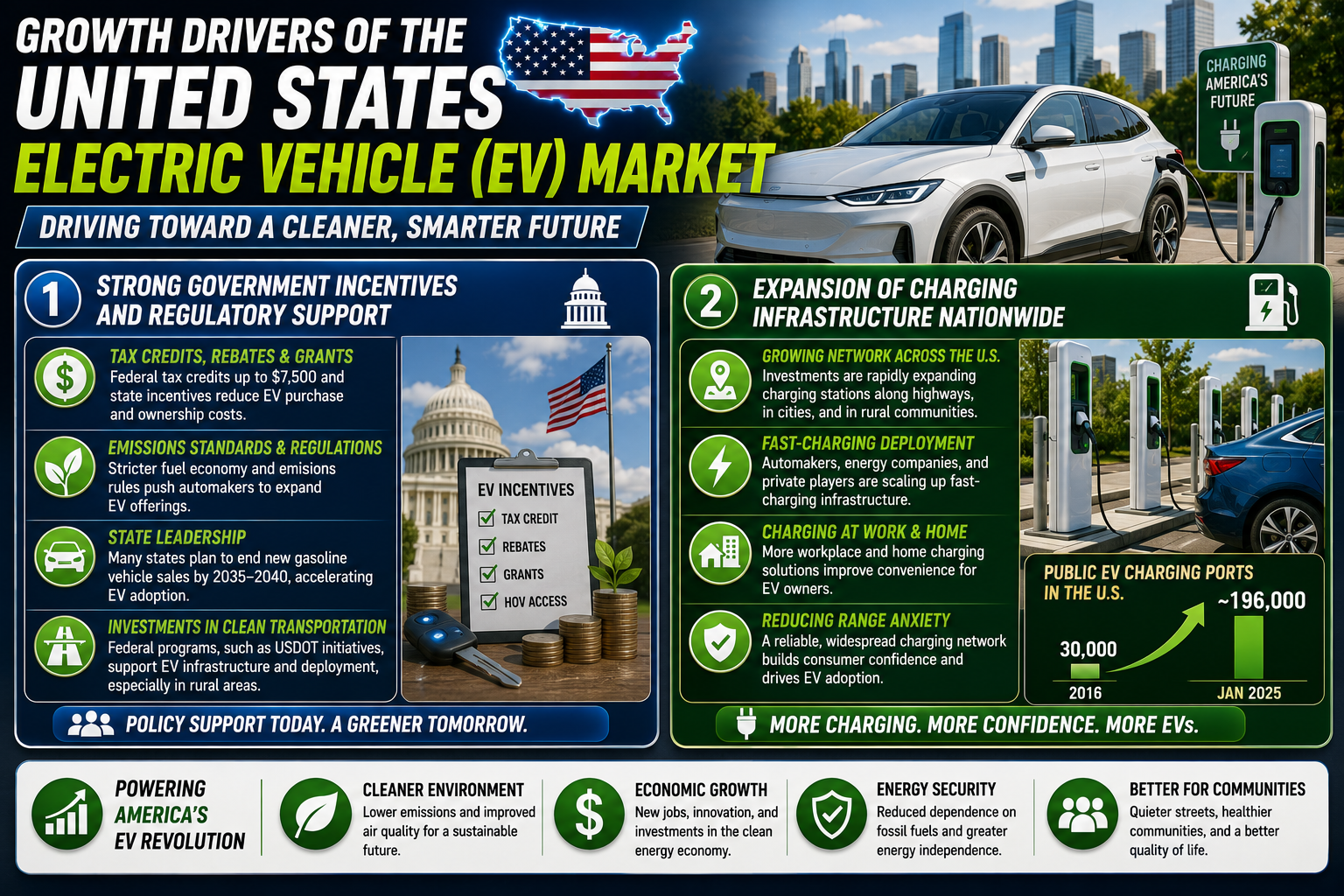
Tax credits, rebates, grants, and other financial incentives help reduce the upfront cost of EV ownership, making electric vehicles more accessible to consumers.
In addition to direct financial support, many states offer benefits such as access to high-occupancy vehicle lanes, reduced registration fees, and preferential parking programs.
Regulatory policies aimed at reducing greenhouse gas emissions have also encouraged automakers to expand their electric vehicle offerings.
Several states have announced long-term plans to phase out the sale of new gasoline-powered vehicles, creating additional momentum for EV adoption.
These policy initiatives continue to play a critical role in accelerating market growth across the country.
Charging Infrastructure Expansion Is Building Consumer Confidence
One of the biggest concerns historically associated with electric vehicles has been charging accessibility.
Consumers often worried about whether they would be able to conveniently recharge their vehicles, particularly during long-distance travel.
Today, that concern is steadily diminishing.
Public and private investments in charging infrastructure have expanded rapidly across the United States. Charging stations are increasingly available in cities, suburban communities, workplaces, shopping centers, apartment complexes, and along major transportation corridors.
The growth of fast-charging networks has been especially important. Modern fast chargers can significantly reduce charging times, making electric vehicles more practical for daily use and extended road trips.
The number of public EV charging ports in the United States has grown dramatically over the past decade, reflecting strong commitment from both government agencies and private-sector companies. This expanding infrastructure is helping reduce range anxiety and encouraging broader consumer adoption.
Battery Technology Continues to Improve
Technological innovation remains one of the most important forces shaping the EV industry.
Battery technology has advanced rapidly in recent years, improving vehicle range, charging speed, durability, and overall performance.
Modern electric vehicles can travel significantly farther on a single charge than earlier generations, making them practical for a wider range of driving needs.
At the same time, battery costs have declined substantially, helping manufacturers reduce production expenses and improve affordability.
Research and development efforts continue focusing on next-generation battery technologies that offer greater energy density, faster charging, and enhanced safety.
As battery technology evolves further, electric vehicles are expected to become increasingly competitive with conventional gasoline-powered automobiles.
Automakers Are Expanding Their EV Portfolios
The automotive industry has embraced electrification at an unprecedented pace.
Major manufacturers are investing billions of dollars in electric vehicle development, battery production facilities, and supply chain expansion.
Consumers now have access to a broader selection of EVs than ever before, spanning multiple vehicle categories and price points.
Electric sedans, SUVs, pickup trucks, luxury vehicles, and commercial fleets are becoming increasingly common across the marketplace.
This diversity of options allows consumers to find vehicles that align with their specific needs, preferences, and budgets.
As competition intensifies among automakers, innovation is accelerating, creating additional benefits for consumers through improved performance, technology, and affordability.
Battery Electric Vehicles Lead Market Growth
Among all electric vehicle categories, battery electric vehicles (BEVs) are emerging as the primary growth engine.
BEVs operate exclusively on electricity and produce zero tailpipe emissions. They also offer lower maintenance requirements because they contain fewer moving parts than traditional internal combustion vehicles.
Consumers are increasingly choosing BEVs due to their environmental benefits, lower operating costs, and technological sophistication.
Automakers continue introducing new BEV models across multiple segments, from compact cars and family SUVs to high-performance sports cars and work trucks.
Advances in charging technology and battery efficiency are further strengthening the appeal of fully electric transportation.
As regulatory pressure to reduce carbon emissions increases, BEVs are expected to capture a growing share of the U.S. automotive market.
Mid-Range EVs Are Becoming the Sweet Spot
One of the most popular segments within the electric vehicle market is the 151–300-mile range category.
These vehicles provide an effective balance between affordability, practicality, and performance.
For many consumers, this range is more than sufficient for daily commuting, errands, weekend travel, and occasional road trips.
Manufacturers have focused heavily on this segment because it appeals to mainstream buyers while avoiding the higher costs associated with ultra-long-range battery systems.
The continued expansion of charging infrastructure further enhances the attractiveness of mid-range electric vehicles.
As battery technology improves, vehicles within this category are expected to become even more competitive.
Mid-Priced EVs Are Driving Mass Adoption
Affordability remains a critical factor influencing EV adoption.
The mid-priced electric vehicle segment has become particularly important because it targets mainstream consumers rather than luxury buyers.
Advances in battery manufacturing, economies of scale, and government incentives have helped reduce costs, allowing automakers to introduce more affordable models.
Today's mid-priced EVs often feature advanced infotainment systems, driver assistance technologies, connected services, and impressive driving ranges.
As consumer confidence in electric vehicle reliability continues to grow, this segment is expected to play a central role in expanding market penetration.
The success of mid-priced EVs could ultimately determine how quickly electric transportation becomes the dominant form of personal mobility.
Electric Two-Wheelers Gain Momentum
While passenger cars receive the most attention, electric two-wheelers are emerging as a growing segment of the U.S. market.
E-bikes, electric scooters, and other two-wheeled vehicles offer efficient and affordable transportation solutions, particularly in urban environments.
Consumers increasingly view these vehicles as practical options for short-distance commuting, recreational use, and last-mile transportation.
Rising fuel costs, traffic congestion, and sustainability concerns are contributing to increased adoption.
As cities continue promoting alternative transportation methods, electric two-wheelers are expected to gain additional market share.
California Continues to Lead the Nation
California remains the largest and most advanced electric vehicle market in the United States.
The state's aggressive climate policies, extensive charging infrastructure, and strong consumer interest in sustainability have made it a leader in EV adoption.
California's zero-emission vehicle mandates and long-term plans to phase out gasoline-powered vehicle sales have created a favorable environment for electric transportation.
The presence of major EV manufacturers, technology companies, and battery innovators further strengthens the state's leadership position.
High fuel prices and heavy traffic congestion also encourage consumers to consider electric alternatives.
As a result, California continues to serve as a model for EV adoption nationwide.
New York Expands Clean Transportation Initiatives
New York has emerged as another major EV growth market.
State-level policies aimed at reducing emissions and promoting clean transportation have supported increasing adoption rates.
Public charging infrastructure investments, fleet electrification programs, and incentives for consumers are helping accelerate the transition.
Urban areas such as New York City benefit particularly from electric vehicles due to shorter commuting distances and growing interest in sustainable mobility solutions.
The state's commitment to climate goals ensures that EV adoption will remain a strategic priority.
Washington and Arizona Show Strong Potential
Washington State benefits from strong environmental awareness and abundant renewable energy resources, making electric vehicles especially attractive to consumers.
Meanwhile, Arizona is experiencing rapid growth as expanding charging infrastructure and population growth increase demand for alternative transportation options.
Both states demonstrate how regional factors such as energy resources, policy support, and demographic trends can influence EV adoption.
These emerging markets are expected to contribute significantly to overall industry growth during the forecast period.
Challenges Still Remain
Despite strong momentum, several challenges continue to affect the EV industry.
One of the most significant concerns is affordability. Although electric vehicle prices are declining, many models still carry higher upfront costs compared to gasoline-powered alternatives.
Consumers often focus on purchase price rather than long-term savings associated with lower fuel and maintenance expenses.
Supply chain issues also present challenges. Battery production depends on critical minerals such as lithium, cobalt, and nickel, which can be subject to geopolitical risks and price fluctuations.
Additionally, the electrical grid must evolve to support increasing electricity demand as EV adoption accelerates.
Addressing these challenges will require continued investment, innovation, and collaboration across industries.
The Future of Transportation Is Electric
The electric vehicle industry has moved beyond its early adoption phase and is rapidly entering the mainstream.
Technological improvements, supportive government policies, expanding infrastructure, and growing environmental awareness are creating favorable conditions for sustained growth.
Consumers increasingly recognize that electric vehicles offer more than environmental benefits—they provide compelling performance, lower operating costs, and advanced technological features.
As battery technology improves and charging infrastructure becomes even more widespread, barriers to adoption are expected to diminish further.
Final Thoughts
The United States electric vehicle market is entering a transformative decade that could redefine the future of transportation.
With strong government support, accelerating technological innovation, expanding charging infrastructure, and growing consumer acceptance, electric vehicles are becoming a practical and attractive option for millions of Americans.
The market's projected growth from US$224.72 billion in 2025 to US$585.65 billion by 2034 highlights the scale of opportunity ahead for automakers, technology providers, infrastructure developers, and investors.
While challenges related to affordability, supply chains, and grid readiness remain, the long-term outlook remains exceptionally positive.
As the nation continues moving toward cleaner, more sustainable transportation solutions, electric vehicles are poised to become one of the defining technologies of the modern era.
About the Creator
Enjoyed the story? Support the Creator.
Subscribe for free to receive all their stories in your feed.
Comments
There are no comments for this story
Be the first to respond and start the conversation.