
United States Bottled Water Market Set to Reach US$79.20 Billion by 2034 as Consumers Prioritize Health and Convenience
Health-conscious lifestyles, premium hydration trends, and sustainable packaging innovations continue reshaping America’s bottled water industry

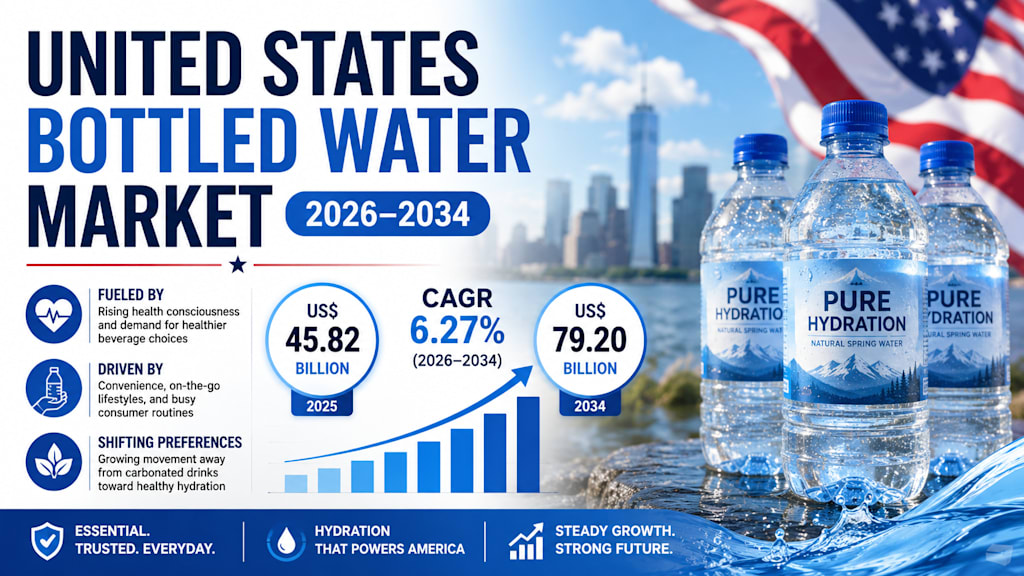
The United States bottled water industry is entering a new phase of accelerated transformation as consumers increasingly replace sugary beverages with healthier hydration options. According to Renub Research, the U.S. bottled water market is projected to rise from US$45.82 billion in 2025 to US$79.20 billion by 2034, expanding at a CAGR of 6.27% during 2026–2034.
What was once considered a convenience product has now evolved into a lifestyle-driven essential. From gym-goers and office workers to travelers and health-conscious families, bottled water has become deeply integrated into daily American life. The industry’s growth reflects broader changes in consumer behavior, including rising awareness around wellness, increasing urban lifestyles, and stronger demand for portable, clean, and functional beverages.
At the same time, manufacturers are navigating significant challenges related to environmental sustainability, plastic waste reduction, and growing competition from filtration systems and reusable hydration solutions. Yet despite these pressures, the market continues to demonstrate remarkable resilience and adaptability.
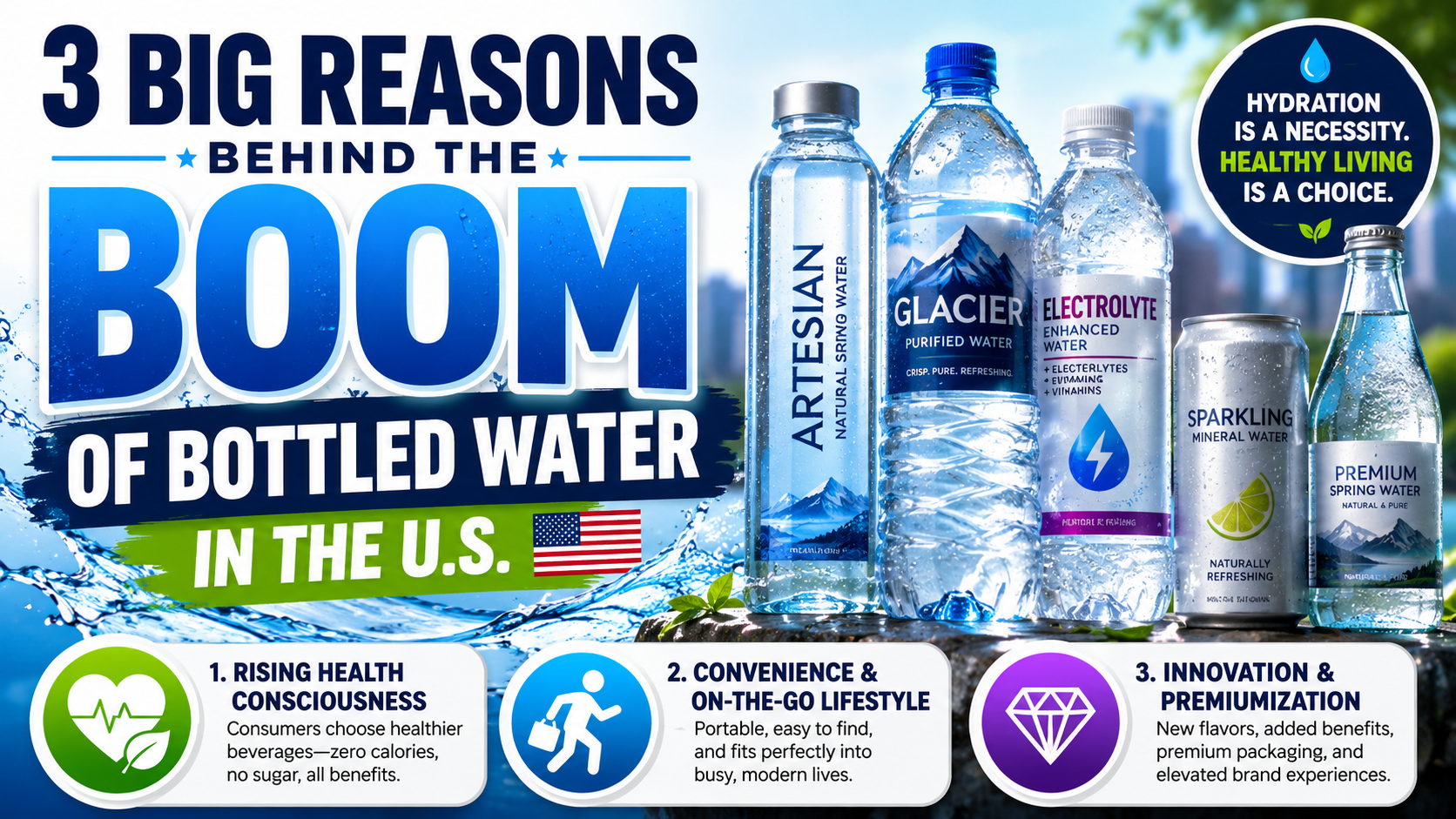
Why Americans Are Drinking More Bottled Water Than Ever
Consumer habits in the United States have changed dramatically over the past decade. Sugary sodas and calorie-heavy drinks are steadily losing ground to healthier alternatives, with bottled water emerging as the preferred everyday beverage.
The rise in obesity, diabetes, and cardiovascular concerns has encouraged millions of Americans to rethink what they consume. Bottled water, being calorie-free and widely accessible, naturally fits into the growing wellness culture.
This shift is particularly visible among millennials and Generation Z consumers, who are more likely to prioritize hydration, fitness, and ingredient transparency. Functional hydration products enhanced with vitamins, electrolytes, minerals, and antioxidants are also gaining strong traction in the market.
According to industry consumption trends, U.S. bottled water consumption increased steadily from 33.6 gallons per capita in 2014 to 47.3 gallons in 2024. The growth reflects not only increasing health awareness but also the convenience factor associated with packaged water products.
Americans increasingly consume bottled water during commuting, exercising, office work, and travel. Single-serve packaging, resealable bottles, and widespread retail availability have made bottled water one of the most convenient beverage options available today.
Premium Water Is No Longer a Niche Product
One of the most interesting developments in the market is the rise of premium and luxury bottled water categories.
Consumers are no longer purchasing water solely for hydration. They are increasingly influenced by product origin, mineral content, packaging design, sustainability claims, and lifestyle branding. Premium waters sourced from glaciers, natural springs, artesian wells, and imported mountain reserves are becoming symbols of status and wellness.
Manufacturers are responding with aggressive product innovation strategies. Enhanced waters with added nutrients, flavored hydration products, sparkling water varieties, and alkaline formulations are helping companies differentiate themselves in an increasingly competitive landscape.
Packaging innovation has also become central to brand positioning. Glass bottles, aluminum cans, and eco-friendly recycled PET containers are now widely used to attract environmentally conscious consumers seeking premium experiences.
Marketing campaigns increasingly emphasize purity, natural sourcing, sustainability, and health benefits rather than simple thirst quenching.
Sustainability Has Become the Industry’s Biggest Challenge
While demand continues rising, the bottled water industry faces mounting scrutiny over environmental concerns, especially plastic waste pollution.
Environmental advocacy groups and regulators continue pressuring companies to reduce their environmental footprint. Single-use plastic bottles remain one of the most debated aspects of the industry, leading to stricter recycling mandates and sustainability regulations across several states.
To address these concerns, companies are heavily investing in sustainable packaging technologies, including:
- Bottles made from 100% recycled PET materials
- Aluminum can packaging
- Biodegradable packaging alternatives
- Lightweight bottle designs to reduce plastic usage
- Improved recycling partnerships and collection systems
Many brands now market sustainability as a competitive advantage. Consumers, particularly younger demographics, increasingly evaluate brands based on their environmental commitments.
However, transitioning toward sustainable packaging remains expensive. Companies must balance environmental responsibility with profitability, particularly in a market where pricing competition remains intense.
Competition From Tap Water and Home Filtration Systems Is Rising
Another emerging challenge for bottled water brands comes from improving municipal water quality and advanced home filtration systems.
Consumers today have access to affordable water filters, refillable bottles, and public hydration stations, all of which reduce dependence on disposable bottled products.
As sustainability awareness rises, many consumers are questioning whether bottled water is necessary for daily consumption when filtered tap water is available at a significantly lower cost.
To remain competitive, bottled water companies are focusing on premiumization, purity assurance, mineral enhancement, convenience, and luxury branding. Rather than competing solely on hydration, brands are attempting to create differentiated lifestyle experiences around their products.
Spring Water and Purified Water Continue Leading the Market
Among product categories, purified water and spring water remain dominant within the United States bottled water market.
Natural spring water continues attracting consumers who associate it with purity, authenticity, and mineral-rich hydration. Manufacturers heavily market the natural origins of spring water to strengthen consumer trust and brand value.
Purified water, meanwhile, remains the largest mass-market category because of its affordability and consistent quality standards. Advanced purification technologies such as reverse osmosis and distillation have helped purified water brands maintain widespread consumer confidence.
Mineral water is also experiencing increased demand among affluent and health-conscious consumers seeking functional hydration benefits from naturally occurring minerals like magnesium and potassium.
Sparkling water and flavored hydration products are expected to witness additional growth as consumers continue moving away from sugary carbonated soft drinks.
Aluminum Cans Are Becoming a Serious Packaging Alternative
Packaging innovation is emerging as one of the most disruptive trends in the industry.
Although PET bottles still dominate the market because of their affordability and lightweight design, canned water is rapidly gaining momentum among eco-conscious consumers.
Aluminum cans offer several environmental advantages, including higher recyclability rates and reduced plastic waste generation. Premium canned water brands are positioning themselves as modern, sustainable alternatives to traditional bottled water products.
Several companies are also introducing visually attractive minimalist packaging designs aimed at younger urban consumers who value aesthetics and sustainability equally.
This trend signals that packaging itself is becoming part of the consumer experience rather than simply a container.
Convenience Stores and Grocery Retailers Continue Driving Sales
Distribution channels remain critical to the industry’s continued expansion.
Convenience stores play a major role in bottled water consumption, particularly among commuters, travelers, and urban consumers seeking quick hydration options. Single-serve bottled water products continue performing strongly in these retail environments.
Meanwhile, supermarkets and grocery stores dominate bulk and family-sized bottled water purchases. Consumers buying for home consumption often prefer multipack products available through large retail chains.
The rise of online grocery delivery platforms and subscription-based beverage services is further increasing accessibility. Consumers can now receive bottled water directly at their doorstep, reinforcing convenience as a major industry growth driver.
California, Texas, Florida, and New York Remain Key Regional Markets
Regional dynamics within the United States significantly influence bottled water demand patterns.
California
California remains one of the largest bottled water markets due to its strong wellness culture, premium consumer base, and sustainability-focused regulations. Demand for alkaline water, spring water, and eco-friendly packaging is especially high in the state.
Texas
Texas represents a major high-volume market driven by population growth, hot climate conditions, and widespread outdoor lifestyles. Bulk purified water products remain especially popular due to affordability and hydration needs.
New York
In New York, urban density and fast-paced lifestyles contribute to strong demand for convenient single-serve bottled water products. Premium imported water and functional hydration products are also increasingly popular among city consumers.
Florida
Florida’s year-round warm weather and massive tourism sector continue supporting steady bottled water consumption growth. Tourist-heavy retail environments further boost demand across convenience and hospitality channels.
Major Companies Intensify Competition Through Innovation
Competition within the bottled water industry remains fierce, with both multinational beverage giants and premium niche brands competing for market share.
Leading players covered in the market include:
- Nestlé
- The Coca-Cola Company
- PepsiCo
- Danone
- Primo Water Corporation
- FIJI Water Company LLC
- Gerolsteiner Brunnen GmbH & Co. KG
- VOSS WATER
- Nongfu Spring
Companies are investing heavily in sustainability, smart branding, premiumization, and functional beverage innovation to capture evolving consumer preferences.
Strategic partnerships with retailers, digital marketing campaigns, and direct-to-consumer subscription models are also becoming increasingly important competitive tools.
Final Thoughts
The United States bottled water market is no longer simply about convenience or hydration. It now sits at the intersection of health, sustainability, lifestyle branding, and consumer identity.
As Americans continue prioritizing wellness and reducing sugary beverage intake, bottled water demand is expected to maintain strong long-term momentum. Renub Research’s forecast of the market reaching US$79.20 billion by 2034 highlights the enormous commercial potential still ahead for the industry.
However, the future of the market will depend heavily on how effectively companies respond to environmental pressures and changing consumer expectations. Brands that successfully combine health-focused innovation with sustainable packaging solutions are likely to emerge as long-term winners.
About the Creator
Enjoyed the story? Support the Creator.
Subscribe for free to receive all their stories in your feed.
Comments
There are no comments for this story
Be the first to respond and start the conversation.