
Understanding Lab Vacuum Furnaces: Why Controlled Heating Matters in Modern Research
A closer look at how vacuum furnace technology supports precision, material quality, and laboratory innovation.

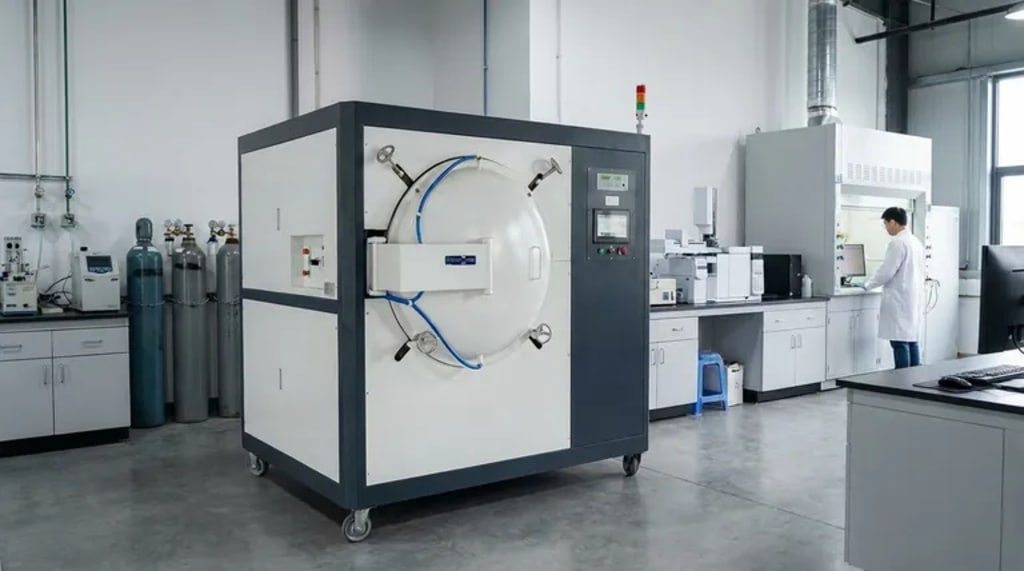
Scientific research often depends on controlling variables with extreme precision. Temperature, atmosphere, pressure, and contamination levels can all influence experimental outcomes. Among the specialized tools developed to manage these conditions, vacuum furnaces have become essential across materials science, metallurgy, ceramics, aerospace research, and advanced manufacturing.
A vacuum furnace is a heating system designed to process materials in a low-pressure or vacuum environment. Unlike conventional furnaces, these systems reduce or remove gases from the chamber during heating. This creates conditions that help prevent oxidation, contamination, and unwanted chemical reactions. The result is often improved consistency and higher-quality material processing.
According to the concept of a Vacuum furnace, operating under vacuum conditions allows materials to undergo thermal treatment while minimizing exposure to atmospheric elements.
What Makes Vacuum Conditions Important?
Many metals and advanced materials react with oxygen at high temperatures. Oxidation can weaken surfaces, alter chemical composition, or affect structural integrity. In research environments where precision matters, even small changes can influence results.
Vacuum processing addresses several challenges:
- Reduced oxidation during heating
- Lower contamination risk from atmospheric gases
- Improved purity in processed materials
- Better repeatability in experimental procedures
- Enhanced performance for sensitive alloys and engineered materials
Because of these benefits, vacuum technology has become increasingly relevant in laboratories exploring next-generation materials.
Common Applications in Research and Industry
Lab vacuum furnaces support a wide range of processes. Their role extends beyond academic laboratories into industrial sectors where material performance is critical.
Heat Treatment of Metals
Controlled heat treatment can alter hardness, strength, and durability. Vacuum environments help maintain material purity during annealing, tempering, brazing, and other thermal treatments.
Sintering Advanced Materials
Sintering involves compacting and heating powdered materials below their melting point to create solid structures. Specialized systems such as lab vacuum furnaces Manufacturer often support experimental sintering processes requiring strict atmospheric control.
Researchers working with ceramics, powder metallurgy, or composite materials frequently rely on sintering technologies to investigate performance characteristics.
Aerospace and High-Performance Components
Industries requiring exceptional reliability often process components under vacuum conditions. Aerospace materials, turbine parts, and specialty alloys benefit from reduced contamination during manufacturing.
Electronics and Semiconductor Research
Microelectronic components may require extremely clean processing environments. Vacuum heating technologies can support treatments where contamination would compromise performance.
The Relationship Between Sintering and Vacuum Processing
Sintering and vacuum technology frequently intersect. Some advanced materials perform better when processed under reduced pressure because impurities and oxidation are minimized.
Systems related to Vacuum Furnace technologies may be designed for controlled sintering environments, supporting investigations into material density, conductivity, and structural properties.
Researchers exploring novel alloys or engineered ceramics often evaluate how vacuum conditions influence final material characteristics.
Factors Researchers Consider When Choosing Furnace Systems
Selecting laboratory heating equipment depends on several variables rather than a single specification. Important considerations include:
Temperature Range
Different experiments require different maximum operating temperatures. High-temperature studies involving advanced alloys may demand specialized capabilities.
Vacuum Quality
The achievable vacuum level influences contamination control and processing conditions.
Chamber Size
Laboratory-scale experiments often prioritize flexibility, while industrial settings may require larger capacities.
Automation and Monitoring
Modern systems increasingly include digital controls for tracking temperature profiles and process parameters.
Material Compatibility
The furnace must support the specific materials being processed without introducing contamination.
These factors illustrate why equipment selection often depends on experimental goals rather than universal standards.
Emerging Trends in Laboratory Thermal Processing
Research environments continue evolving alongside advances in materials engineering. Growing interest in additive manufacturing, energy storage materials, and high-performance composites has increased demand for precise thermal processing technologies.
Automation, data integration, and improved environmental control are shaping future furnace design. Researchers seek systems capable of delivering reproducible results while supporting increasingly complex experiments.
Discussions around Custom Vacuum Furnace concepts also reflect broader interest in adapting furnace configurations to specialized scientific requirements.
Final Thoughts
Vacuum furnaces occupy an important position in modern research because they enable thermal processing under tightly controlled conditions. Their ability to reduce contamination, support material purity, and improve experimental consistency makes them valuable across multiple scientific disciplines.
As material science advances and performance expectations increase, technologies supporting precise heating environments will likely remain central to laboratory innovation. Understanding how vacuum processing works offers insight into the invisible but essential systems helping shape future discoveries.
About the Creator
Enjoyed the story? Support the Creator.
Subscribe for free to receive all their stories in your feed.
Comments
There are no comments for this story
Be the first to respond and start the conversation.