
Understanding Industrial Mixing Systems: Design, Materials, and Practical Applications
A practical overview of mixing tank design, materials, and real-world industrial use

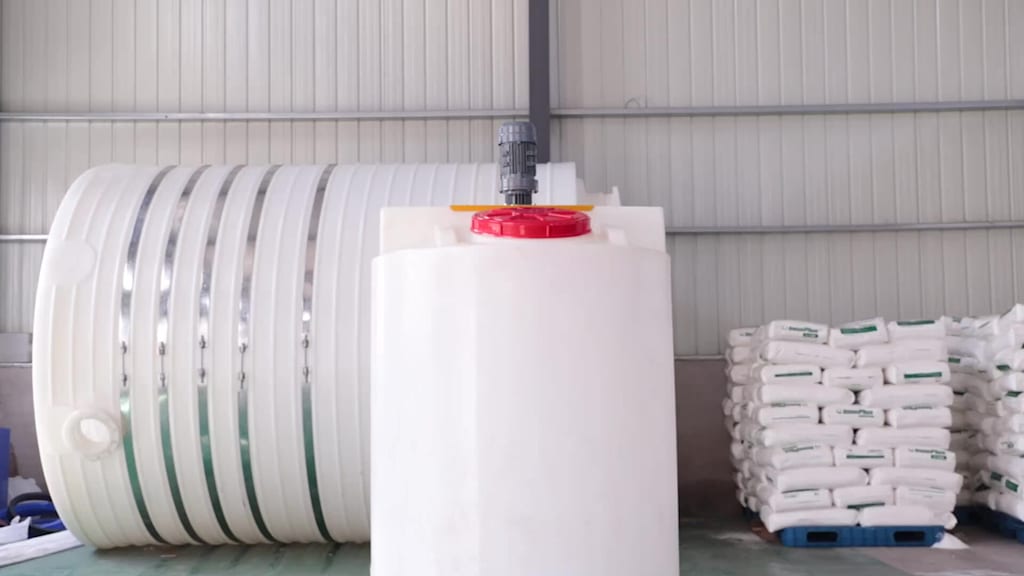
Industrial mixing plays a central role in manufacturing processes across sectors such as chemicals, food processing, pharmaceuticals, and water treatment. It is a fundamental step that ensures raw materials are combined accurately, reactions occur efficiently, and final products meet strict quality standards. Whether blending liquids, dissolving solids, dispersing powders, or maintaining uniform consistency over time, mixing equipment is engineered to meet precise operational requirements. The effectiveness of this process directly impacts product performance, safety, and production efficiency. Among the many types of vessels used, plastic mixing tanks have gained attention for their durability, corrosion resistance, and cost efficiency, making them a practical choice for industries that require reliable and low-maintenance solutions.
The Role of Plastic Mixing Tanks
A 3000L Plastic Mixing Tank represents a mid-to-large-scale solution often used in operations where chemical compatibility and volume handling are critical. These tanks are commonly constructed from materials such as polyethylene (PE) or polypropylene (PP), which are known for their resistance to acids, alkalis, and other reactive substances. Unlike metal tanks, plastic alternatives are less prone to corrosion, making them suitable for long-term use in challenging environments.
Open-Top Tank Design and Functionality
One notable design variation is the 3000L Plastic Mixing Tank with Open Top, which offers accessibility advantages. Open-top configurations allow for easier inspection, manual intervention, and loading of raw materials. This design is particularly useful in processes where operators need frequent access to the contents or where automated feeding systems are not feasible. However, open-top tanks may require additional safety considerations, such as covers or controlled environments, to prevent contamination or evaporation.
Engineering Considerations in Mixing Systems
From an engineering perspective, mixing tanks are often evaluated based on several factors: capacity, material compatibility, agitation mechanism, and structural integrity. Agitation systems—such as paddle mixers, impellers, or magnetic stirrers—are selected depending on the viscosity and nature of the materials being processed. In plastic tanks, these systems are typically mounted with reinforced supports to maintain stability during operation.
Comparison with Jacketed Vessels
Another important consideration is the distinction between standard mixing tanks and more specialized equipment like jacketed vessels. A jacketed vessel incorporates an additional outer layer that allows for temperature control through heating or cooling fluids. While plastic tanks are generally not jacketed due to material limitations, they can still be used in processes where temperature variation is minimal or externally managed.
Global Supply and Manufacturing Landscape
The global demand for industrial equipment has led to the emergence of numerous manufacturers and suppliers. Companies often categorized as China Industrial Tools Supplier provide a wide range of mixing solutions, including plastic tanks, stainless steel vessels, and automated systems. These suppliers cater to both domestic and international markets, offering customizable designs based on industry requirements. While sourcing from such suppliers can be cost-effective, it also requires careful evaluation of quality standards, certifications, and after-sales support.
Practical Applications Across Industries
In practical applications, plastic mixing tanks are widely used in water treatment plants for chemical dosing, in agriculture for fertilizer preparation, and in manufacturing for blending raw materials. Their lightweight nature allows for easier transportation and installation compared to metal tanks. Additionally, their smooth inner surfaces reduce the risk of residue buildup, simplifying cleaning and maintenance.
Limitations and Considerations
Despite these advantages, plastic tanks are not without limitations. They may not withstand extremely high temperatures or pressures, and their structural strength can be lower than that of steel tanks. Therefore, selecting the appropriate tank involves balancing operational needs with material capabilities.
Conclusion
Industrial mixing systems are a foundational component of many production processes. Plastic mixing tanks, particularly those with capacities around 3000 liters, offer a practical solution for handling a variety of materials in controlled environments. By understanding their design features, advantages, and limitations, businesses can make informed decisions that align with both operational efficiency and safety standards.
About the Creator
Enjoyed the story? Support the Creator.
Subscribe for free to receive all their stories in your feed.
Comments
There are no comments for this story
Be the first to respond and start the conversation.