
Understanding Delay and Quantum Analysis in Modern Technology
In today's rapidly evolving technological landscape, understanding complex systems requires looking beyond individual components. Engineers, researchers, and technology professionals must evaluate how different variables interact, influence performance, and affect overall system behavior.

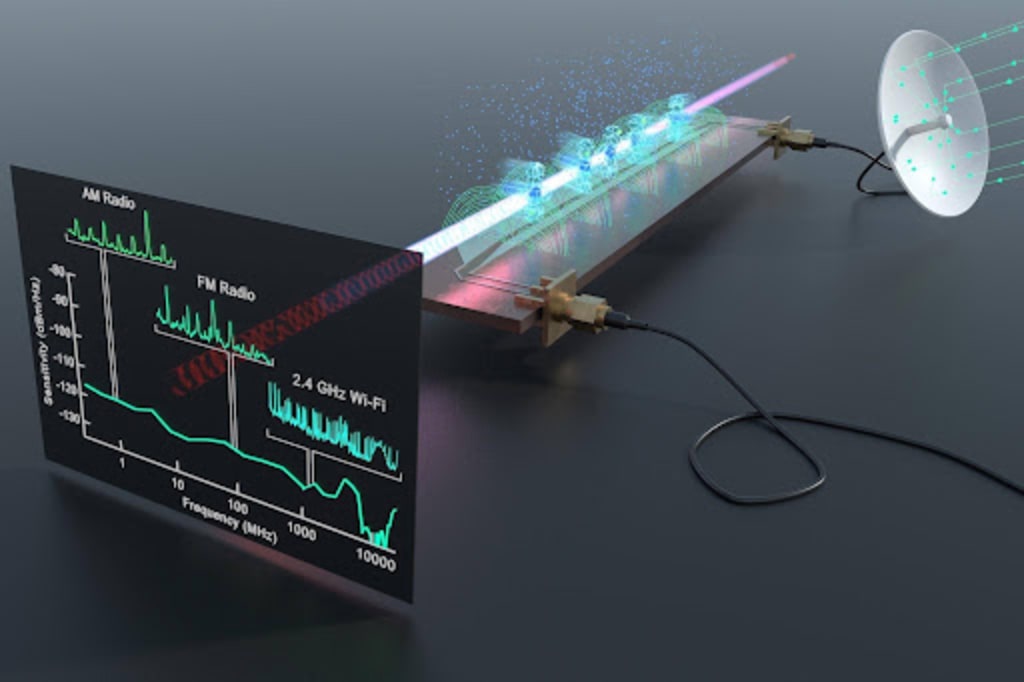
In today's rapidly evolving technological landscape, understanding complex systems requires looking beyond individual components. Engineers, researchers, and technology professionals must evaluate how different variables interact, influence performance, and affect overall system behavior. Two key concepts in this area are delay analysis and quantum analysis, which offer different perspectives on timing, efficiency, and complex system behavior.
Delay and quantum analysis can offer valuable insights when examining processes that involve time-dependent behavior, computational performance, and quantum-level interactions. Although these concepts address different technical challenges, studying them can help researchers develop better models, identify potential inefficiencies, and explore innovative solutions across various scientific and engineering applications.
What Is Delay Analysis?
Delay analysis is the systematic evaluation of time-related interruptions, slowdowns, or differences between expected and actual performance. It is widely used in engineering, telecommunications, computing, construction, and project management to identify the causes of delays and determine their effects.
For example, in computer networks, delays can occur when information travels between devices, passes through routers, or waits in a processing queue. In construction projects, delays may result from material shortages, scheduling conflicts, or unexpected site conditions.
Common Causes of Delays
Several factors can contribute to delays in different systems, including:
Processing limitations: Hardware or software may require additional time to complete complex operations.
Communication bottlenecks: Data transmission may slow down because of network congestion or limited bandwidth.
Resource constraints: Insufficient equipment, personnel, or computing capacity can interrupt workflows.
Unexpected conditions: External disruptions can affect schedules, performance, and resource availability.
By identifying these factors, professionals can develop strategies to improve efficiency, minimize disruptions, and make more accurate predictions about future performance.
Exploring Quantum Analysis
Quantum analysis examines phenomena associated with quantum mechanics, the branch of physics that describes matter and energy at extremely small scales. At the quantum level, particles can exhibit behaviors that differ significantly from the familiar rules governing everyday objects.
Researchers use quantum analysis to investigate phenomena such as superposition, entanglement, and quantum tunneling. These principles contribute to the development of emerging technologies, including quantum computing, advanced sensors, and secure communication systems.
Applications of Quantum Analysis
Quantum analysis has several important applications in modern science and technology.
First, it supports research into quantum computing, where quantum bits, or qubits, can represent combinations of quantum states. This approach may offer advantages for specific computational problems compared with conventional computing methods.
Second, quantum analysis helps scientists understand interactions between particles and energy. Such insights can contribute to advances in materials science, chemistry, and the development of specialized electronic devices.
Finally, quantum-based measurement techniques may improve precision in applications that require highly accurate measurements of time, motion, magnetic fields, or other physical quantities.
How Delay and Quantum Analysis Can Work Together
Although delay analysis and quantum analysis focus on different principles, they may intersect in specialized research and engineering applications. For instance, quantum computing systems must account for processing time, communication latency, measurement operations, and environmental disturbances.
Analyzing these factors can help researchers evaluate system performance and identify opportunities for improvement. In quantum communication, understanding delays is also important when coordinating operations and transmitting information between connected quantum devices.
Benefits of Combining Analytical Approaches
Integrating time-based performance evaluation with quantum-level investigation may help professionals:
Improve the understanding of complex system behavior.
Identify performance limitations and operational bottlenecks.
Evaluate the timing requirements of emerging technologies.
Develop more reliable models for research and experimentation.
Support innovation in computing, communications, and scientific measurement.
Conclusion
Delay analysis and quantum analysis address different but potentially complementary challenges in modern technology. Delay analysis focuses on understanding time-related performance issues, while quantum analysis investigates the behavior of matter and energy at microscopic scales.
When applied appropriately, these analytical approaches can support better decision-making, improve technical understanding, and encourage innovation. As computing and scientific research continue to advance, evaluating both system performance and underlying physical processes will remain important for developing reliable, efficient, and increasingly sophisticated technologies.
About the Creator
Enjoyed the story? Support the Creator.
Subscribe for free to receive all their stories in your feed.
Comments
There are no comments for this story
Be the first to respond and start the conversation.