
Understanding Cinema LED Screens and the Technology Behind Them
A brief look at the technology transforming modern cinema LED screens and viewing experiences

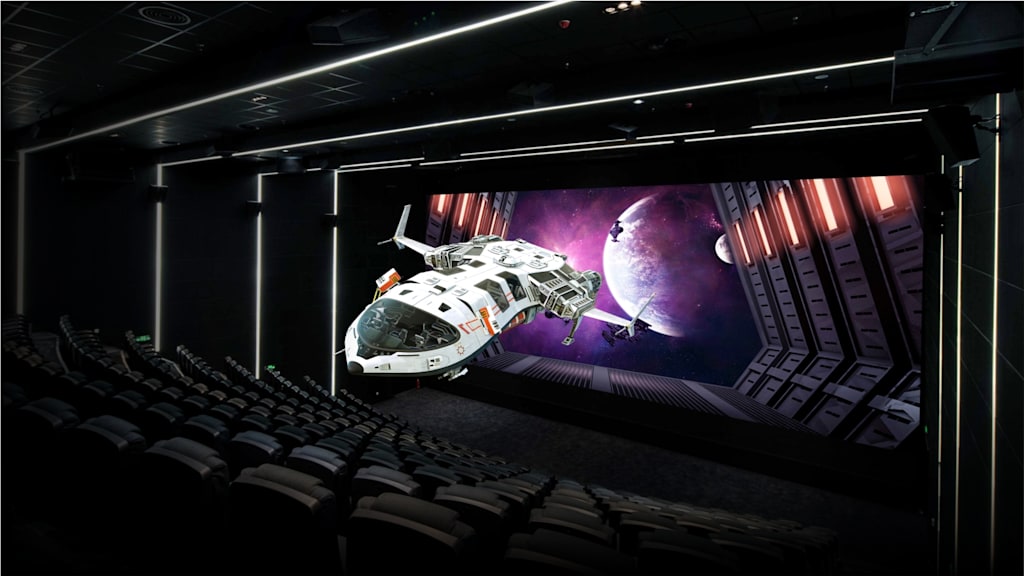
Modern visual experiences have evolved far beyond traditional projection systems. One of the most significant advancements in this space is the cinema LED screen, a technology that is transforming how audiences engage with films and large-format visuals. Built on the foundation of LED innovation, these screens offer enhanced brightness, color accuracy, and durability.
What Powers a Cinema LED Screen?
At the core of every cinema LED screen is the light emitting diode, a semiconductor device that emits light when an electric current passes through it. Unlike projectors that rely on reflected light, LED screens generate their own light. This fundamental difference results in higher contrast ratios, deeper blacks, and more vivid colors.
The concept behind LEDs is relatively simple but highly effective. When electrons move through a semiconductor material, they release energy in the form of photons, producing visible light. This process is efficient, reliable, and capable of delivering consistent performance over long periods.
The Role of SMD LEDs in Screen Manufacturing
One of the key components used in modern LED displays is SMD (Surface-Mounted Device) technology. <strong>SMD LEDs</strong> are compact, highly efficient light sources that can be mounted directly onto circuit boards. Their small size allows for higher pixel density, which is essential for creating sharp and detailed images on large screens.
<strong>SMD LEDs for Screen Manufacturing</strong> are particularly important in cinema applications. They enable seamless panel construction, ensuring that images appear smooth and continuous without visible gaps. This is crucial for maintaining immersion in a cinematic environment, where even minor visual inconsistencies can disrupt the viewing experience.
Additionally, SMD LEDs contribute to wider viewing angles and improved color uniformity. This means that viewers can enjoy a consistent picture quality regardless of where they are seated in the theater.
Advantages Over Traditional Projection Systems
Cinema LED screens offer several advantages compared to traditional projection-based systems. One of the most noticeable benefits is brightness. LED screens can achieve much higher levels of luminance, making them suitable for a variety of lighting conditions without compromising image clarity.
Another major advantage is contrast. Because LEDs can turn completely off, they can produce true blacks, enhancing the depth and realism of on-screen visuals. This is particularly valuable for films with dark scenes or high dynamic range content.
Durability is also a key factor. LED screens are less susceptible to wear and tear compared to projector bulbs, which degrade over time and require frequent replacement. This results in lower maintenance requirements and more consistent performance.
Expanding Applications Beyond Cinema
While cinema LED screens are gaining popularity in theaters, their applications extend far beyond entertainment venues. LED display technology is widely used in advertising, live events, sports arenas, and corporate environments. The flexibility and scalability of LED panels make them suitable for both indoor and outdoor use.
Companies such as Kinglight LED play a role in supplying components that support these advanced display systems. Their contributions highlight how the broader LED ecosystem continues to evolve and support new innovations.
Challenges and Considerations
Despite their many benefits, cinema LED screens come with certain challenges. The initial installation cost can be significantly higher than traditional projection systems. Additionally, achieving optimal calibration for color and brightness requires precise engineering and setup.
Another consideration is heat management. Although LEDs are more efficient than older technologies, large-scale displays still generate heat that must be properly dissipated to maintain performance and longevity.
The Future of LED Cinema Technology
As technology continues to advance, cinema LED screens are expected to become more accessible and refined. Improvements in manufacturing processes, including advancements in SMD LEDs, are likely to reduce costs and enhance performance.
Emerging innovations such as micro-LED technology promise even greater pixel density and efficiency. These developments could further revolutionize how visual content is presented, offering audiences an even more immersive and lifelike experience.
Conclusion
Cinema LED screens represent a major step forward in display technology. By leveraging the capabilities of the light emitting diode and advanced components like SMD LEDs, these systems deliver superior image quality, reliability, and versatility. As adoption grows and technology improves, LED-based displays are set to redefine the future of cinematic and large-scale visual experiences.
About the Creator
Enjoyed the story? Support the Creator.
Subscribe for free to receive all their stories in your feed.
Comments
There are no comments for this story
Be the first to respond and start the conversation.