
Top Mobile App Development Companies in Chicago Staying Ahead of Trends in 2026
Beyond the Coast — Why Chicago's Mobile App Development Scene Deserves More Attention in 2026

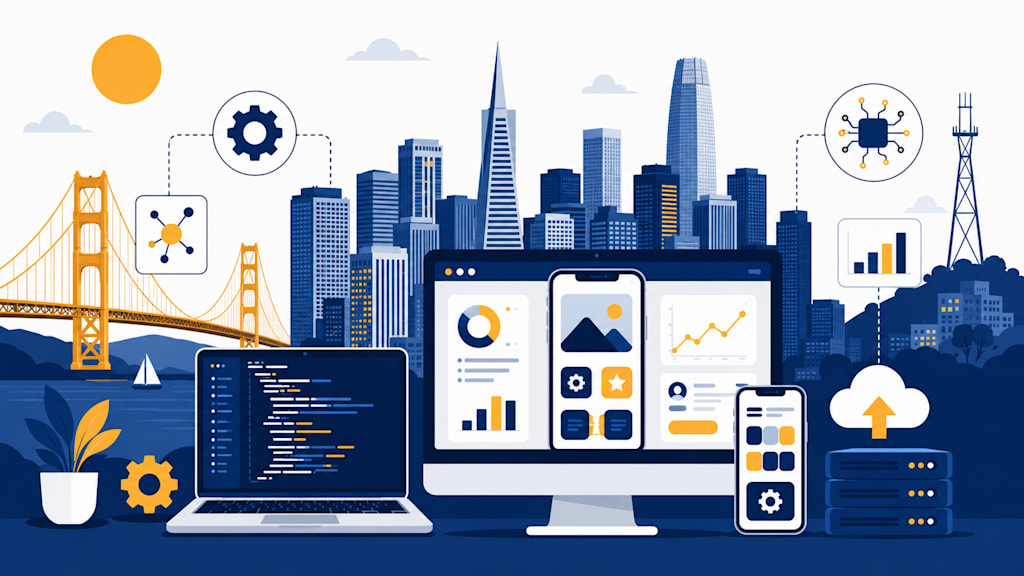
There's a tendency to associate serious mobile app development with either coast — San Francisco for the startup energy, New York for the enterprise muscle. Chicago doesn't fit neatly into either narrative, which might be why it gets overlooked. That's a mistake worth correcting.
The city has been quietly building a technology ecosystem that draws on something neither coast can easily replicate: decades of experience serving large, complex organisations across industries that actually depend on their software working. Boeing, Kraft Heinz, United Airlines — these aren't companies with tolerance for products that look good in demos but fall apart under real conditions. The development culture that's grown up around serving clients like these has produced firms that think in systems, not just screens.
For anyone evaluating mobile development partners in the Midwest in 2026, here are six Chicago firms that have earned serious consideration.
1. TechGropse
TechGropse, a top app development company in chicago has been building mobile products for over a decade, which in the app development industry represents genuine staying power. Their work spans healthcare, logistics, fintech, e-commerce, and on-demand services — a range that reflects real cross-industry experience rather than a marketing claim.
What stands out in their client feedback is their approach to the full product lifecycle. They cover discovery, design, development, and post-launch support without requiring clients to manage handoffs between multiple vendors — a practical advantage for founders and product teams that don't have the internal capacity to coordinate across separate specialists. Their communication consistency is mentioned repeatedly in reviews, which matters more than it sounds when a development engagement runs for several months.
2. Rightpoint
Rightpoint has built a strong reputation in Chicago specifically because they think about mobile products in their broader context. Rather than treating an app as a standalone deliverable, they consider how it fits within a larger customer experience — which makes them particularly relevant for organisations where the mobile product is one touchpoint among many rather than the entire product.
Their consultative approach means they'll push back on assumptions and help clarify what a product actually needs to do before development begins. For clients still working through their product vision, that kind of structured thinking upfront tends to produce better outcomes than jumping straight into a build.
3. Table XI
Table XI has been operating since 2002, which gives them a perspective on the mobile development industry that newer agencies simply don't have. They've seen platforms rise and fall, development frameworks come and go, and client expectations shift dramatically — and they've adapted throughout.
Their preference for working carefully with a smaller number of projects at a time means clients get genuine attention rather than being managed as one of dozens of simultaneous engagements. For organisations that want a development partner genuinely invested in their specific product rather than optimising for throughput, that working style is worth paying attention to.
4. Kin + Carta
Kin + Carta operates at the enterprise level, combining data, technology, and design in a way that makes them particularly relevant for organisations where analytics and personalisation are central to the product strategy. Their Chicago office serves clients across retail, financial services, and other data-intensive industries.
Their strength is in building mobile products that connect meaningfully with backend data infrastructure — not just applications that look polished on the surface but struggle to deliver personalised or insight-driven experiences at scale. For enterprises where that capability is a core requirement, Kin + Carta brings genuine depth.
5. Codal
Codal leads with UX research, which reflects a specific philosophy: that understanding how users actually behave should precede any decisions about how an application is built. Their process involves extensive design research before development begins, which tends to produce applications that solve real problems rather than technically correct ones that users don't engage with.
They work across healthcare, e-commerce, logistics, and finance — sectors where the gap between a functional application and one that people actually use can have significant business consequences. For clients in those industries, Codal's research-first approach addresses a risk that purely engineering-oriented firms often underestimate.
6. Doejo
Doejo operates as a boutique studio, which defines both their strengths and their limitations honestly. They're not the right fit for large enterprise programmes or organisations that need significant team scale. What they offer instead is creative product development for consumer-facing applications — a working style that suits founders building their first product or creative companies that want a development partner capable of thinking about the product experience, not just the technical execution.
For the right project type, their boutique scale is an advantage rather than a constraint. Direct access to the people doing the work, faster decision-making, and genuine creative investment in the product are things that larger agencies struggle to replicate.
Where Chicago's Mobile Development Market Is Heading in 2026
A few shifts are worth understanding as context for any mobile development conversation this year.
AI integration has moved from a differentiating feature to a baseline expectation for many product categories. Users increasingly expect applications to personalise, predict, and adapt — which means development firms without genuine AI capability are operating with a meaningful gap in their service offering.
Cross-platform frameworks have matured to the point where they're appropriate for a much wider range of products than they were even two years ago. The performance gap between native and cross-platform development has narrowed significantly, which changes the cost-benefit calculation for many projects.
UX has become a competitive differentiator in categories that previously treated it as secondary. In healthcare, financial services, and enterprise tools particularly, poor design now carries a measurable cost in user adoption and retention. Firms that treat UX as a preliminary phase rather than an ongoing discipline are producing products that show it.
Final Thought
Chicago's mobile development market has real depth in 2026, and the six firms above represent different but complementary approaches to building serious digital products. The right partner depends on what your project actually needs — scale, design depth, data integration, startup flexibility, or enterprise rigour.
Take the discovery calls seriously. The questions a firm asks you in that first conversation will tell you more about how they work than anything on their website. The best development partners in this market are the ones that want to understand your business before they talk about technology.
About the Creator
Jack Cook
Hi myself Jack, a mobile application developer with 5+ years of experience in creating intuitive and engaging user experiences for iOS and Android platforms.
Enjoyed the story? Support the Creator.
Subscribe for free to receive all their stories in your feed.
Comments
There are no comments for this story
Be the first to respond and start the conversation.