
Top 5 Risk Monitoring Tools Every Business Should Know
Discover how risk monitoring tools help organizations identify potential threats, improve compliance.
Introduction
Running a business today comes with many uncertainties. From cyberattacks and changing regulations to supply chain issues and financial challenges, risks can appear when you least expect them.
In fact, cybercrime is projected to cost businesses trillions of dollars globally each year, highlighting the growing need for proactive risk management.
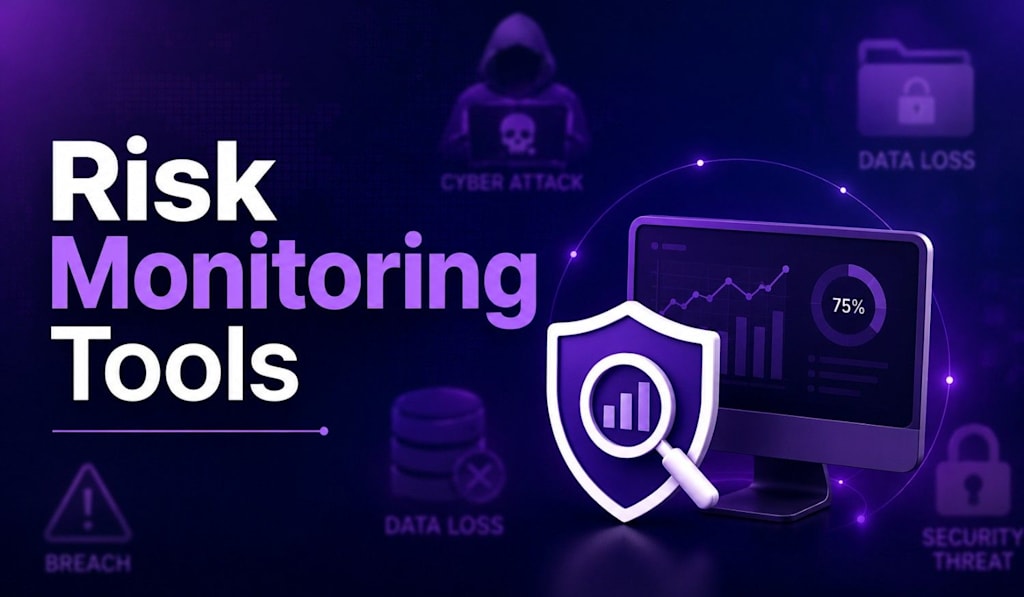
Risk monitoring tools help organizations stay one step ahead by providing real-time insights, enabling teams to identify potential threats early and make more informed business decisions.
What Are Risk Monitoring Tools?
Risk monitoring tools help businesses stay aware of potential problems before they grow into major challenges. Think of them as an early warning system that continuously tracks risks across different areas of an organization.
These tools gather information from multiple sources and present it in an easy-to-understand format through dashboards, alerts, and reports.
Whether it's a cybersecurity threat, a compliance issue, financial uncertainty, or an operational disruption, risk monitoring tools help teams spot warning signs early.
With better visibility and real-time insights, businesses can make smarter decisions, respond faster to risks, and operate with greater confidence.
Why Businesses Need Risk Monitoring Tools
Risk management is no longer something organizations review once or twice a year. In today's fast-moving business environment, risks can evolve rapidly, making continuous monitoring essential.
Better Visibility Across the Organization
One of the biggest benefits of risk monitoring tools is the ability to gain a clear and centralized view of risks across departments, teams, and business functions. Instead of managing information in separate systems, organizations can monitor everything from a single platform.
Faster and More Confident Decision-Making
Access to real-time data allows leaders to identify emerging risks and take action before they escalate. This leads to quicker decisions and reduces uncertainty when responding to potential threats.
Improved Regulatory Compliance
Many industries operate under strict regulations and compliance requirements. Risk monitoring tools help businesses stay informed about regulatory obligations, track compliance activities, and reduce the likelihood of costly violations.
More Efficient Resource Allocation
Understanding where risks are most significant helps organizations focus their resources effectively. Teams can prioritize high-risk areas while maintaining oversight of less critical concerns.
Reduced Business Disruptions
Early detection is often the key to preventing major incidents. By identifying risks before they become serious problems, businesses can minimize downtime, avoid financial losses, and protect their reputation.
Top 5 Risk Monitoring Tools
With many solutions available in the market, selecting the right platform can feel overwhelming. Here are five widely recognized risk monitoring tools that help organizations strengthen their risk management strategies.
1. LogicManager
LogicManager is a governance, risk, and compliance (GRC) platform designed to help organizations create a structured approach to risk management. It enables businesses to identify risks, assess their impact, and implement effective controls.
Key Features
- Enterprise risk management framework
- Compliance monitoring capabilities
- Risk assessment workflows
- Automated reporting
- Incident tracking and management
What makes LogicManager appealing is its focus on helping organizations build a proactive risk culture rather than simply responding to problems as they arise.
2. Resolver
Resolver is a comprehensive risk intelligence platform that combines multiple risk management functions into a single system. Organizations can use it to manage incidents, conduct audits, assess risks, and monitor compliance efforts.
Key Features
- Risk and control assessments
- Incident reporting and management
- Audit management tools
- Real-time dashboards
- Compliance monitoring support
Resolver is particularly useful for businesses that want to connect operational activities with risk data to gain deeper insights into overall performance.
3. MetricStream
MetricStream is one of the most widely known enterprise risk management platforms. It helps organizations monitor operational, financial, compliance, and cybersecurity risks through an integrated framework.
Key Features
- Integrated risk management
- Compliance and audit management
- Policy management tools
- Advanced risk analytics
- Workflow automation
Large enterprises often choose MetricStream because it can handle complex risk environments while providing scalability as organizations grow.
4. RiskWatch
RiskWatch focuses on helping organizations evaluate and manage risks through data-driven assessments and compliance monitoring capabilities. It is used across various industries, including healthcare, government, finance, and manufacturing.
Key Features
- Risk assessment templates
- Compliance management tools
- Security risk analysis
- Automated reporting
- Customizable dashboards
The platform's analytical capabilities make it a valuable option for organizations looking to gain a deeper understanding of their risk exposure.
5. Archer
Archer provides organizations with a comprehensive platform for managing governance, risk, and compliance activities. It helps businesses improve resilience while maintaining visibility into potential threats.
Key Features
- Enterprise risk management
- Third-party risk monitoring
- Business continuity planning
- Regulatory compliance tracking
- Centralized reporting
Organizations with complex structures often rely on Archer to streamline risk management processes and improve operational oversight.
How to Choose the Right Risk Monitoring Tool
The best risk monitoring solution depends on your organization's specific goals, industry, and operational requirements. Before making a decision, consider the following factors.
Understand Your Risk Landscape
Different businesses face different types of risks. Some may prioritize cybersecurity, while others focus on compliance, financial risks, or operational resilience. Understanding your primary concerns will help narrow down the options.
Consider Scalability
A solution that works well today should also support future growth. Choose a platform that can scale as your organization expands and your risk management needs evolve.
Evaluate Integration Capabilities
Risk monitoring tools should work seamlessly with existing systems. Integration with business applications, security tools, and reporting platforms can improve efficiency and reduce manual work.
Review Reporting and Analytics Features
Clear dashboards and meaningful reports are essential for effective risk management. Look for platforms that provide customizable reporting and actionable insights.
Prioritize User Experience
Even the most powerful tool can be ineffective if employees struggle to use it. A user-friendly interface can improve adoption and maximize value across teams.
Emerging Trends in Risk Monitoring
Technology continues to reshape the way organizations approach risk management. Several emerging trends are influencing the future of risk monitoring.
Artificial Intelligence and Machine Learning
AI-powered systems can analyze large volumes of data, identify patterns, and detect potential risks much faster than traditional methods.
Predictive Risk Analysis
Organizations are increasingly using predictive analytics to anticipate future risks and take preventive actions before issues occur.
Continuous Monitoring
Rather than relying on periodic reviews, businesses are moving toward real-time monitoring that provides instant visibility into changing risk conditions.
Automation
Automation reduces manual effort and enables faster responses to incidents, compliance tasks, and reporting requirements.
Integrated Risk Management
Many organizations are adopting unified platforms that combine governance, compliance, cybersecurity, and operational risk management into a single solution.
Conclusion
Managing risk has become a critical part of running a successful business. As organizations face growing challenges and increasing uncertainty, having the right tools in place can help improve visibility, strengthen compliance, and support smarter decision-making.
Solutions like LogicManager, Resolver, MetricStream, RiskWatch, and Archer offer valuable capabilities that help businesses identify and manage risks more effectively. While each platform has its own strengths, the best choice depends on your organization's specific needs, industry requirements, and long-term objectives.
By investing in a reliable risk monitoring tool, businesses can move beyond reactive risk management and adopt a more proactive approach that supports resilience, stability, and sustainable growth.
About the Creator
Enjoyed the story? Support the Creator.
Subscribe for free to receive all their stories in your feed.
Comments
There are no comments for this story
Be the first to respond and start the conversation.