
The Uncanny Valley of Localized Ads: What Happened When I Tried to Automate International Video Campaigns at 2 AM
Late-night insomnia has a strange way of warping your perspective as a creator.
Late-night insomnia has a strange way of warping your perspective as a creator. It was around 2:20 AM on a damp Tuesday, and I was staring at the familiar mess of my bedroom workspace—tangled charging cables, a cold, half-empty mug of chamomile tea, and three browser windows rendering video clips. My laptop fan was making that faint, high-pitched whine it usually reserves for when I push it just a little too hard.
Ten minutes earlier, I had been doom-scrolling through a creator forum on my phone and stumbled across a showcase thread. Someone had posted a slick, thirty-second promo clip for a regional beverage brand. The comments section was full of the usual awe and existential dread: "Designers are finished," "No one needs video agencies anymore."
I looked back at my main monitor and sighed. On my screen was a digital presenter speaking Spanish, except her lip movements were lagging three frames behind her vocal track, and her left hand gesture looked like she was trying to ward off a swarm of invisible bees.
The Expectation Trap
A small e-commerce client had approached me two weeks ago with an ambitious request. They were expanding a niche lifestyle brand into Spain and Germany. They had a modest budget—which in freelance terms meant practically zero budget—and zero interest in hiring local actors, booking studio space, or paying translation agencies to record voice tracks.
"Can't we just use automated tools for all of it?" the founder had asked during our kick-off call. He sent me a link to a synthetic brand ambassador account he'd seen on Instagram. "Just feed our English copy into a tool, pick a nice face, and let it generate localized video ads for both markets. It should take a couple of hours, right?"
At the time, I foolishly nodded along. I thought I understood the landscape. I assumed that using an AI avatar video generator was essentially like setting up a digital puppet: you paste in translated text, select a regional voice profile, click render, and out pops a convincing ad ready for Meta or TikTok feeds. I figured the hard part was just drafting the scripts.
I was wrong.
When "Almost Right" Feels Entirely Wrong
The fundamental issue with modern generative video platforms isn't that they look terrible—it’s that they look almost right. And in advertising, "almost right" is far more unsettling to a viewer than something that is obviously an animation or a cartoon.
When you try to build a localized campaign using an AI influencer generator, you quickly realize that human trust doesn't hinge on 4K resolution or flawless studio lighting. It hinges on subtle, non-verbal cues that no algorithm has quite mastered yet.
Take the Spanish translation I was fighting with at 2:30 AM. The copy was grammatically correct, translated via a standard neural machine translation service. But when I mapped it onto the digital presenter, the cadence was completely off. Spanish naturally has a different rhythm and syllable density than English. The synthetic voice rushed through the ends of sentences to fit the hard-coded video duration, while the digital avatar stared directly into the camera with an unblinking, unsettling intensity.
It didn't look like a local creator recommending a product to a friend. It looked like an android hostage video demanding ransom.
The Unseen Friction of Localization
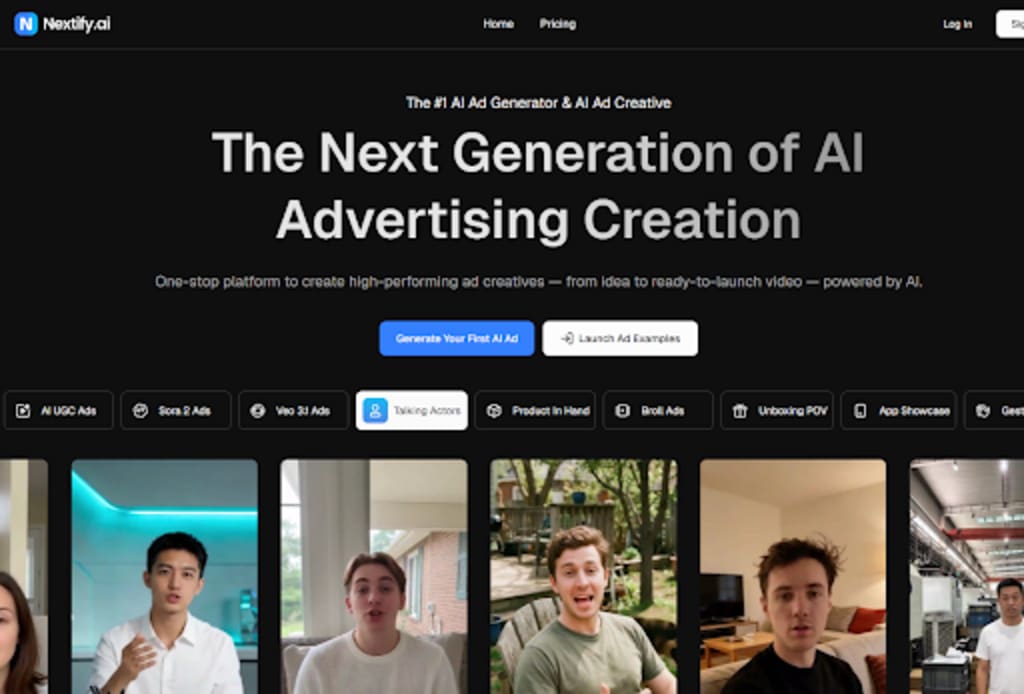
I spent the next two hours tweaking phonemes and adding manual pause markers in the speech synthesis editor. I tried switching platforms, testing different rendering engines to see if another system handled non-English lip synchronization any cleaner. At one point, I fired up Nextify.ai to see if its script-to-video workflow managed the regional voice inflections any better, only to realize the tool itself wasn't the core bottleneck—it was my own misplaced expectation that I could bypass the cultural nuances of human communication.
A synthetic voice profile doesn't inherently know that Castilian Spanish uses different natural pauses than Latin American Spanish. An automated presenter doesn't understand that a German consumer generally expects a far more direct, understated tone of voice compared to the hyper-enthusiastic, pitch-heavy style common in American social ads.
When you generate a synthetic persona, you aren't just rendering a face; you are attempting to synthesize cultural context. And when that context is missing, viewers don't just scroll past—they get actively uncomfortable.
Shifting the Burden of Work
I had to email the client the next afternoon and break the news. I didn't send them a polished pitch about the miraculous future of automated marketing. I sent them three raw renders alongside a straightforward document explaining why we needed to re-think our entire pipeline.
We couldn't just automate translation and expect high-converting ad variants. If we wanted to use digital presenters to save on physical production costs, we had to do the heavy lifting manually on the back end:
Hiring native freelancers to rewrite the translated scripts for natural, conversational flow.
Adjusting emotional inflections and pitch shifts line by line rather than relying on default text-to-speech outputs.
Keeping the digital avatar's screen time shorter, weaving in real product B-roll to anchor the viewer's visual focus.
The technology didn't eliminate the work; it just shifted the work from physical filming to tedious micro-editing.
Anyway... I suppose that’s the real lesson I keep learning over and over with these shiny new toolkits. They don't replace human judgment or cultural intuition; they just punish you faster when you try to skip them.
4:15 AM
By 4:15 AM, the streetlights outside my bedroom window were casting long, orange shadows across the dusty surface of my desk. The final render progress bar on my secondary monitor slowly ticked over to 100%.
I clicked play one last time. The digital presenter on screen blinked, smiled slightly, and spoke its opening line in German. It wasn't perfect. If you looked closely at the corners of its mouth during the harder consonants, you could still spot a faint digital stutter. But the script sounded natural now, the tone was quiet and conversational, and the pacing finally had room to breathe.
I closed the preview window, shut down the laptop, and listened as the room went completely quiet, the cooling fan finally spinning down into silence.
About the Creator
Enjoyed the story? Support the Creator.
Subscribe for free to receive all their stories in your feed.
Comments
There are no comments for this story
Be the first to respond and start the conversation.