
The UK's Digital Checkout Revolution: How E-Commerce Payments Are Shaping the Future of Online Shopping
Digital wallets, contactless payments, and mobile commerce are transforming the way British consumers spend online.

The way people shop in the United Kingdom has changed dramatically over the past decade. What was once an occasional online purchase has evolved into an everyday activity for millions of consumers. Whether ordering groceries, streaming entertainment, purchasing fashion items, or subscribing to digital services, online shopping has become deeply embedded in British life.
At the center of this transformation lies a rapidly evolving payment ecosystem. Modern consumers no longer judge an online retailer solely by product selection or pricing. Instead, the checkout experience itself has become a critical factor influencing purchasing decisions. Shoppers expect transactions to be fast, secure, flexible, and seamless across multiple devices.
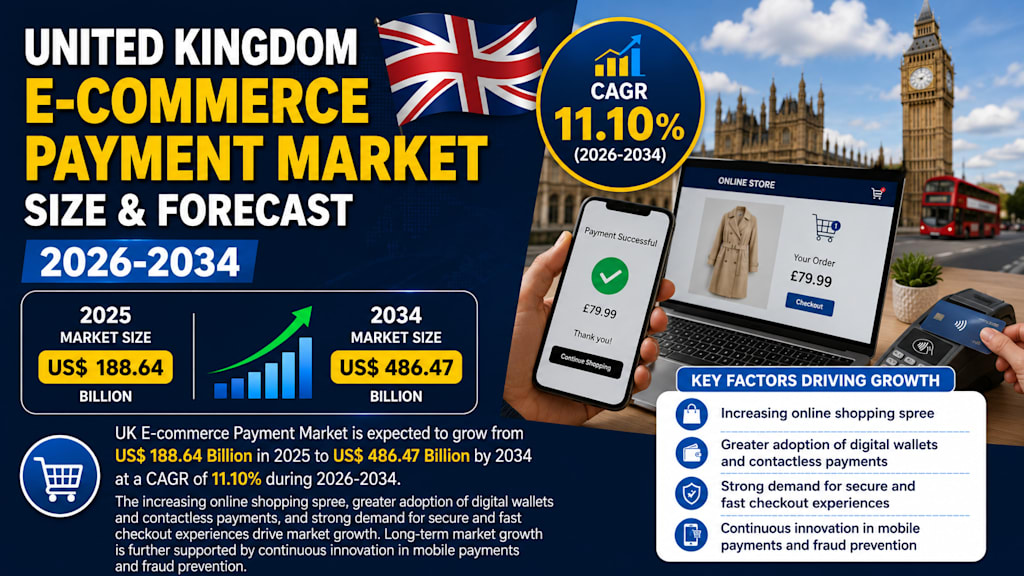
As a result, the United Kingdom's e-commerce payment market is experiencing remarkable growth. According to Renub Research, the UK E-Commerce Payment Market is expected to expand from US$188.64 billion in 2025 to US$486.47 billion by 2034, registering a compound annual growth rate (CAGR) of 11.10% between 2026 and 2034. This impressive growth reflects increasing digital payment adoption, widespread mobile commerce usage, and the continued shift toward cashless transactions.
The evolution of online payments is not simply a technological trend. It represents a broader transformation in consumer behavior, retail strategy, and financial innovation that is reshaping the UK's digital economy.
A Nation Comfortable with Digital Commerce
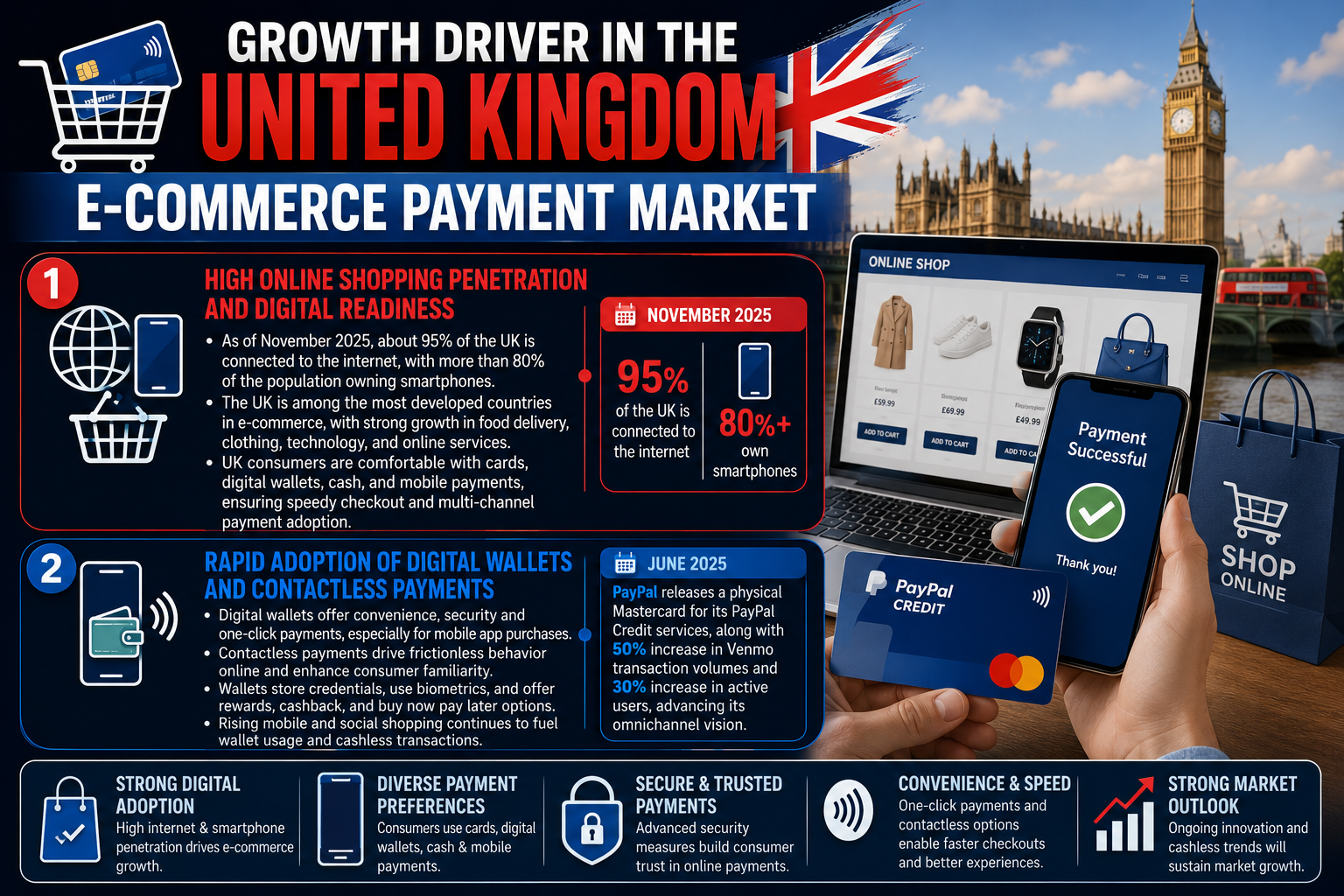
The United Kingdom has long been one of Europe's most advanced e-commerce markets. High internet penetration, widespread smartphone ownership, efficient delivery networks, and strong consumer confidence have created an ideal environment for online retail growth.
British consumers have become increasingly comfortable making purchases online. From daily essentials and fashion products to electronics and subscription services, digital shopping channels have become the preferred option for many households.
The convenience offered by e-commerce platforms has significantly influenced purchasing habits. Consumers can compare prices, read reviews, and complete transactions from virtually anywhere. As online shopping becomes more integrated into daily life, demand for efficient payment systems continues to rise.
Retailers have responded by investing heavily in digital infrastructure and omnichannel strategies that combine physical stores with online experiences. This shift has increased the importance of payment technologies capable of supporting seamless transactions across multiple touchpoints.
Digital Wallets Are Leading the Transformation
One of the strongest drivers of growth within the UK e-commerce payment market is the rapid adoption of digital wallets.
Consumers increasingly favor payment solutions that eliminate the need to repeatedly enter card information during checkout. Digital wallets store payment credentials securely while allowing transactions to be completed with just a few clicks or taps.
The popularity of digital wallets aligns closely with the UK's broader embrace of contactless payment culture. Consumers who regularly use contactless cards and mobile payments in physical stores often prefer similar convenience when shopping online.
Digital wallets offer several advantages. They simplify checkout processes, reduce transaction times, improve security through biometric authentication, and support one-click purchasing experiences. Many also integrate loyalty rewards, cashback programs, subscription management tools, and flexible financing options.
For merchants, digital wallets often lead to higher conversion rates and lower cart abandonment levels. When customers can complete purchases quickly and securely, they are more likely to finalize transactions rather than leave items in their shopping carts.
As mobile commerce continues to expand, digital wallets are expected to become even more central to the UK's payment landscape.
Mobile Commerce Continues to Expand
The rise of smartphones has transformed the way consumers interact with retailers.
Shopping no longer takes place exclusively on desktop computers. Consumers browse products, compare prices, and complete purchases through mobile devices throughout the day. This shift has encouraged businesses to optimize both websites and payment systems for mobile experiences.
Mobile-first payment solutions focus on speed, simplicity, and security. Features such as biometric authentication, digital wallet integration, and one-click checkout help create frictionless purchasing experiences.
The growth of social commerce is also contributing to mobile payment adoption. Consumers increasingly discover products through social media platforms and complete transactions directly through integrated shopping experiences.
As mobile shopping becomes the dominant method of online purchasing for many consumers, payment providers are investing heavily in technologies designed to enhance mobile checkout experiences.
Buy Now, Pay Later Is Reshaping Consumer Spending
Another major trend influencing the UK payment landscape is the growing popularity of Buy Now, Pay Later (BNPL) services.
BNPL solutions allow consumers to spread payments over several installments rather than paying the full amount upfront. These services have become especially popular among younger consumers seeking flexibility and financial control.
Fashion, electronics, lifestyle products, and home goods are among the categories where BNPL adoption is particularly strong. Consumers appreciate the ability to manage larger purchases without relying on traditional credit products.
Retailers also benefit significantly. BNPL options often increase average order values, reduce cart abandonment rates, and improve conversion performance. Because the financing risk is generally transferred to BNPL providers, merchants gain additional revenue opportunities without increasing credit exposure.
As consumers continue seeking flexible payment alternatives, BNPL services are expected to remain an important growth segment within the UK's e-commerce payment ecosystem.
Technology Is Enhancing the Checkout Experience
Innovation remains one of the strongest forces driving the evolution of e-commerce payments.
Payment providers are continuously introducing new features designed to improve convenience, security, and customer satisfaction. Embedded finance, personalized payment experiences, intelligent fraud prevention systems, and faster payment processing technologies are becoming increasingly common.
Cloud-based payment platforms and modern application programming interfaces (APIs) have made it easier for businesses of all sizes to integrate advanced payment solutions. Even smaller retailers can now offer sophisticated checkout experiences that were previously available only to large enterprises.
Consumers increasingly expect payment processes to be intuitive and effortless. Long forms, complicated authentication procedures, and delayed processing times can discourage purchases. As a result, merchants are placing greater emphasis on optimizing every stage of the checkout journey.
The payment experience itself is becoming a key competitive differentiator in the online retail market.
Security Remains a Top Priority
While convenience drives adoption, security remains one of the most important considerations for both consumers and businesses.
As online transaction volumes increase, so do concerns regarding fraud, identity theft, and cybersecurity threats. Consumers expect payment providers to protect sensitive financial information while ensuring transactions remain quick and convenient.
Advanced security technologies such as tokenization, encryption, biometric authentication, and machine learning-based fraud detection systems are helping address these concerns. Artificial intelligence can analyze transaction patterns in real time, identifying suspicious activity before fraudulent payments are completed.
Strong consumer protection regulations in the United Kingdom have also contributed to higher levels of trust in digital payment systems. Payment providers must comply with strict standards designed to safeguard customer data and maintain transaction security.
The companies that successfully balance convenience and protection are likely to gain a significant competitive advantage in the years ahead.
Industry-Specific Payment Trends
Different sectors of the e-commerce market have unique payment requirements.
The electronics and media segment often involves higher-value transactions, making security and flexible payment options especially important. Subscription-based services such as streaming platforms and software providers require payment systems capable of handling recurring transactions efficiently.
Fashion retailers prioritize speed and convenience. Since impulse purchases are common, streamlined checkout experiences can significantly improve conversion rates. Efficient refund processes are equally important because returns occur frequently within the fashion sector.
Food and personal care retailers focus heavily on reliability. Consumers purchasing essential goods expect payments to process successfully every time. Subscription-based purchasing models have become increasingly common in this category, creating demand for secure recurring payment systems.
Understanding these differences allows payment providers to tailor solutions that address the specific needs of individual industries.
Challenges Facing the Market
Despite its strong growth trajectory, the UK e-commerce payment market faces several challenges.
Cybersecurity threats remain a persistent concern. Fraudsters continuously develop new methods for targeting digital transactions, requiring ongoing investment in security infrastructure and monitoring systems.
Regulatory compliance also presents challenges for payment providers and merchants. Consumer protection requirements, authentication standards, and data privacy regulations create additional complexity and operational costs.
For international merchants, navigating multiple regulatory frameworks can be particularly demanding. While regulations strengthen consumer trust, they can also increase administrative burdens and slow implementation of new payment innovations.
Successfully managing these challenges will be critical for sustaining long-term market growth.
The Future of Payments in the United Kingdom
The future of the UK e-commerce payment market appears exceptionally promising.
Growing consumer confidence in digital transactions, increasing smartphone adoption, advances in payment technology, and continued expansion of online retail will continue driving demand for innovative payment solutions.
Artificial intelligence is expected to play an increasingly important role in fraud prevention, payment personalization, and transaction optimization. Open banking initiatives may further expand account-based payment options, while embedded finance solutions could make payments more seamlessly integrated into online experiences.
Consumers will likely continue demanding greater convenience, flexibility, and security. Businesses that successfully meet these expectations will be best positioned to thrive in an increasingly competitive digital marketplace.
Final Thoughts
The United Kingdom's e-commerce payment market is undergoing a period of rapid transformation driven by technological innovation, changing consumer behavior, and growing digital commerce adoption.
With the market projected to grow from US$188.64 billion in 2025 to US$486.47 billion by 2034, digital payments are becoming one of the most important foundations of the UK's online economy. Digital wallets, mobile commerce, contactless payment habits, and flexible financing options are helping create a more efficient and customer-friendly shopping experience.
As online retail continues expanding and payment technologies become increasingly sophisticated, the future of commerce in the United Kingdom will depend heavily on the ability to deliver secure, seamless, and convenient payment experiences. In an increasingly digital world, the checkout process is no longer simply the final step of a purchase—it has become a crucial part of the customer journey itself.
About the Creator
Enjoyed the story? Support the Creator.
Subscribe for free to receive all their stories in your feed.
Comments
There are no comments for this story
Be the first to respond and start the conversation.