
The Smart Port Revolution: Penang’s Pioneering Leap into Private 5G
By deploying Malaysia’s first dedicated-spectrum 5G network, the historic maritime hub is setting a new regional benchmark for data sovereignty, advanced automation, and supply chain resilience.

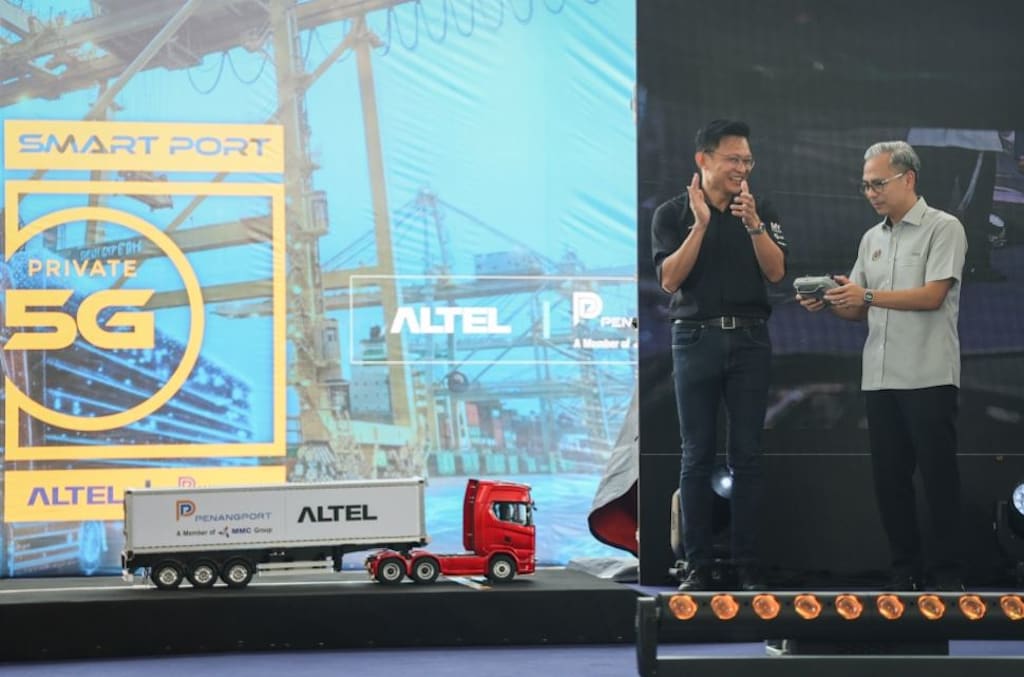
In the high-stakes world of global maritime logistics, the difference between a thriving port and a stagnant one increasingly comes down to a single factor: digital infrastructure. Recognizing this reality, Penang Port Sdn Bhd has officially launched Malaysia’s first private 5G network operating on dedicated spectrum. Unveiled at the North Butterworth Container Terminal (NBCT), this landmark initiative marks a definitive turning point in the facility’s evolution, transitioning it from a traditional cargo hub into a cutting-edge, future-ready "smart port."
Deployed in partnership with Altel Communications Sdn Bhd, the new network blankets approximately 2.5 square kilometers of critical infrastructure, encompassing both the NBCT and the Butterworth Deep Water Wharves (BDWW). However, the true significance of this project lies not merely in the presence of 5G technology but in its architecture. Unlike public commercial mobile networks, which are shared among millions of users and susceptible to congestion, this private 5G network operates entirely independently. Its 5G core and associated port applications are hosted entirely within the port’s own premises, creating a closed, highly secure digital ecosystem.
This on-premises hosting model is a game-changer for critical national infrastructure. According to Penang Port’s acting chief executive officer, Fakhrul Azhar Tajudin, the private network grants the port operator unprecedented control over network performance and operational data. In an era where cyber threats to supply chains are escalating, keeping sensitive logistical data within the physical boundaries of the port ensures robust data sovereignty and security. Furthermore, it guarantees the ultra-reliable, low-latency communications that modern automated systems demand, free from the unpredictable traffic spikes of public networks.
The operational implications of this technological upgrade are profound. The dedicated 5G infrastructure is explicitly designed to support network availability with latency below 15 milliseconds. This near-instantaneous response time is the critical enabler for the next generation of smart port technologies. In the coming years, Penang Port plans to leverage this connectivity to deploy autonomous prime movers, which can navigate the sprawling terminal yards without human drivers. It will also facilitate the remote operation of heavy cranes and gantries, allowing skilled workers to control massive machinery from safe, climate-controlled environments rather than precarious heights.
Beyond heavy automation, the network will serve as the nervous system for artificial intelligence (AI)-enabled video analytics and intelligent surveillance systems. These AI tools can monitor cargo flows in real time, predict bottlenecks before they occur, optimize container stacking, and enhance perimeter security by instantly identifying anomalies. By interconnecting these progressive automation systems, Penang Port is building a holistic ecosystem where physical operations and digital intelligence are seamlessly fused, driving unprecedented levels of efficiency and resilience.
The launch of this network is not just a corporate milestone for Penang Port; it is a strategic victory for Malaysia’s broader digital economy. The ceremony was officiated by Communications Minister Datuk Seri Fahmi Fadzil, underscoring the federal government’s strong backing of the initiative. The presence of key figures, including Penang Deputy Chief Minister II Jagdeep Singh Deo and Malaysian Communications and Multimedia Commission (MCMC) managing director Abdul Karim Fakir Ali, highlighted a unified, whole-of-government approach to modernizing the nation’s infrastructure. By allocating dedicated spectrum for private enterprise use, Malaysian regulators are sending a clear message: they are committed to providing the regulatory sandbox necessary for industries to innovate without being bottlenecked by public network limitations.
From a regional perspective, this move is highly strategic. Penang Port operates in a fiercely competitive maritime landscape, vying for market share against regional giants like Port Klang and the Port of Singapore. As global shipping alliances increasingly prioritize ports that offer seamless, tech-driven, and transparent logistics, digital capability has become as important as water depth or crane capacity. By pioneering private 5G, Penang Port is positioning itself as a technologically advanced alternative, capable of handling the complex, high-volume demands of modern global supply chains with greater agility than its legacy-bound competitors.
The success of this initiative also serves as a powerful proof of concept for the wider Malaysian enterprise sector. Dr. Afizulazha Abdullah, Group Chief Executive Officer of Altel Communications, noted that enterprise digitalization is increasingly dependent on reliable, tailored connectivity. As automation, real-time data processing, and AI become integral to operations across manufacturing, energy, and agriculture, the one-size-fits-all approach of public telecommunications is no longer sufficient. Private 5G on dedicated spectrum allows enterprises to build digital capabilities precisely calibrated to their unique operational requirements. Penang Port’s successful deployment provides a replicable blueprint for other heavy industries looking to embark on their own digital transformation journeys.
Of course, the road to a fully autonomous smart port is not without its challenges. Integrating cutting-edge 5G applications with legacy port management systems will require careful, phased execution. Furthermore, the shift toward automation necessitates a significant investment in workforce upskilling, ensuring that port employees transition from manual laborers to highly trained technicians and system supervisors. Cybersecurity will also remain a perpetual priority, as a highly interconnected digital port presents a larger, albeit more controlled, attack surface for potential bad actors.
Nevertheless, the launch of Malaysia’s first private 5G network at Penang Port is a watershed moment. It represents a bold departure from the past and a confident stride into the future. By taking control of its digital destiny, Penang Port is not just upgrading its technology; it is redefining what it means to be a modern maritime hub. As the network goes live and the first autonomous vehicles begin to navigate the terminals, Penang Port will stand as a shining example of how dedicated digital infrastructure can drive smarter operations, stronger business outcomes, and sustained economic growth in the 21st century.
About the Creator
Mark Lim
Hi I am mark an automotive student and a car, tech and food enthusiast ! Im gonna try and post daily & hope you enjoy what I write and do share my page with people you know. I would gladly appreciate it! Cheers
Enjoyed the story? Support the Creator.
Subscribe for free to receive all their stories in your feed.
Comments
There are no comments for this story
Be the first to respond and start the conversation.