
The Science and Significance of Custom Furnace Design in Modern Industry
How tailored thermal systems shape precision, efficiency, and innovation

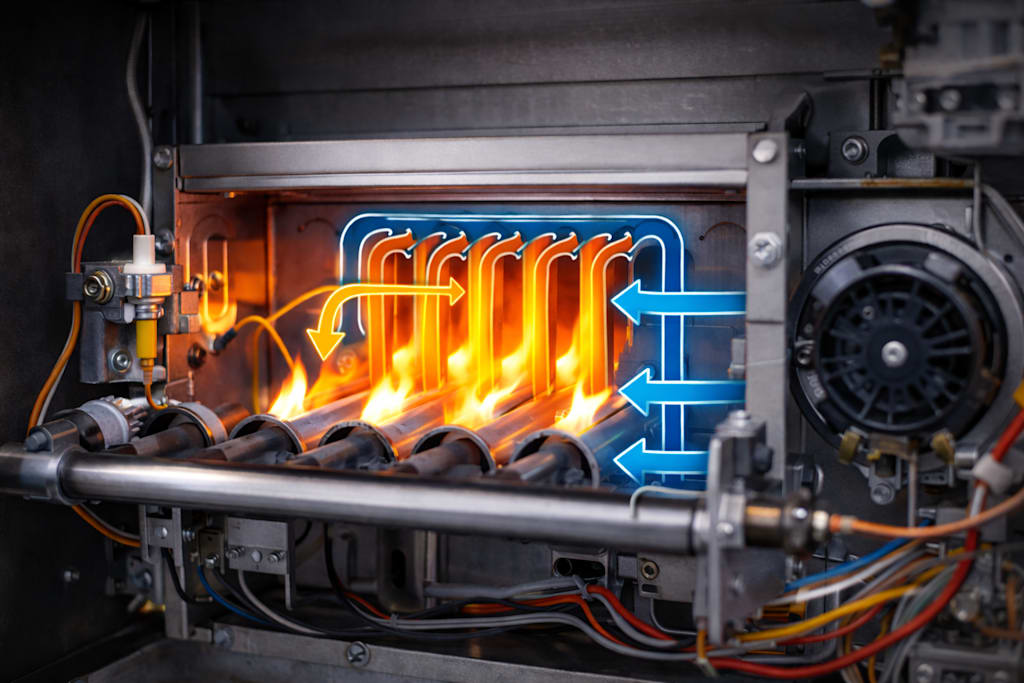
In today’s advanced manufacturing and research environments, heat treatment is far more than a basic industrial step—it is a controlled, highly specialized process that directly influences material properties and product performance. This is where Custom Laboratory Furnaces and Custom Industrial Furnaces come into play. Rather than relying on standardized equipment, industries increasingly turn to tailored furnace systems designed to meet exact thermal, atmospheric, and dimensional requirements.
At the core of many of these applications lies Sintering, a process in which powdered materials are compacted and heated below their melting point to form solid structures. Sintering is widely used in ceramics, metallurgy, and electronics, making furnace precision essential for consistent results.
The Need for Customization in Thermal Processing
Standard furnaces are built to serve general purposes, but industrial and research demands rarely fit into generic frameworks. Materials behave differently under varying temperatures, pressures, and atmospheres. A slight deviation in any of these factors can lead to defects, inefficiencies, or failed experiments.
Custom furnaces are designed to address specific challenges such as:
- Precise temperature uniformity
- Controlled heating and cooling rates
- Specialized atmospheres (vacuum, inert gas, or reducing environments)
- Unique chamber sizes or configurations
For example, a Custom Laboratory Furnace used in materials research must prioritize accuracy and repeatability, while a Custom Industrial Furnace may focus on throughput, durability, and energy efficiency.
Understanding Sintering and Its Furnace Requirements
Sintering is a delicate process that requires tightly controlled thermal conditions. The temperature must be high enough to enable particle bonding but not so high that the material melts completely. This narrow operating window demands furnaces capable of fine-tuned control.
Different sintering applications require different furnace designs:
- Ceramic sintering often requires uniform heat distribution to avoid cracking.
- Metal powder sintering may need controlled atmospheres to prevent oxidation.
- Advanced materials like composites demand programmable heating cycles.
This is where systems like Custom Sintering Furnace and specialized configurations such as bell sintering furnaces become relevant. Bell-type designs, for instance, allow for efficient sealing and atmospheric control, making them suitable for high-temperature applications.
Variations in Furnace Design
Custom furnaces are not a single category but a broad spectrum of designs tailored to specific industrial needs. Among the most commonly used types are:
1. Muffle Furnaces
A Custom muffle furnace isolates the material from direct contact with combustion gases. This ensures a clean environment, which is particularly important for laboratory testing and sensitive materials.
2. Mesh Belt Furnaces
A Custom Mesh Belt Furnace is designed for continuous processing. Materials move through the furnace on a conveyor belt, allowing for high production efficiency. These are commonly used in large-scale manufacturing where consistency and speed are critical.
3. Lift Bottom Furnaces
Lift bottom designs, often seen in advanced sintering systems, allow heavy loads to be placed and removed easily. They are particularly useful in applications requiring uniform heating of large or dense components.
Each design reflects a balance between operational needs, material characteristics, and production scale.
Efficiency and Energy Considerations
Energy consumption is a significant concern in thermal processing. Custom furnaces can be engineered to optimize insulation, heating elements, and airflow, reducing energy waste while maintaining performance.
For instance:
- Improved insulation minimizes heat loss.
- Advanced control systems ensure that energy is only used when necessary.
- Zoned heating allows different parts of the furnace to operate at varying temperatures.
These enhancements not only lower operational costs but also contribute to more sustainable industrial practices.
The Role of Automation and Control Systems
Modern custom furnaces increasingly incorporate digital controls and automation. Programmable logic controllers (PLCs) and advanced sensors enable precise monitoring of temperature, pressure, and atmosphere.
Automation offers several advantages:
- Reduced human error
- Greater consistency in production
- Real-time data tracking for quality assurance
In research settings, this level of control is invaluable for replicating experiments and validating results.
Challenges in Custom Furnace Development
While customization offers clear benefits, it also introduces complexity. Designing a furnace tailored to specific requirements involves:
- Detailed analysis of material behavior
- Engineering for safety at high temperatures
- Balancing cost with performance
Additionally, maintenance and scalability must be considered. A highly specialized furnace may perform exceptionally well for one application but may not adapt easily to others.
Conclusion
Custom furnace design represents a crucial intersection of engineering, materials science, and industrial efficiency. Whether in the form of Custom Laboratory Furnaces for precise experimentation or Custom Industrial Furnaces for large-scale production, these systems enable processes that would otherwise be difficult or impossible to achieve.
From the intricacies of sintering to the demands of continuous manufacturing, tailored thermal solutions provide the control and reliability needed in modern industry. As materials and technologies continue to evolve, the importance of customization in furnace design will only grow, shaping the future of manufacturing and scientific discovery.
About the Creator
Enjoyed the story? Support the Creator.
Subscribe for free to receive all their stories in your feed.
Comments
There are no comments for this story
Be the first to respond and start the conversation.