
The Retro Tech Renaissance: Why We're Voluntarily Giving Up Our Smartphones
From typewriters to boom boxes to landlines, a growing segment of consumers is choosing gadgets that do one thing well and look good doing it over devices that do everything poorly


There's a particular kind of fatigue that comes with a phone designed to do everything. Endless notifications. Multiple open tabs. Infinite scroll that turns "I'll check something quick" into forty minutes of doomscrolling. The ability to do anything from anywhere has somehow translated into a baseline anxiety that you're not working, never not connected, never quite fully present.
A growing number of people are responding by buying gadgets that deliberately do less. Digital typewriters. Boom boxes. Record players. Instant cameras. Landlines. These aren't ironic purchases or pure nostalgia; they're practical tools for people who've noticed that less connectivity sometimes feels like more freedom.
And technology companies are leaning into this trend entirely, blending genuinely retro design with modern functionality in ways that actually work.

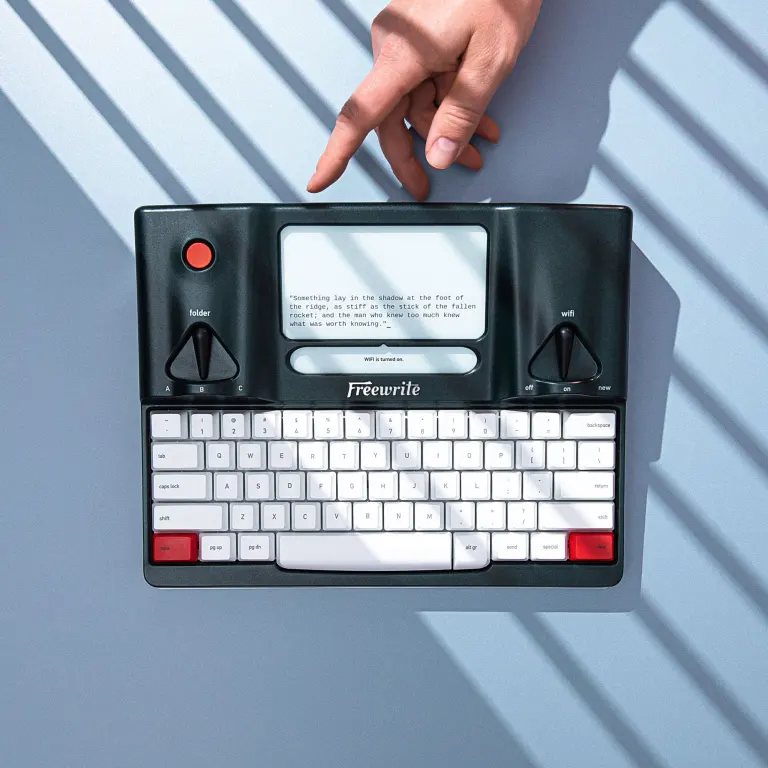
Digital Typewriters for Distraction-Free Writing
The smartest retro device to emerge might be the digital typewriter, a machine built on a simple principle: just a keyboard, a small screen, and your words. No notifications. No email. No temptation to open a web browser and spend thirty minutes reading about celebrity drama when you meant to write.
Freewrite positions itself as the premium option at $699, featuring a classic typewriter-inspired design with satisfying mechanical keys and a small screen. Drafts sync to the cloud, so you're not actually disconnected from your files; you just can't access distractions while writing. Pomera takes a different approach at $549, looking more like a compact laptop while still prioritizing focus. It includes spell check, document management, and word counts, useful tools that don't cross the line into distraction.
Both work on the same principle: if your writing device can't show you Instagram, you won't open Instagram while trying to write. The appeal is straightforward for anyone who's noticed that focus and constant connectivity are genuinely incompatible goals.
Audio in the Age of Earbuds: Boom Boxes, Cassettes, and Records
Perhaps the most visible retro trend is the audio equipment boom boxes, cassette players, and record players that disappeared when everything went digital, but never actually stopped mattering to people who liked owning music rather than streaming it.
We Are Rewind's GB-001 is a modern boom box at $579 that keeps the chunky buttons, cassette deck, and oversized speakers of the original design while adding Bluetooth and rechargeable batteries. Bumpboxx's BB-777, launching on Kickstarter, goes further; it's a three-way speaker system with dual cassette decks, CD player, USB recording, and AM/FM radio. The aesthetic is full '80s, but the functionality is contemporary enough to matter.
For something simpler, Retrospekt's $99 portable cassette player strips things down to essentials: play, rewind, fast-forward, record, with USB-C charging. It's the modern Walkman if someone remembered to actually update the charging cable.
Record players remain genuinely popular, with new entrants like Kickback World's DEKO model ($500) positioning vinyl playback as a design statement. The orange acrylic "Swedish modernism" aesthetic stands out from the traditional suitcase-style players that dominated retro record player design for years. The point isn't just the sound, it's the ritual of selecting an album, placing the needle, sitting with the choice you've made, instead of shuffling algorithmically through endless options.

Instant Cameras: The Permanence of Physical Photos
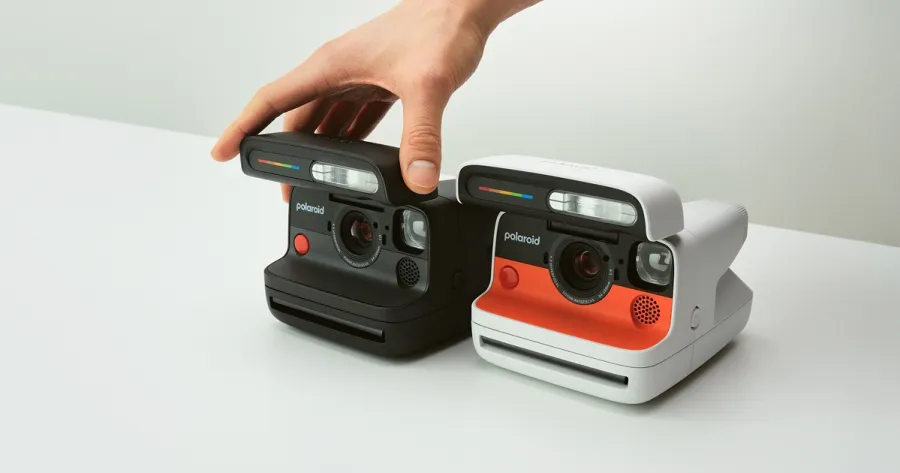
There's something genuinely different about holding a physical photograph seconds after taking it. Not the digital image on a screen, but an actual print you can hold, share, lose, and remember years later. Instant cameras offer that, which explains why they've remained popular despite every smartphone including a camera.
Polaroid never stopped evolving. The Flip model launched last year at $209, featuring modern conveniences like autofocus and app connectivity for remote control, the retro design coupled with features that actually solve modern problems. Fujifilm's Instax Mini Evo ($234) takes a hybrid approach, letting you shoot digitally and print instantly, offering flexibility that pure instant film cameras can't match. For people who want absolute simplicity, Kodak's single-use disposable camera at $31 remains a surprisingly good option, no skills required, just point and shoot.
The appeal here isn't nostalgia for difficulty. It's nostalgia for permanence. A digital photo taken on a phone lives in a cloud somewhere, potentially backed up to multiple servers, existing as data rather than as an object. An instant photo is tactile, fragile, real, the kind of thing you'll actually look at again because it occupies physical space.
Phones That Deliberately Refuse to Do Everything
The most striking retro trend might be phones that actively prevent you from certain things. Tin Can ($100) is designed for kids and looks like an actual landline phone, except it connects via Wi-Fi instead of a phone jack. Only approved people can call. Parents manage contacts through an app. It's a phone designed to prevent the kinds of connectivity that a smartphone enables.
More adult-focused, Clicks ($499) debuted at CES 2026 as a smartphone that looks remarkably like a BlackBerry, the device that dominated the 2000s and has seen an unexpected revival among Gen Z. The catch: it deliberately doesn't include access to mobile games or social media. You can use email, messaging, and productivity apps. You can't scroll TikTok or play games. It's a smartphone that's admitted the problem with modern smartphones: they're optimized for engagement over usefulness.
What's Actually Happening Here
This isn't just nostalgia. If it were, people wouldn't buy these devices in meaningful numbers, they'd just talk fondly about older technology while using newer stuff. What's happening instead is a recognition that the "everything device" model has real costs. Constant connectivity. Algorithmic recommendations. Attention extraction as a business model. Devices designed to be used rather than devices designed to be useful.
The retro tech revival is people opting out of that trade-off. They're choosing gadgets that do one or two things well, that don't have business models built around holding your attention, that don't buzz with notifications designed to make you feel like you're missing something.
Some of this is genuine nostalgia; the appeal of cassette tapes and vinyl records includes actual emotional memory. But the more interesting piece is the functionality these devices offer that modern equivalents have abandoned: focus, ownership, permanence, the deliberate friction that keeps you from endlessly scrolling.
The Practical Reality
None of these devices is better than modern alternatives in pure functional terms. A smartphone camera is objectively better than an instant camera. A streaming service gives you more music than a record player ever could. A laptop with internet access is more capable than a typewriter.
But "more capable" and "better at what you actually want to do with it" are increasingly different things. A typewriter can't distract you. A record player requires you to listen to an entire album. An instant camera makes you think before you shoot because film is expensive and limited. A phone that doesn't have social media can't algorithmically extract your attention.
The retro tech trend is people quietly concluding that the devices made to do everything are worse at doing the specific things they actually care about and choosing devices optimized for those specific things instead.
The retro tech revival isn't about rejection of progress. It's about recognizing that newer doesn't always mean better, that more features don't always mean more useful, and that sometimes a device designed to do one thing really well beats a device designed to do everything poorly while also tracking your behavior and selling your attention to advertisers.
Whether it's a typewriter that forces you to focus, a record player that makes you listen intentionally, a camera that makes you own your photos, or a phone that refuses to be a slot machine, the appeal is the same: technology that serves you rather than asking you to serve it.
About the Creator
Mark Lim
Hi I am mark an automotive student and a car, tech and food enthusiast ! Im gonna try and post daily & hope you enjoy what I write and do share my page with people you know. I would gladly appreciate it! Cheers
Enjoyed the story? Support the Creator.
Subscribe for free to receive all their stories in your feed. You could also become a paid subscriber, letting them know you appreciate their work.
Comments
There are no comments for this story
Be the first to respond and start the conversation.