
The Real Reason Apple’s Foldable Leak Complaint Doesn’t Add Up
Huawei’s Pura X beat the iPhone Duo to the wide-fold idea by 18 months. Here’s the timeline Apple hopes you ignore.
Who Is Copying Whom? Fact-Checking Apple's Foldable Leak Narrative
1. A Regret That Sparked Controversy
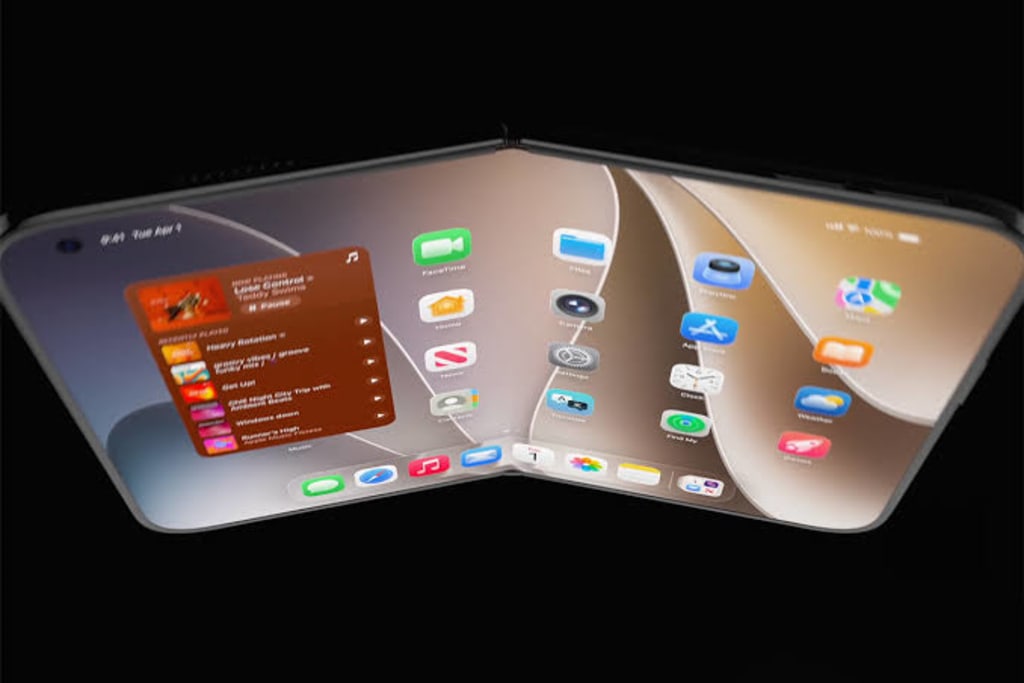
In September 2026, after Apple released its first foldable phone, the iPhone Duo, new CEO John Ternus and Senior Vice President of Worldwide Marketing Greg Joswiak gave a podcast interview. Joswiak said the outside world had already learned through leaks that Apple was developing a foldable phone. "Unfortunately, they also got the screen ratio," he said. After that, many manufacturers "coincidentally" became interested in the same ratio.
The implication was not subtle. Around the launch of the iPhone Duo, several Chinese manufacturers' wide-fold products were either released or exposed. Joswiak's "regret" was widely read as a hint that rivals had obtained Apple's design plans early through supply-chain leaks.
But the full timeline of the foldable industry tells a different story.
2. The Timeline: Who Defined the Wide Fold First?
On March 20, 2025, Huawei unveiled the industry's first wide-fold phone, the Pura X, at its Pura Pioneer Ceremony. It used a 16:10 wide inner display and was officially named a "wide fold." Yu Chengdong said at the launch that this ratio differed from the 16:9 screens used by mainstream products. The larger, wider inner display, he said, would deliver a more immersive experience for video, content creation, and information browsing.
This was not a trial product. In its first year on the market, the Pura X shipped over 1.5 million units. It became the world's first wide-fold model to break one million units. Its shipments exceeded the combined total of the next three manufacturers' flagship foldables. That helped Huawei reach a 71.8% share of China's foldable market. Huawei then released the Pura X Max large wide-fold and the Pura X View wide bar phone. In two years and four products, it turned "wide" from a marketing concept into a full product matrix across multiple price bands.
The iPhone Duo has a 7.76-inch 4:3 inner display. Apple announced it in September 2026. Official sales did not begin until late October. Measured from the introduction of the wide-fold concept, Huawei was ahead by a full year and a half. If we compare actual on-sale dates, the gap is larger. Huawei's Pura X went on sale on March 30, 2025, and sold out ten minutes after launch.
3. 4:3 Is an Industry Consensus, Not an Apple Exclusive
Even setting aside who first proposed the wide fold, a 4:3 or near-4:3 screen ratio is not Apple's exclusive invention.
The logic behind the shift is simple. Earlier foldables opened into something close to a square. That left large blank areas at the top and bottom during multitasking or video playback. Practicality suffered. In July 2026, Samsung's Galaxy Z Fold8 moved fully to a 4:3 inner display. It has a 5.5-inch 10:16 outer screen and a 7.6-inch 4:3 inner screen. Samsung's reasoning was direct: when turned horizontally for video or games, black bars are reduced; when used vertically for reading, the shape fits the human eye better. Xiaomi was also reported to be preparing a 4:3 inner display for the Mix Fold 5. When Korean media analyzed the trend, it ran the headline "The 4:3 ratio takes center stage, with Samsung, Apple, and Huawei competing for leadership." It treated all three as competitors in the wide-fold race, not as one following another.
The 4:3 ratio is a direction the industry found together through practical exploration of foldables. It is the result of product iteration driven by market feedback. Apple's choice of 4:3 follows an industry consensus. It is not an original creation.
4. Bloomberg's Reporting Is More Honest Than Apple's Executive Narrative
If Apple really were the original creator of the foldable category and everyone else were merely following, how do we explain the timing of Cook's decision to enter?
Bloomberg offered a different version from the one presented by Apple's executives. According to the report, when Cook visited China and other parts of Asia, he saw more and more consumers using foldable phones from Huawei, Samsung, and other manufacturers. That is what solidified his determination to push Apple into the category. The report named names. If it were seriously false, Apple could have responded legally. Apple took no action.
From a product cadence perspective, Apple's role as a follower is clearer. More than a month and a half passed between the iPhone Duo's announcement and its official sale. That gap was interpreted as leaving time for third-party software developers to adapt. Huawei's Pura X went on sale only ten days after its launch. The Pura X Max also went on sale quickly. That efficiency gap alone suggests that Apple's preparation in the foldable race was far less mature than that of the pioneers.
The irony goes further. After the iPhone Duo was released, Smartisan founder Luo Yonghao used the word "copied" seven times in a row to describe the product. He covered the foldable form factor, under-display camera, the short and wide screen ratio, the side Dock, smooth handoff between outer and inner screens, multi-angle hinge positioning, and the titanium alloy 3D-printed hinge cover. Samsung also posted a series of social media messages mocking Apple for merely "reheating old material." A company that was late to release its own foldable was collectively labeled a "copycat" by the pioneers, while it turned around and accused the pioneers of copying its screen ratio. The internal contradiction in that narrative is self-evident.
5. The Truth About the Leak Problem: Systemic Cracks, Not Rivals Being Too Good at Copying
Joswiak's "regret" was not entirely baseless. Apple does face serious confidentiality challenges. But the root of those challenges is not that rivals are too good at copying. It is that Apple's own secrecy system has developed systemic cracks.
The most direct example is the India leak exposed in June 2026. The ransomware group World Leaks stole more than 200,000 files, or 630 GB of data, from the systems of Apple's Indian contract manufacturer Tata Electronics. The haul included iPhone 18 Pro motherboard design drawings, component specification sheets, bills of materials and purchase prices for hundreds of suppliers, and even internal factory photos. Apple's iPhone production in India had risen from 5.8% in 2022 to about 26% in 2026. The company aimed to move up to 50% of iPhone output to India within two years. The speed of capacity transfer far outstripped the construction of information security systems. Indian manufacturing has long prioritized capacity over security. Confidentiality capabilities are badly out of step with production scale.
Apple's supply-chain secrecy system was once considered an industry benchmark. Employees with access to secrets had to sign nondisclosure agreements. Office areas were subject to tiered controls. Digital files were transmitted with 128-bit encryption. Security teams even used sting operations and fake leaks to flush out leakers. But that system depended on one premise: every link was under Apple's strict control. When capacity shifted massively to India and the manufacturing partner list expanded from Foxconn to newer players such as Tata Electronics, the weak links in the secrecy chain multiplied rapidly. The Tata Electronics breach was not an isolated case. Reports showed Tata's yield rate was only 50%. That indicates its manufacturing management was still maturing. Information security was even less of a priority.
A deeper challenge comes from the shared nature of global supply chains. Apple, Samsung, Huawei, Xiaomi, and others all rely on the same panel suppliers and component makers. Core parameters such as screen ratio, which involve panel cutting, must be communicated to panel makers in advance. Those panel makers serve multiple phone brands at once. Information naturally diffuses through the industrial chain. Joswiak himself admitted that the outside world already knew through leaks that Apple was developing a foldable phone. In an environment where leaks are the default, treating screen ratio as a core competitive secret is unrealistic.
Apple did not fail everywhere. The iPhone Duo's key technical selling point, a foldable nano-texture display, was successfully kept secret until the launch. Apple took extra confidentiality measures for this technology, strictly limiting who knew about it. It kept the feature hidden until the event. That fact points to a distinction: appearance parameters are surface intelligence, and leaks are almost inevitable. Defensible advantages come from core processes, which can be protected. Apple's screen ratio was exposed early, but its nano-texture process remained secret. The lesson is that confidentiality should focus on deep technology, not surface parameters.
6. The Real Impact on the Industry
Setting aside the "who copied whom" argument, Apple's entry into foldables matters for three reasons.
In the market, Counterpoint Research predicts that global foldable smartphone shipments will grow 21% year over year in 2026. Samsung's share is expected to fall from 40% in 2025 to 32%. Apple could take 25% in its first year. Huawei is expected to hold 24%. The new demand Apple brings will mainly fill the market gap left by existing brands' shipment adjustments. It will not create an entirely new incremental space.
On supply-chain security, this leak incident exposes an industry-wide pain point. A deeply integrated global supply chain is both a manufacturing advantage and a confidentiality risk. Leaks of form-factor parameters cost pioneers their early design dividends. Core technology secrecy is the last moat for high-end products. Apple kept the nano-texture display secret but failed to keep the screen ratio under wraps. That contrast alone should prompt every hardware manufacturer to rethink the priorities of its confidentiality strategy.
On product evolution, Apple's entry could push the foldable supply chain toward greater technical maturity and larger production scale. Apple's stringent requirements for displays, UTG ultra-thin flexible glass, hinges, and overall structure may force suppliers to improve their processes. Meanwhile, AI applications are becoming a key variable in the next stage of foldable competition. The larger display space of an unfolded phone can simultaneously present AI-generated content, source materials, and other applications. That could turn the foldable form factor from a purely hardware differentiator into a new interface for AI applications.
7. Admitting the Follower Role Is Not Shameful
A latecomer following or imitating a pioneer is not automatically a moral failing. When a design has already been proven by market feedback, timely follow-up benefits consumers. If a company can differentiate or even improve on the pioneer's work, so much the better. Competition often pushes an industry forward.
The problem is that Apple's executives chose the opposite path. Instead of frankly acknowledging the follower role and then emphasizing their own differentiated advantages, they hinted that the pioneers had "copied" Apple's screen ratio. Huawei's Pura X has been on sale for a year and a half and shipped 1.5 million units. Samsung's Fold8 and Xiaomi's Mix Fold 5 have adopted 4:3 ratios. The narrative lacks factual support and risks a public-relations backfire.
Apple does not need to belittle pioneers to prove originality. The product can make that case. Apple's breakthrough in nano-texture displays deserves recognition. The multi-tasking experience design of iOS in foldable form will matter. But if Apple insists on claiming "originality" for the screen ratio, the timeline gives an unambiguous answer: the wide-fold concept arrived with Huawei a full year and a half before Apple.
About the Creator
Jin
Writer of reamstories
https://reamstories.com/jin
Enjoyed the story? Support the Creator.
Subscribe for free to receive all their stories in your feed. You could also become a paid subscriber, letting them know you appreciate their work.
Comments
There are no comments for this story
Be the first to respond and start the conversation.