
The Prototype That Had to Unlearn Everything
Nubia's first AI phone broke into apps and got banned in 24 hours. Its successor knocked politely and got a license. But is it still the same phone?
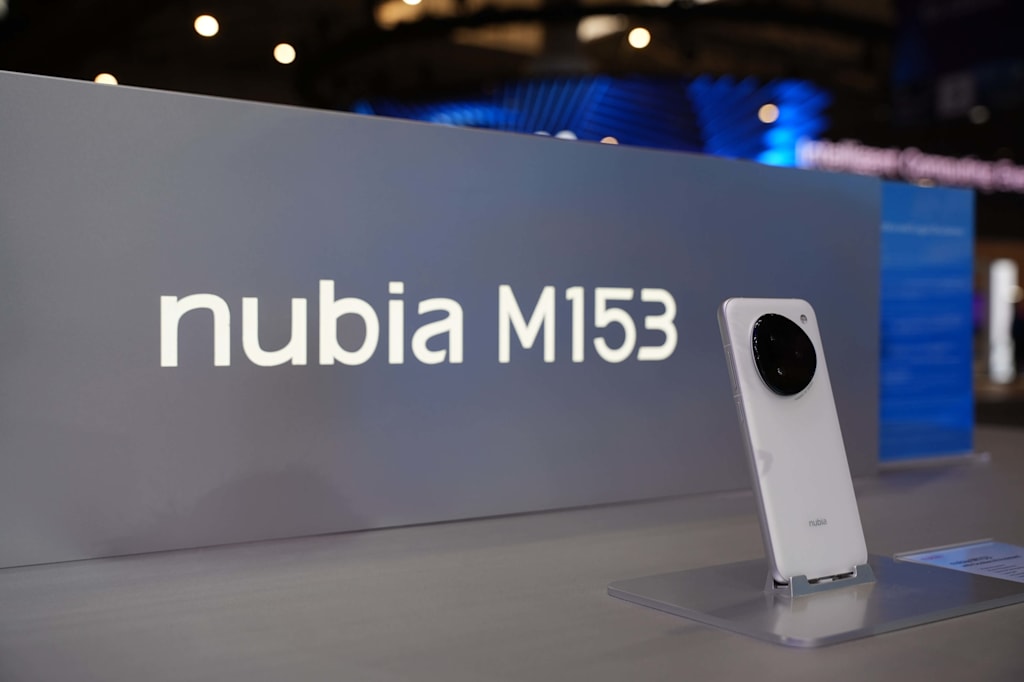
On December 1, 2025, ByteDance’s Doubao AI assistant and ZTE jointly released an engineering prototype – the Nubia M153 – running a technical preview of the Doubao Phone Assistant. The official price was 3,499 yuan. All 30,000 units sold out quickly, and on secondary markets the price was bid up to tens of thousands of yuan.
But on the second day after launch, WeChat threw up a login environment warning.
User accounts were forcibly logged out. Taobao displayed CAPTCHA challenges. Banking apps terminated sessions citing risky environments. WeChat, Alipay, Meituan – several of China’s super‑apps – collectively triggered their risk‑control systems, flagging the Doubao phone’s operations as "cheating tools."
The M153 never made it past the prototype stage. It never became a phone you could buy at a retail counter. Its inflated secondary‑market price became an ironic footnote.
Nine months later, the NaviX Ultra arrived.
On September 1, 2026, the phone officially received network access approval from China’s Ministry of Industry and Information Technology (MIIT). Two months earlier, on July 8, the "Nubia Doubao Phone Large Model" had already completed the mandatory generative AI service filing. It is the world’s first AI‑agent phone to secure both the model filing and the terminal network license.
The filing entity was Shanghai Zhongqi Jiyuan Intelligent Terminal Technology Co., Ltd. Ni Fei, President of ZTE’s Terminal Division and Nubia Technology, said simply: "Putting users at ease is the prerequisite for technological innovation."
But this time, the NaviX Ultra took a completely different path from the M153.
The first‑generation Doubao phone relied on GUI‑based simulated clicks – the AI mimicked human screen‑reading, recognised buttons, and injected click events, breaking a user’s spoken instruction into a sequence of actions that directly operated third‑party apps. Technically, this was "accessibility permission hijacking"; colloquially, it was "breaking in through the window."
The second generation shifted to the MCP (Model Context Protocol) and A2A (Agent‑to‑Agent Protocol). MCP, introduced by Anthropic, connects large models with external tools and data sources. A2A, initiated by Google, enables secure communication and collaboration between different AI agents. In plain terms, this is "knocking on the door and asking" – apps must voluntarily open their interfaces before the AI can act.
The difference is fundamental. The GUI approach required no cooperation from apps – in theory, it could manipulate any app. But it was unstable, easily caught by risk controls, and inefficient. The MCP/A2A path demands that apps proactively expose interfaces, offering faster and more reliable responses – provided the apps are willing to cooperate.
From publicly disclosed partnership lists, Didi, JD.com, Ctrip, and Qunar have completed integration. ByteDance‑owned apps such as Douyin, Xiaohongshu, and Feishu support voice interactions. WeChat has opened only limited capabilities – voice messaging and initiating audio/video calls are allowed, but payment transfers still require two‑factor authentication. Taobao, Meituan, Alipay, and most banking apps do not yet support direct AI operation.
A ZTE booth representative said that dozens of apps within the ByteDance ecosystem already support protocol‑based calls. As for how far negotiations have progressed with external super‑apps, no clear answer is available.
On the hardware side, the NaviX Ultra is a no‑compromise flagship: Snapdragon 8 Elite Gen 5, a 7,100mAh battery, and a 6.78‑inch flat 1.5K display. The one component that stands out is the memory – Nubia and Changxin Memory jointly announced that the NaviX Ultra will use Changxin’s LPDDR5X chips running at 10,667 Mbps. This marks the first mass‑production deployment of domestically produced high‑speed mobile DRAM at this rate. Compared with the mainstream 8,533 Mbps version, bandwidth improves by about 25%, while power consumption drops 30% versus LPDDR5.
The camera module adopts a horizontal track‑style design, supplied by Sunny Optical. A dedicated orange AI physical button sits on the side. Colour options include Blue Realm, Dream, Black, and White. The estimated price range is 5,000 to 8,000 yuan – for reference, the ill‑fated M153 was priced at 3,499 yuan.
But the primary challenge for the NaviX Ultra does not lie in its hardware specifications.
At its core, the battle is a transition from "app competition" to "agent competition." Whoever controls the orchestration of AI agents holds the keys to the next generation of advertising, transactions, and data distribution. ByteDance’s ambition is to transform itself from a "content provider" into a "service orchestrator" through the Doubao phone.
The problem is that Tencent and Alibaba have already laid down their defensive lines in advance.
WeChat is internally testing its own agent, "XiaoWei"; Alipay has launched "Abao" – both are essentially bulwarks against external AI agents hijacking their core entry points. In June this year, WeChat began opening its A2A capabilities to Huawei, Honor, Xiaomi, OPPO, and vivo. Phone makers and super‑apps are bypassing third parties and building direct collaborations. Huawei, Xiaomi, OPPO, and vivo are all developing their own on‑device large models, maintaining a wary stance toward external AI capabilities.
Ni Fei remarked that from the M153 to the NaviX Ultra, the "last mile" of bringing the AI‑agent phone from concept to mass production has reached its most decisive stretch.
But one fact cannot be sidestepped: the Doubao phone completed that "last mile" by switching its technical route – from "breaking in through the window" to "knocking on the door and asking."
After changing its technical path, can the Doubao phone still be called a Doubao phone? The M153 prototype that was bid up to tens of thousands of yuan, and this production model that only secured network access after changing course – they share the same name, but perhaps they are no longer the same thing.
About the Creator
Jin
Writer of reamstories
https://reamstories.com/jin
Enjoyed the story? Support the Creator.
Subscribe for free to receive all their stories in your feed. You could also become a paid subscriber, letting them know you appreciate their work.
Comments
There are no comments for this story
Be the first to respond and start the conversation.