
The New Frontier in Liver Care: How Breakthrough Therapies Are Transforming the Fight Against Chronic Liver Disease
RNA-based medicines, regenerative therapies, billion-dollar collaborations, and rising demand for advanced treatments are reshaping the global liver disease therapeutic market.

Liver disease has quietly become one of the most significant health challenges facing modern healthcare systems. While conditions such as heart disease, cancer, and diabetes often dominate public discussion, chronic liver disorders are affecting millions of people worldwide and creating an increasingly urgent need for innovative treatments.
From nonalcoholic steatohepatitis (NASH) and alcoholic liver disease to viral hepatitis, cirrhosis, fibrosis, and rare metabolic disorders, liver diseases represent a growing global burden. Many of these conditions progress silently for years before symptoms appear, making early intervention difficult and increasing the risk of severe complications.
Fortunately, the liver disease therapeutic landscape is entering a period of remarkable transformation. Advances in RNA-based medicines, regenerative therapies, targeted biologics, and precision medicine are creating new possibilities that extend far beyond traditional treatment approaches.
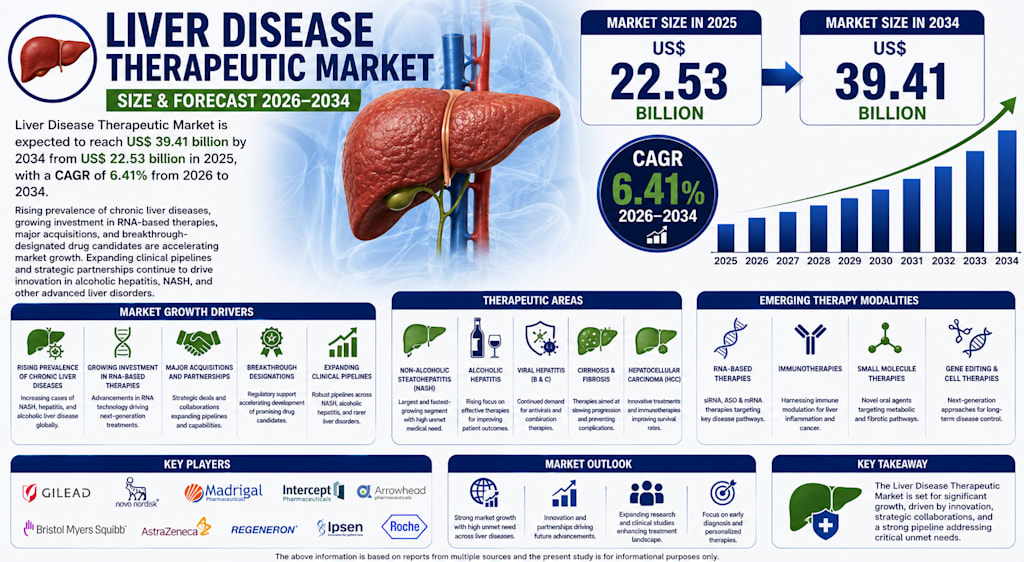
This momentum is reflected in strong market projections. According to Renub Research, the Global Liver Disease Therapeutic Market is expected to grow from US$ 22.53 billion in 2025 to US$ 39.41 billion by 2034, expanding at a compound annual growth rate (CAGR) of 6.41% between 2026 and 2034. Rising prevalence of chronic liver diseases, expanding clinical pipelines, breakthrough-designated therapies, strategic acquisitions, and increasing investment in RNA-based treatments are among the primary factors driving growth.
As scientific innovation accelerates, liver disease treatment is evolving from symptom management toward therapies capable of modifying, slowing, or potentially reversing disease progression.
The Growing Global Burden of Liver Disease
Liver diseases affect hundreds of millions of people worldwide and represent a major contributor to healthcare costs, hospitalizations, and mortality.
Several factors are fueling this growing burden.
Obesity, diabetes, metabolic syndrome, excessive alcohol consumption, aging populations, and viral hepatitis infections continue to drive rising incidence rates across both developed and emerging economies.
One of the most concerning trends is the rapid growth of nonalcoholic fatty liver disease (NAFLD) and its more severe form, nonalcoholic steatohepatitis (NASH).
These conditions are closely associated with modern lifestyle factors and are becoming increasingly common worldwide.
At the same time, alcohol-related liver disease remains a significant public health challenge, while viral hepatitis continues to affect millions despite advances in prevention and treatment.
As healthcare providers face growing numbers of patients with chronic liver disorders, demand for effective therapies continues to rise.
This expanding patient population forms the foundation for long-term market growth.
Strategic Acquisitions Are Accelerating Innovation
One of the strongest growth drivers within the liver disease therapeutic market is the increasing number of strategic acquisitions.
Large pharmaceutical companies are actively acquiring promising biotechnology firms and innovative drug candidates to strengthen their liver disease portfolios.
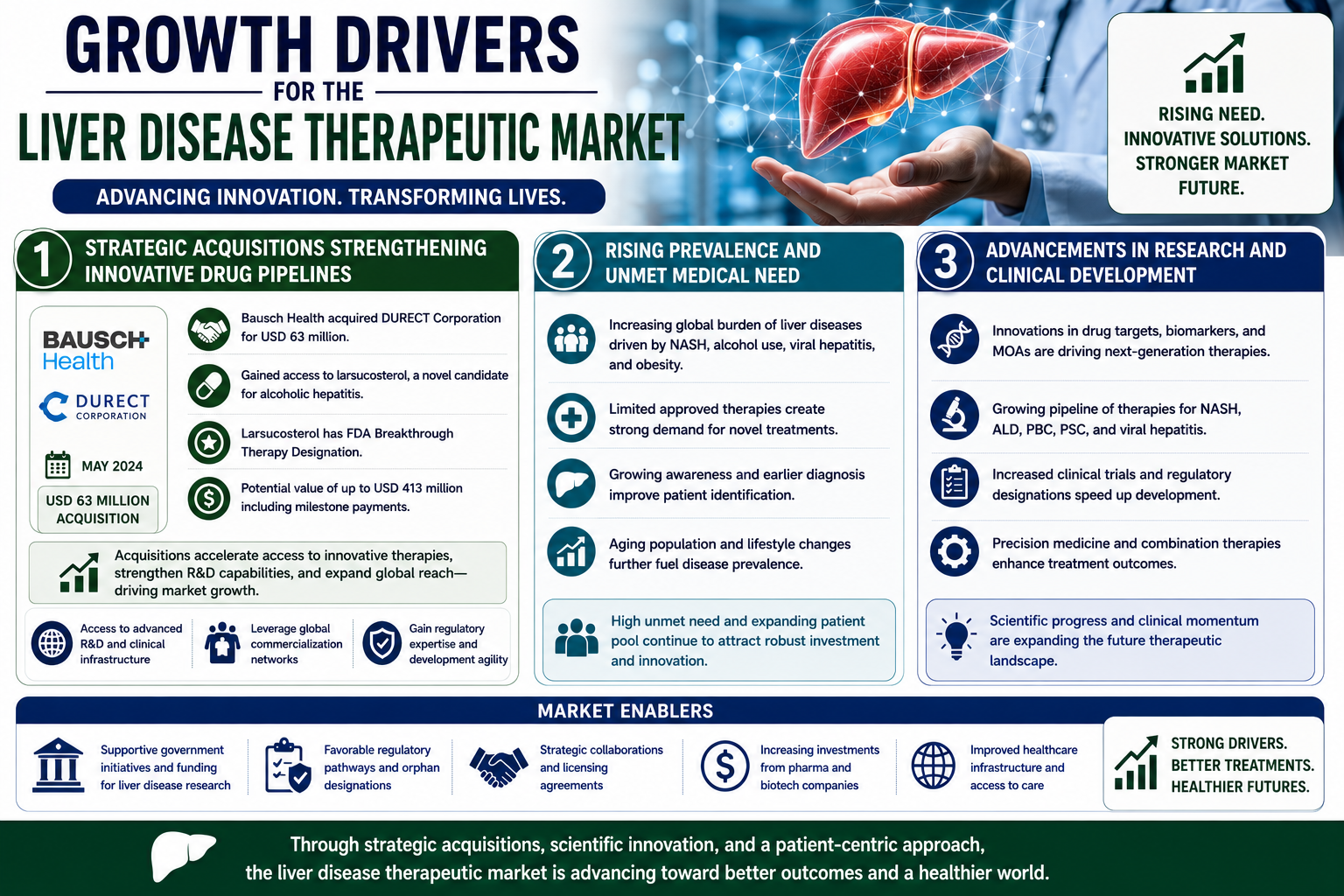
A notable example occurred in May 2024 when Bausch Health acquired DURECT Corporation for approximately US$ 63 million.
The acquisition provided Bausch Health with access to larsucosterol, an investigational therapy for alcoholic hepatitis that has received FDA Breakthrough Therapy Designation. The asset has significant commercial potential and addresses a disease area with limited treatment options.
Such acquisitions help accelerate development timelines by combining innovative therapies with the regulatory expertise, clinical development resources, and commercialization capabilities of larger pharmaceutical organizations.
As competition intensifies, strategic acquisitions are expected to remain a major force driving market expansion.
RNA-Based Therapies Are Redefining Treatment Possibilities
Perhaps the most exciting development within the liver disease therapeutic market is the emergence of RNA-based treatment platforms.
Traditional therapies often focus on managing symptoms or slowing disease progression. RNA therapeutics offer the potential to directly influence the genetic and molecular mechanisms responsible for liver disease.
Technologies such as RNA interference (RNAi), small interfering RNA (siRNA), messenger RNA (mRNA), and gene-regulating therapies are creating entirely new treatment possibilities.
These approaches can selectively silence or modify disease-causing genes involved in inflammation, fibrosis, fat accumulation, and metabolic dysfunction.
The precision offered by RNA-based medicine has generated enormous interest throughout the pharmaceutical industry.
As delivery technologies improve and clinical evidence accumulates, RNA therapeutics are increasingly viewed as one of the most promising solutions for chronic liver diseases.
This shift toward highly targeted molecular interventions represents a major evolution in liver disease treatment.
Billion-Dollar Partnerships Are Fueling Progress
Large-scale collaborations are becoming increasingly common as pharmaceutical companies seek to accelerate innovation.
One of the most significant examples occurred in April 2024 when Boehringer Ingelheim entered into a collaboration with Ochre Bio valued at more than US$ 1 billion.
The partnership focuses on developing regenerative therapies for advanced liver disease through the use of deep phenotyping, gene profiling, and RNA-based technologies.
Such collaborations allow companies to combine scientific expertise, technological platforms, research infrastructure, and financial resources.
The goal is to develop disease-modifying therapies capable of restoring liver function and enhancing the organ's natural regenerative abilities.
These partnerships highlight growing confidence in next-generation therapeutic approaches and demonstrate the industry's commitment to tackling complex liver disorders.
As more collaborations emerge, innovation within the market is expected to accelerate further.
RNA Interference Is Becoming a Major Focus
RNA interference technology has emerged as one of the most promising therapeutic strategies for chronic liver diseases.
RNAi therapies work by selectively silencing genes that contribute to disease progression.
This highly targeted mechanism allows researchers to address the root causes of conditions such as NASH, fibrosis, and metabolic liver disease.
In January 2024, Boehringer Ingelheim expanded its commitment to RNA-based innovation through a collaboration with Suzhou Ribo Life Science in a deal potentially exceeding US$ 2 billion.
The partnership focuses on developing RNAi therapies targeting disease-associated genes involved in chronic liver disorders.
Advances in delivery systems and molecular engineering are helping improve the safety and effectiveness of these therapies.
As clinical development progresses, RNAi is expected to play an increasingly important role in future treatment strategies.
NASH Is Creating Significant Market Opportunities
Nonalcoholic steatohepatitis has become one of the most important areas of focus within the liver disease therapeutic market.
NASH develops when fat accumulation in the liver triggers inflammation and progressive tissue damage.
Left untreated, the condition can lead to fibrosis, cirrhosis, liver failure, and even liver cancer.
The prevalence of NASH is increasing rapidly due to rising obesity rates, sedentary lifestyles, and growing incidence of metabolic syndrome.
Despite its growing impact, treatment options remain limited.
This unmet medical need has attracted substantial investment from pharmaceutical companies seeking to develop effective therapies.
Many of the industry's most advanced clinical programs target pathways associated with inflammation, fibrosis, lipid metabolism, and cellular injury.
As awareness and diagnosis rates increase, NASH is expected to remain one of the most important growth opportunities within the market.
Regenerative Medicine Could Transform Liver Care
The liver possesses a remarkable natural ability to regenerate, making it an ideal target for regenerative medicine.
Researchers are increasingly exploring therapies designed to stimulate tissue repair, restore liver function, and reverse disease progression.
These approaches include stem-cell therapies, regenerative biologics, gene therapies, and advanced cellular interventions.
Unlike traditional treatments that focus on symptom management, regenerative therapies aim to address underlying tissue damage directly.
The potential to restore liver health rather than merely slow disease progression has generated significant excitement among clinicians and investors.
As clinical evidence continues to emerge, regenerative medicine may fundamentally change the treatment paradigm for advanced liver disease.
Anti-Viral Therapies Continue to Play a Vital Role
While newer technologies attract considerable attention, antiviral therapies remain essential components of the liver disease therapeutic market.
Chronic viral hepatitis continues to affect millions of individuals worldwide and remains a major cause of liver damage.
Advances in antiviral treatment have dramatically improved outcomes for hepatitis patients.
A significant development occurred in June 2025 when AbbVie received FDA approval for an expanded indication for MAVYRET (glecaprevir/pibrentasvir), making it the first and only pangenotypic direct-acting antiviral approved for treating acute hepatitis C in just eight weeks with a 96% cure rate.
Such innovations continue improving patient outcomes and reducing the long-term burden of viral liver disease.
Hospitals Remain the Leading Treatment Centers
Hospitals continue to represent the largest end-user segment within the liver disease therapeutic market.
Managing advanced liver disease often requires multidisciplinary care involving hepatologists, gastroenterologists, transplant specialists, radiologists, and other healthcare professionals.
Hospitals provide access to advanced diagnostic technologies, specialized treatment programs, transplantation services, and clinical trials.
They also serve as key centers for administering biologics, advanced therapies, and investigational treatments.
As healthcare systems expand and diagnostic capabilities improve, hospitals are expected to remain central to liver disease management.
The United States Continues to Lead Innovation
The United States remains one of the most advanced liver disease therapeutic markets globally.
High disease prevalence, strong biotechnology investment, active clinical research programs, and supportive regulatory pathways contribute to market leadership.
The FDA's Breakthrough Therapy and Fast Track designations help accelerate development for promising therapies addressing unmet medical needs.
A major recent development occurred in May 2025 when GSK announced a US$ 1.2 billion acquisition of efimosfermin from Boston Pharmaceuticals, expanding its metabolic liver disease portfolio through a next-generation FGF21 analog.
These investments demonstrate the industry's confidence in future growth opportunities.
Emerging Markets Are Expanding Rapidly
China and Saudi Arabia are becoming increasingly important contributors to market growth.
China's large patient population, rising obesity rates, expanding healthcare infrastructure, and growing investment in biotechnology continue driving rapid expansion. Domestic companies are actively investing in RNAi therapies, biologics, and antifibrotic treatments.
Saudi Arabia is benefiting from healthcare modernization initiatives under Vision 2030, increasing awareness of metabolic disorders, and expanded access to advanced diagnostics and treatment options. Rising rates of obesity and diabetes are also contributing to growing demand for liver disease therapies.
These markets are expected to play increasingly important roles in the future of global liver disease treatment.
Challenges Continue to Limit Progress
Despite encouraging advances, several challenges remain.
One of the most significant obstacles is the limited availability of approved therapies for conditions such as NASH and alcoholic hepatitis.
Many promising drug candidates fail during late-stage clinical trials due to the complex and multifactorial nature of liver diseases. Variability in disease progression, patient populations, and clinical endpoints further complicates development efforts.
Cost also remains a major concern.
Advanced therapies, including RNA-based treatments, biologics, and regenerative interventions, often carry substantial price tags. Limited reimbursement, inadequate screening programs, and restricted access to specialists further reduce treatment availability in many regions.
Overcoming these barriers will be critical to maximizing the impact of future innovations.
Final Thoughts
The liver disease therapeutic market is entering one of the most exciting periods in its history. Advances in RNA therapeutics, regenerative medicine, targeted biologics, and precision medicine are opening new possibilities for treating some of the most challenging chronic diseases.
Strategic acquisitions, billion-dollar collaborations, and expanding clinical pipelines are accelerating the development of therapies that may fundamentally transform patient outcomes.
With the market projected to grow from US$ 22.53 billion in 2025 to US$ 39.41 billion by 2034, opportunities for innovation and investment remain substantial.
As science continues unlocking new ways to repair, protect, and regenerate the liver, the future of liver disease treatment appears increasingly promising. For millions of patients worldwide, these advances offer hope for longer, healthier lives and a future where chronic liver disease can be managed more effectively than ever before.
About the Creator
Enjoyed the story? Support the Creator.
Subscribe for free to receive all their stories in your feed.
Comments
There are no comments for this story
Be the first to respond and start the conversation.