
The New Era of Cystic Fibrosis Care: How Breakthrough Therapies Are Transforming Lives Worldwide
Innovative CFTR modulators, expanding newborn screening programs, and growing investment in rare disease research are reshaping the future of cystic fibrosis treatment and patient care.

For decades, cystic fibrosis was considered one of the most challenging genetic diseases to manage. Patients often faced recurring respiratory infections, digestive complications, frequent hospitalizations, and significantly reduced life expectancy. Treatment primarily focused on managing symptoms rather than addressing the root cause of the disease.
Today, however, the story of cystic fibrosis is changing dramatically.
Advances in precision medicine, genetic research, and targeted therapies are transforming how healthcare providers approach this complex condition. Patients who once relied exclusively on supportive care now have access to groundbreaking treatments that target the underlying genetic defects responsible for the disease.
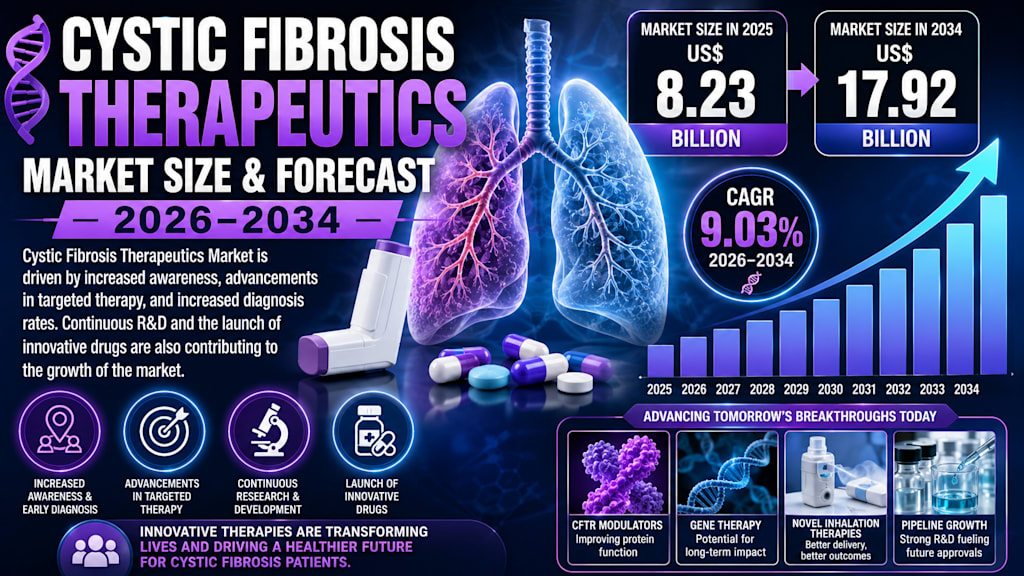
This progress is creating significant momentum within the global healthcare industry. According to Renub Research, the global Cystic Fibrosis Therapeutics Market is expected to grow from US$ 8.23 billion in 2025 to US$ 17.92 billion by 2034, representing a compound annual growth rate (CAGR) of 9.03% between 2026 and 2034. The market's expansion is being driven by increased awareness, improved diagnosis rates, continuous research and development, and the introduction of innovative therapies that are changing patient outcomes worldwide.
As scientific innovation accelerates, cystic fibrosis is becoming one of the clearest examples of how personalized medicine can transform the treatment of rare diseases.
Understanding Cystic Fibrosis
Cystic fibrosis is a hereditary genetic disorder that primarily affects the lungs and digestive system. The disease causes the body to produce thick, sticky mucus that accumulates in various organs, particularly the airways and pancreas.
This abnormal mucus buildup can lead to chronic respiratory infections, breathing difficulties, digestive complications, nutritional deficiencies, and progressive organ damage.
For many years, treatment focused largely on symptom management. Patients often required combinations of antibiotics, bronchodilators, mucolytics, pancreatic enzyme supplements, nutritional therapies, and respiratory support to maintain quality of life.
While these treatments remain important, recent advances have fundamentally changed the treatment landscape by targeting the disease at its genetic source rather than simply addressing its symptoms.
This shift represents one of the most important developments in rare disease medicine.
The Rise of CFTR Modulator Therapies
The most significant breakthrough in cystic fibrosis treatment has been the development of CFTR modulator therapies.
CFTR, or cystic fibrosis transmembrane conductance regulator, is the protein affected by genetic mutations responsible for cystic fibrosis. When this protein fails to function properly, mucus becomes abnormally thick and sticky.
CFTR modulators are designed to correct or improve the function of the defective protein, directly addressing the underlying cause of the disease.
Unlike traditional therapies that focus on symptom management, these treatments work at the molecular level to improve cellular function and reduce disease progression.
The impact has been remarkable. Patients receiving CFTR modulators often experience improved lung function, fewer respiratory complications, enhanced quality of life, and reduced hospitalization rates.
Pharmaceutical companies continue investing heavily in next-generation modulators designed to treat a broader range of genetic mutations while delivering improved efficacy and safety profiles.
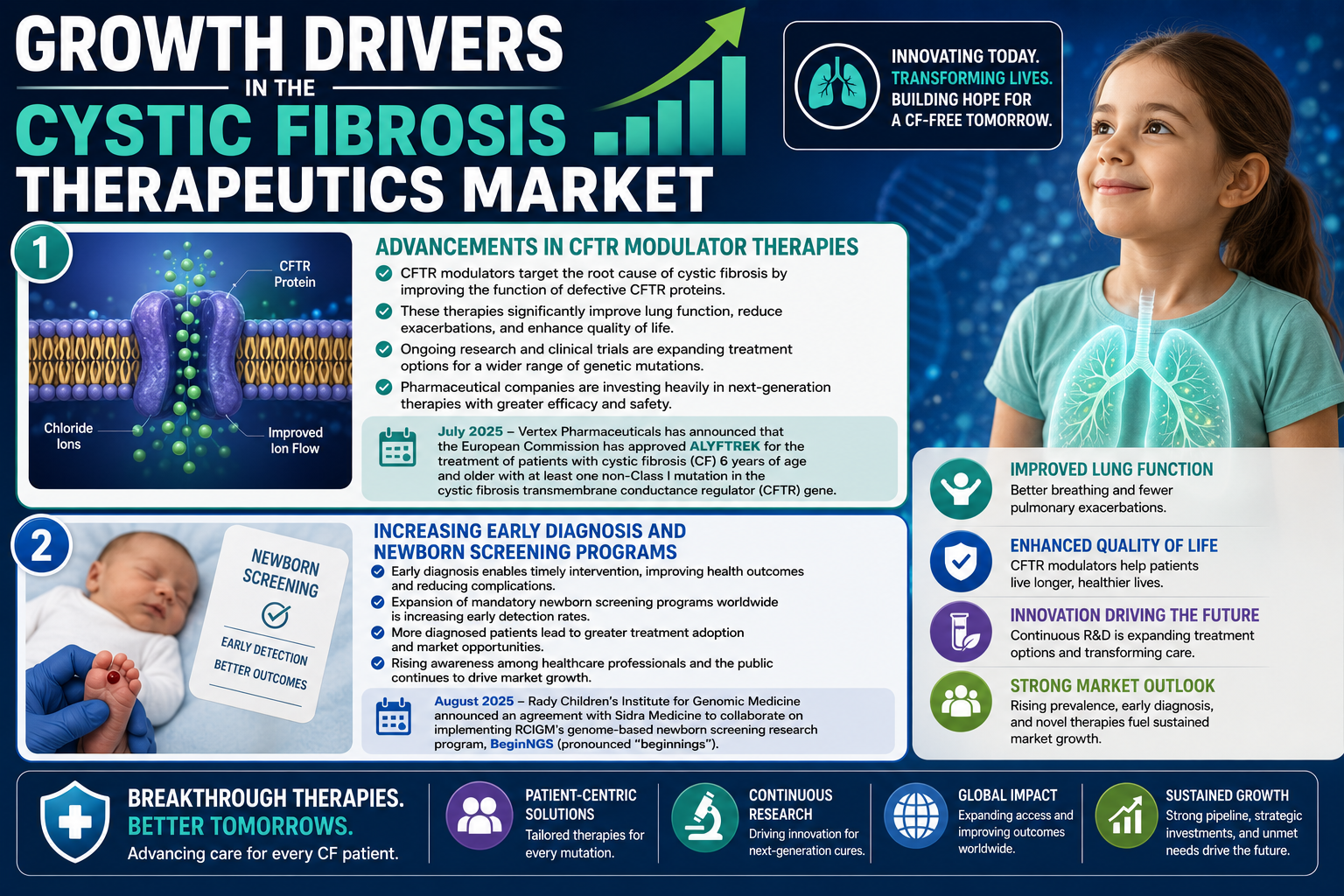
One notable milestone occurred in July 2025 when Vertex Pharmaceuticals received European Commission approval for ALYFTREK, a therapy intended for cystic fibrosis patients aged six years and older who possess at least one non-Class I mutation in the CFTR gene.
These developments continue expanding treatment opportunities for patients around the world.
Early Diagnosis Is Improving Patient Outcomes
Another major factor contributing to market growth is the expansion of newborn screening and early diagnosis programs.
Historically, many cystic fibrosis patients experienced delays in diagnosis, allowing disease progression before treatment could begin. Today, mandatory newborn screening programs are becoming increasingly common across many countries.
Early diagnosis enables healthcare providers to initiate treatment sooner, helping prevent complications and improve long-term health outcomes.
Screening programs also increase awareness among healthcare professionals and families, ensuring that patients receive appropriate care from the earliest stages of life.
The benefits extend beyond individual patients. Earlier diagnosis creates opportunities for healthcare systems to reduce long-term treatment costs while improving overall disease management.
Recent initiatives demonstrate growing global interest in advanced screening technologies. In August 2025, Rady Children’s Institute for Genomic Medicine announced a collaboration with Sidra Medicine in Qatar to implement genome-based newborn screening through the BeginNGS program.
As screening programs expand worldwide, more patients are expected to gain access to early intervention and life-changing therapies.
Rare Disease Research Is Attracting Investment
The cystic fibrosis therapeutics market is also benefiting from increased investment in rare disease research.
Governments, pharmaceutical companies, academic institutions, and nonprofit organizations are directing significant resources toward developing innovative therapies for rare genetic disorders.
Various incentives have encouraged this investment, including orphan drug programs, tax benefits, accelerated regulatory pathways, and research grants.
The growing emphasis on rare disease innovation has accelerated scientific discovery while creating opportunities for pharmaceutical companies to develop highly specialized treatments.
Strategic partnerships and collaborative research initiatives are playing an increasingly important role in advancing therapeutic development.
One example occurred in November 2024 when the Cystic Fibrosis Foundation committed up to $15 million to support collaboration between ReCode Therapeutics and Intellia Therapeutics in developing a gene-editing therapy for cystic fibrosis patients.
These investments highlight the industry's commitment to finding increasingly effective treatments and potentially curative solutions.
Gene Therapy and Personalized Medicine Represent the Future
Beyond CFTR modulators, researchers are exploring even more advanced treatment approaches.
Gene therapy has emerged as one of the most exciting areas of investigation. Rather than correcting protein function, gene therapies aim to address the underlying genetic mutations responsible for the disease itself.
Scientists are also developing personalized medicine approaches tailored to specific genetic profiles.
Because cystic fibrosis can result from numerous different genetic mutations, individualized therapies may provide more effective outcomes for certain patient groups.
Although these technologies remain under development, they have the potential to fundamentally transform how cystic fibrosis is treated in the future.
The increasing focus on precision medicine reflects a broader trend across healthcare, where treatments are becoming more targeted, personalized, and biologically sophisticated.
Bronchodilators Continue to Play a Critical Role
While advanced therapies attract significant attention, supportive treatments remain essential components of cystic fibrosis care.
Bronchodilators continue to play an important role in helping patients manage respiratory symptoms.
These medications work by relaxing and widening the airways, making it easier for patients to breathe and improving the effectiveness of other respiratory therapies.
Bronchodilators are frequently used alongside antibiotics, mucolytics, and airway clearance techniques to optimize respiratory health.
Their ability to provide immediate symptom relief ensures their continued importance within comprehensive treatment strategies.
As diagnosis rates increase and more patients receive ongoing care, demand for bronchodilator therapies remains strong.
Mucolytics Remain Essential in Disease Management
Mucolytic therapies continue serving as another cornerstone of cystic fibrosis treatment.
These medications help thin and loosen mucus within the lungs, making it easier for patients to clear secretions and reduce the risk of infection.
Improved mucus clearance supports better lung function and contributes to overall respiratory health.
Although newer disease-modifying therapies have transformed treatment approaches, mucolytics remain essential for many patients as part of comprehensive care plans.
Ongoing improvements in formulation technologies are enhancing their effectiveness while improving patient convenience and adherence.
As healthcare providers increasingly emphasize preventive care and long-term disease management, mucolytic therapies continue maintaining an important role within the market.
Oral Therapies Are Driving Patient Convenience
The oral drug segment has emerged as one of the most important areas of growth within the cystic fibrosis therapeutics market.
Patients and healthcare providers increasingly favor oral medications due to their convenience, ease of administration, and potential for improved treatment adherence.
Modern oral therapies include antibiotics, anti-inflammatory medications, nutritional supplements, and advanced CFTR modulators.
The success of oral CFTR modulators has been particularly significant, providing patients with highly effective treatment options that can be incorporated into daily routines more easily than many alternative therapies.
As pharmaceutical companies continue developing patient-centric treatment solutions, the oral therapy segment is expected to remain a major contributor to market growth.
Hospitals Continue to Lead Patient Care
Hospitals remain central to cystic fibrosis diagnosis, treatment, and ongoing management.
Specialized treatment centers provide access to multidisciplinary care teams that often include pulmonologists, nutritionists, physiotherapists, genetic counselors, and infectious disease specialists.
These facilities also play a critical role in administering advanced therapies, managing severe complications, conducting clinical trials, and introducing innovative treatment options.
As awareness and diagnosis rates continue increasing, hospitals are expected to remain at the forefront of cystic fibrosis care delivery.
Their involvement in research and therapeutic innovation further strengthens their importance within the overall treatment ecosystem.
Regional Markets Driving Innovation
The United States remains the largest and most advanced market for cystic fibrosis therapeutics.
Strong research capabilities, significant healthcare spending, favorable reimbursement policies, and early adoption of innovative treatments have positioned the country as a global leader in cystic fibrosis care. In December 2024, Vertex Pharmaceuticals received FDA approval for ALYFTREK, expanding treatment options for eligible patients in the United States.
The United Kingdom also maintains a well-developed market supported by the National Health Service, comprehensive screening programs, and strong clinical research infrastructure. Recent regulatory approvals continue improving access to advanced therapies.
India's market remains in a developmental phase but is experiencing growth due to increasing awareness, improving healthcare infrastructure, and enhanced diagnostic capabilities.
Saudi Arabia is also witnessing steady market expansion driven by healthcare investments, improved access to specialized treatment centers, and broader availability of advanced therapies.
Challenges Still Facing the Industry
Despite significant progress, several challenges remain.
The high cost of advanced therapies continues to limit accessibility for many patients. CFTR modulators and other innovative treatments require extensive research and development investments, resulting in substantial treatment expenses.
The relatively small patient population associated with cystic fibrosis also presents challenges for pharmaceutical development. Limited patient numbers can complicate clinical trials and increase development costs.
Genetic variability further complicates treatment because not all patients respond equally to existing therapies.
Addressing these challenges will be critical to ensuring broader access and continued innovation.
Final Thoughts
The cystic fibrosis therapeutics market is undergoing one of the most remarkable transformations in modern healthcare. What was once considered a disease managed primarily through symptom control is increasingly becoming a condition treated through targeted, disease-modifying therapies.
Advances in CFTR modulators, newborn screening programs, gene therapy research, and personalized medicine are creating new possibilities for patients around the world.
With the market projected to grow from US$ 8.23 billion in 2025 to US$ 17.92 billion by 2034, the future of cystic fibrosis treatment appears exceptionally promising. Continued investment in research, innovation, and patient access will likely unlock even greater breakthroughs in the years ahead.
For patients, families, healthcare providers, and researchers, the ongoing evolution of cystic fibrosis therapeutics offers something that was once difficult to imagine: genuine hope for a healthier and more manageable future.
About the Creator
Enjoyed the story? Support the Creator.
Subscribe for free to receive all their stories in your feed.
Comments
There are no comments for this story
Be the first to respond and start the conversation.