
The Most Difficult Languages to Translate and How to Tackle Them
Master localization by understanding significant translation hurdles posed by several languages.

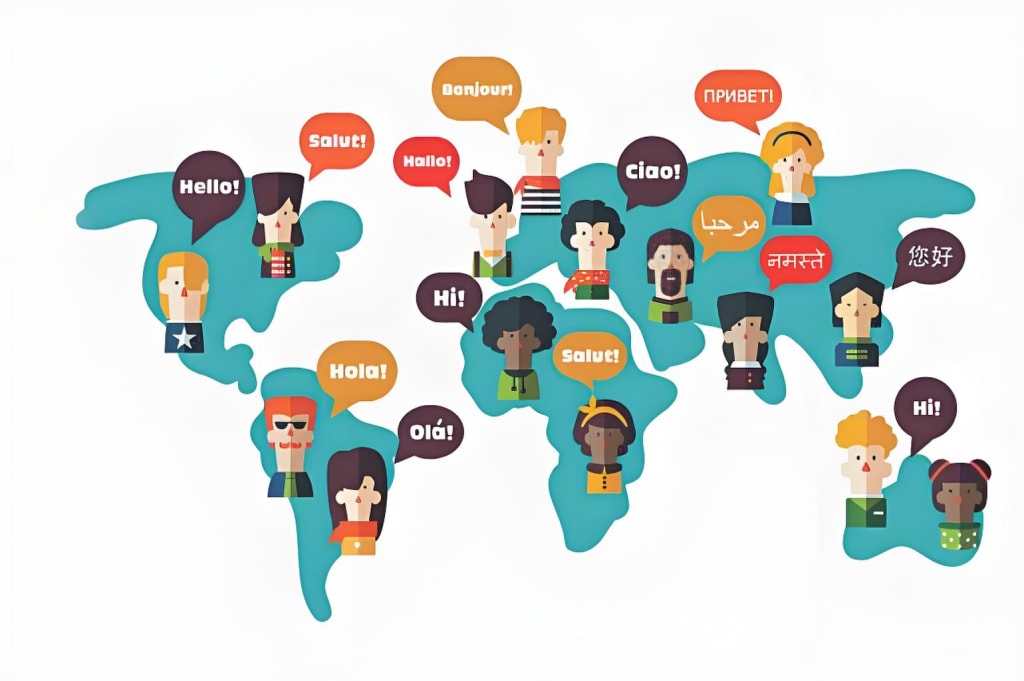
In today's globalized world, translation is more than just swapping words—it’s the key to bridging cultural divides and sparking genuine connections. Yet, some languages are notorious for the challenges they present. This isn’t simply about complexity; it’s about diving deep into culture, history, and unique expressions. In this post, we’ll explore languages that even seasoned translators find tricky, explain why they’re so challenging, and share practical tips to overcome these hurdles. Whether you’re a professional translator or a language enthusiast, understanding these obstacles is the first step toward delivering translations that truly resonate.
Why Some Languages Are Harder to Translate
Translation isn’t a one-to-one word swap—it’s a journey into the heart of a language’s culture and history. Factors such as intricate grammar, idiomatic expressions, and deep-rooted cultural references add layers of complexity. Here are a few reasons why some languages are tougher to translate than others:
- Grammar and Syntax Complexity: Some languages have elaborate grammatical rules that defy direct equivalents.
- Cultural Nuances: Every language carries its own historical and cultural quirks that may be lost in a literal translation.
- Ambiguity and Multiple Meanings: Words can shift meaning based on context.
- Lack of Direct Equivalents: Certain concepts simply don’t exist in other languages.
Armed with these insights, let’s take a closer look at some of the world’s most challenging languages to translate.
This article is part of our Glocalingo blog where we talk about languages and cultures in plain language. If you want to learn in detail the practical strategies for overcoming the top difficulties posed by these harder-to-translate languages, you can read the detailed article for free on our website.
The Most Difficult Languages to Translate
Although there are many languages that are considered difficult to translate, below are the most popular.
1. Chinese: A Complex World of Logograms
Chinese stands out for its unique logographic system—each character can represent an idea, sound, or even an entire word. Here’s why translating Chinese can be so demanding:
- Logographic System: Thousands of characters require deep familiarity.
- Non-Phonetic Script: Characters don’t provide direct phonetic clues, complicating transliteration.
- Tonal Nuances: As a tonal language, a slight change in tone can completely alter meaning.
- Cultural Richness: Idioms and historical references often have no direct equivalents.
Tips for Translators:
- Immerse yourself in Chinese culture and history.
- Practice listening and speaking with native speakers to master tonal differences.
- Use advanced translation tools and collaborate with cultural experts to ensure accuracy.
2. Arabic: The Intricacies of Dialects and Syntax
Arabic carries a rich cultural and religious heritage, but its complexity can be daunting:
- Diglossia: Numerous regional dialects vary in vocabulary and grammar.
- Script and Orthography: Written from right to left, letters change shape based on their position.
- Complex Morphology: A root-based system creates many nuanced word forms.
- Cultural Nuances: Deep cultural and religious references are often hard to mirror in another language.
Tips for Translators:
- Obtain specialized training in both Modern Standard Arabic and regional dialects.
- Collaborate with native speakers to navigate dialect variations.
- Leverage tools that analyze Arabic morphology for better context.
3. Japanese: The Struggle with Syntax and Honorifics
Japanese translation blends art and technique. Its challenges include:
- Multiple Writing Systems: Kanji, hiragana, and katakana each play a unique role.
- Honorifics and Politeness: Subtle shifts in formality affect word choice and tone.
- Context-Dependence: Often, subjects and objects are omitted, relying heavily on context.
- Cultural Idioms: Traditional expressions carry deep cultural meanings that resist literal translation.
Tips for Translators:
- Get comfortable with all three writing systems.
- Understand Japanese social norms and honorifics to choose the right level of formality.
- Work with native speakers to fully grasp context and subtle meanings.
4. Korean: Between Tradition and Modernity
Korean may have one of the world’s most logical alphabets, yet it presents its own hurdles:
- Honorifics and Formality: A detailed system of honorifics demands precision.
- Unique Grammar: The subject-object-verb order and grammatical particles can be challenging.
- Context Dependence: Many words shift meaning depending on context.
- Cultural Nuances: Deep-rooted cultural expressions require more than a literal translation.
Tips for Translators:
- Master the honorific system through ongoing practice.
- Adapt sentence structures to maintain the intended emphasis.
- Consult native speakers to capture cultural subtleties.
5. Uralic Languages (Finnish, Hungarian, and Estonian): The Complexity of Cases and Conjugations
Though less commonly encountered, Uralic languages pack a linguistic punch:
- Agglutinative Structure: Words form by adding multiple suffixes, creating intricate compounds.
- Vowel Harmony: Suffixes adjust based on the root’s vowels, complicating direct translation.
- Extensive Case System: A myriad of grammatical cases influences word function.
- Complex Verb Conjugations: Multiple forms indicate tense, mood, and aspect.
- Flexible Word Order: Sentence structure shifts based on emphasis and context.
Tips for Translators:
- Study the grammar rules and vocabulary deeply.
- Use specialized software for morphological analysis.
- Break down compound words before reconstructing their meaning in the target language.
6. Russian: The Puzzle of Syntax and Nuances
Russian might use fewer words than English, but its grammar is famously complex:
- Complex Grammar: With six cases and flexible word order, context is crucial.
- Verb Aspects: The interplay between perfective and imperfective verbs adds depth.
- Rich Vocabulary: Nuanced synonyms require careful selection.
- Cultural References: Idioms and historical contexts need a deep cultural understanding.
Tips for Translators:
- Invest time in mastering Russian grammar and verb aspects.
- Always consider the broader context when selecting words.
- Immerse yourself in Russian culture to better translate idiomatic expressions.
7. Thai: The Blend of Tonality and Royalty
Thai is a fascinating language with its own set of unique challenges:
- Tonal Complexity: Five tones mean that a slight shift can change a word’s meaning.
- Unique Script: A non-Latin writing system with no uppercase or lowercase and minimal punctuation.
- Complex Grammar: Unique sentence structures and modifier placement can be puzzling.
- Cultural Idioms: Deep cultural expressions are tough to capture literally.
- Politeness Levels: Different registers influence word choice and sentence structure.
Tips for Translators:
- Rely on context-driven methods to capture the correct tone.
- Use advanced text segmentation tools to parse Thai accurately.
- Develop a strong understanding of Thai cultural norms and idiomatic expressions.
Conclusion: Bridging Cultures Through Translation
Translation is much more than a mechanical exchange of words—it’s a powerful way to connect cultures and share stories. Whether you’re decoding the logograms of Chinese, navigating the diverse dialects of Arabic, mastering the honorifics in Japanese, Korean, or Thai, or untangling the grammatical intricacies of Finnish, Hungarian, Estonian, or Russian, every language presents its own puzzle.
For translators, the journey involves continuous learning, collaboration, and the smart use of advanced tools to capture not just the meaning, but the soul of a language. And for those commissioning translations, partnering with native experts and providing clear reference materials can make all the difference.
As technology and AI continue to evolve, the art of translation will become even more dynamic—bridging gaps and connecting our global community in ways we’re only beginning to imagine.
About the Creator
Glocalingo
A space dedicated to discuss the monetization and demystification of languages and cultures, including: ways to generate income by leveraging your unique linguistic abilities, cultural knowledge, as well as AI and automation.
Enjoyed the story? Support the Creator.
Subscribe for free to receive all their stories in your feed.
Comments
There are no comments for this story
Be the first to respond and start the conversation.