
The Mobility Shift: Tesla’s Robotaxi Reality Check and Uber’s Shocking Bet on Its Former CEO
As autonomous vehicle ambitions face real-world data hurdles, the transportation sector sees massive capital shifts, historic reconciliations, and a renewed focus on industrial AI.

The intersection of artificial intelligence and transportation is entering a complex new phase. As the latest earnings season reveals, the gap between autonomous promises and on-the-ground realities is widening. Meanwhile, in a twist that would have seemed unimaginable a decade ago, former rivals are joining forces, injecting billions into the next wave of mobility and industrial automation.
Tesla’s Robotaxi Ambitions Meet Reality
Tesla kicked off the mobility sector’s earnings season with disclosures that are likely to puzzle, if not concern, investors. The company has quietly walked back previous promises to achieve “volume production” of its highly anticipated Cybercab, Tesla Semi, and Megapack 3 in 2026.
More striking is the performance of its existing robotaxi operations. While Tesla has publicly celebrated the expansion of its robotaxi service into new cities across Florida and Texas, a closer look at the company’s shareholder letter reveals a troubling trend. The chart showing steady growth in paid robotaxi rides between August 2025 and June 2026 represents cumulative data. When broken down quarterly, the numbers tell a different story: Tesla’s fleet of Model Y SUVs carrying paying passengers covered approximately 1.1 million miles in the first quarter, but that figure plummeted to roughly 700,000 miles in the second quarter, a sharp decline of about 36%.
Adding to the intrigue, Elon Musk revealed that Tesla must now accumulate specific driving data using Cybercabs retrofitted with steering wheels and pedals to calibrate the vehicle’s chassis. This admission marks a notable pivot from the company’s long-standing assertion that its nearly 10 million customer vehicles have been gathering sufficient data to train its Full Self-Driving (Supervised) system and future robotaxis. Financially, the strain is evident: Tesla’s capital expenditures have doubled, pushing the company back into negative free cash flow territory, and a 5% year-over-year drop in net income underscores the high cost of building its next generation of products.
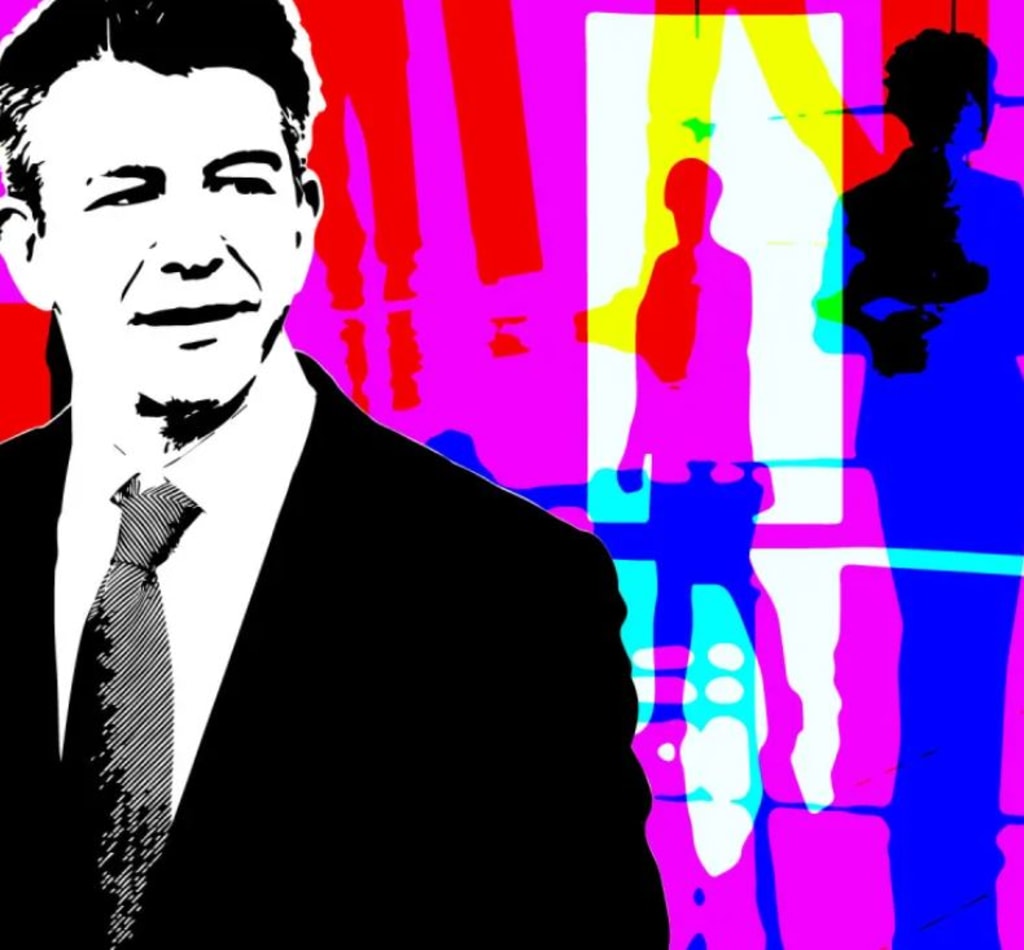
Uber’s $100 Million Gamble on Travis Kalanick
In one of the most surprising developments in recent mobility history, Uber has invested $100 million in a new venture led by its former CEO, Travis Kalanick. Kalanick’s rebranded holding company, Atoms, recently secured a massive $1.7 billion funding round led by Andreessen Horowitz, with participation from Bain Capital, Fifth Wall, and Uber itself. Ben Horowitz will also join Atoms’ board of directors.
This investment is staggering given the messy history between Kalanick and Uber, which culminated in his resignation nearly a decade ago amid a string of scandals and lawsuits. The plot thickens with the involvement of Anthony Levandowski. Atoms recently acquired Levandowski’s industrial automation startup, Pronto. This reunites two figures at the center of one of Silicon Valley’s most infamous legal battles: Waymo’s 2017 trade secret theft lawsuit against Uber over Levandowski’s self-driving truck startup, Otto.
Despite this fraught history, Uber appears willing to look forward. According to internal communications, Atoms plans to deploy this capital heavily into “Industrial AI and physical automation applied to mining and transport,” with Pronto serving as a core strategic priority to scale practical, OEM-agnostic autonomy.
Broader Industry Shifts and Deal Flow
The mobility and AI landscape is bustling with other significant maneuvers. Swedish electric and autonomous trucking company Einride agreed to acquire EV charging startup Flipturn in a $38 million all-stock deal. In the quantum computing space, IBM is purchasing HRL Laboratories, a research lab jointly owned by Boeing and General Motors. Meanwhile, battery materials startup Sila raised $300 million to expand its Washington state factory, aiming to produce enough anode material for over 100,000 EVs.
On the operational front, Aurora unveiled its second-generation driverless trucks, featuring smaller hardware, upgraded sensor-cleaning systems, and extended-range lidar built for a million-mile service life. Notably, these trucks operate without a human observer in the cab and will scale to a 200-vehicle fleet on the Dallas-to-Houston route by year’s end.
In consumer automotive news, Ford is integrating Apple Maps into its next-generation EVs via MapKit for Automotive, starting with a $30,000 midsize truck in 2027, though Google Automotive Services will remain in current programs. Safety continues to be a focal point, with an Insurance Institute for Highway Safety (IIHS) study revealing that Waymo’s driverless cars have a crash rate 68% lower than human drivers, though the organization emphasized the need for better national data collection for Level 4 vehicles.
Elsewhere, Mobileye CEO Amnon Shashua announced his departure after nearly 30 years; the NHTSA is probing emergency door release designs following petitions targeting the 2022 Tesla Model 3; and Rivian is suing the U.S. government for a refund on tariffs deemed unconstitutional by the Supreme Court. Finally, Waymo is reportedly in internal discussions to end its Uber partnership in Atlanta and Austin by early 2028 to launch its own dedicated app, signaling a major shift in how autonomous ride-hailing will be distributed.
As the lines between past adversaries blur and autonomous technology faces the rigorous demands of real-world scaling, the mobility sector is proving that its future will be defined not just by technological breakthroughs, but by strategic, and sometimes shocking, alliances.
About the Creator
Mark Lim
Hi I am mark an automotive student and a car, tech and food enthusiast ! Im gonna try and post daily & hope you enjoy what I write and do share my page with people you know. I would gladly appreciate it! Cheers
Enjoyed the story? Support the Creator.
Subscribe for free to receive all their stories in your feed. You could also become a paid subscriber, letting them know you appreciate their work.
Comments
There are no comments for this story
Be the first to respond and start the conversation.