
The Invisibility Cloak for the Surveillance Age: How One Man's 31 Million Tests Created a Pattern to Fool America's Cameras
A cybersecurity researcher's AI-driven project aims to give citizens the power to opt-out of algorithmic tracking one pattern at a time.
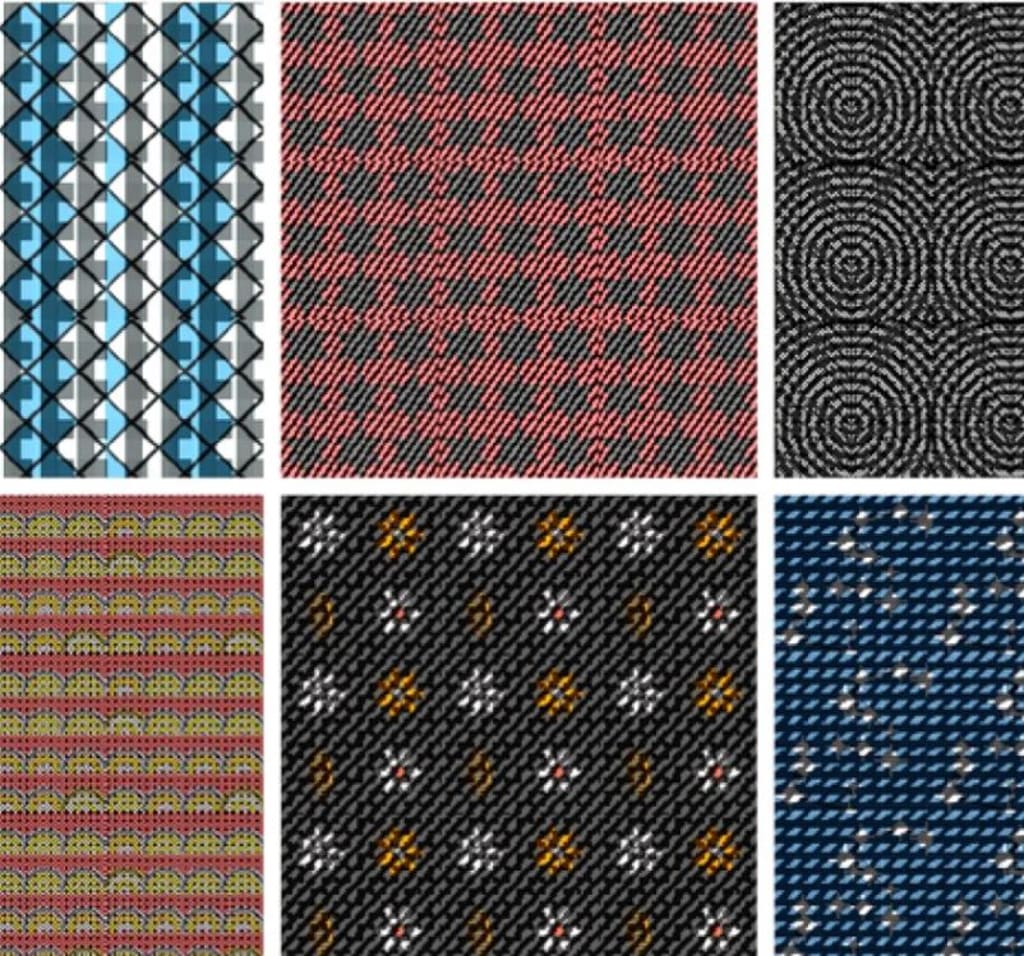
Bill Swearingen has spent the past year running largely the same test, over and over again. The goal was to produce a computer-generated pattern that could block the surveillance cameras lining America's streets from detecting it. Some 31 million tests later, Swearingen says he can now produce patterns on-demand that, when applied to clothing and objects, prevent some of the most commonly deployed license plate readers and surveillance cameras from detecting whatever the pattern covers, from people to vehicles.
His project, which he calls noRecognition, allows people to escape the automatic detection and algorithmic surveillance used across the U.S. and beyond. In an era where cameras are everywhere on street corners, inside stores, and on police officers' bodies, the ability to move through public spaces without being digitally tracked has become a rare privilege. Swearingen's work seeks to restore that right.
How Surveillance Works and How to Break It
In recent years, surveillance cameras have been supercharged with the ability to detect what is happening in the footage being recorded, from tracking the license plates of speeding vehicles to using facial recognition to identify suspected criminals, albeit with mixed success and sometimes terrifying results. The detection algorithms that power most surveillance cameras today can sift through vast amounts of footage, allowing law enforcement to pick out activity of interest, akin to pulling a needle out of a haystack.
Swearingen's computer-generated patterns do not block surveillance cameras from recording video footage. Instead, they scramble the camera's ability to identify objects, people, or faces, so that the cameras do not trigger any detection alerts. By blocking the camera's ability to detect what the pattern covers, the person becomes a needle in a haystack again until someone knows where to look.
"Privacy is a fundamental right," Swearingen told TechCrunch in a call this week. He described his patterns as a way to allow people to "opt-out of being tracked."
The First Public Test: A Toyota Yaris in Las Vegas
In its first public test Friday at the Def Con cybersecurity conference in Las Vegas, Swearingen successfully demonstrated the pattern printed on a vehicle, proving that these patterns can be effective at defeating surveillance detection in the real world. With help from Donut Media, the test involved covering a 2009 Toyota Yaris with one of Swearingen's newest patterns to see if the car would be invisible to detection by a Flock camera.
"We proved it was effective," said Swearingen; though, the wheels were a challenge, he said. The video of the demo will be out in the next few weeks, said Donut Media.
The demonstration was a milestone for the project. For the first time, a real-world test confirmed what Swearingen's computer models had been showing for months: that carefully designed patterns could defeat the detection algorithms used by some of the most common surveillance systems in the country.
Why One Man Decided to Take on Surveillance
In a call from his home in Kansas City, where he co-founded cybersecurity meet-up SecKC, Swearingen told TechCrunch that as a cyber professional he is acutely aware of the privacy and security risks of surveillance. He described how his town is swamped with surveillance cameras, sometimes located just a few feet from each other. He said that he and others never opted in to being watched, just like he never opted in to having the government use his driver's license for facial recognition.
Swearingen described himself as a middle-aged white guy who lives in the center of the United States, and acknowledged that as a result he has not faced hardship or discrimination for being who he is or what he looks like. But last year, he wanted to attend a protest and felt uncomfortable concerned that the vast number of cameras could track people who were exercising their constitutional rights to free expression.
If he felt this way, undoubtedly others would as well, including those who wanted to exercise their rights but may not feel safe or comfortable doing so themselves. Swearingen got to work.
The Technology Behind the Magic
For as long as there have been cameras capable of detecting things, there have been efforts to counter the technology. Several art projects and clothing brands have introduced apparel that aims to help people defeat facial recognition. Some eyeglass makers are jumping on the trend, albeit not with much efficacy. Swearingen said his research builds on some of this earlier work, which showed that it was possible to block camera detections.
He started out last year with a proof-of-concept test lab that began by incrementally defeating one open-source video camera detection algorithm after another. Over the course of the year, he refined the patterns by scaling up his tests with additional computer processing power. He thanked the wider community who showed up with hardware to help further the project along.
His proof-of-concept evolved over time into a reinforcement learning model, essentially a self-contained system that could train itself on which patterns work and which do not against the specific camera algorithms he is testing. In simple terms, Swearingen told TechCrunch that he essentially taught his model "how to paint."
Each time a pattern failed, and an algorithm detected it, the model would try again, over and over, until it eventually defeated multiple algorithms at once. His model soon began to find perfect recipes for patterns that were able to defeat all of the 11 open-source detection algorithms he tested, including the software that powers Flock license plate readers, Axon body-worn cameras, and cameras running Clearview AI.
Now the model creates new patterns every minute, each batch mathematically better than the last, he said.
What's Next: From Research to Reality
With a public demo in Las Vegas now under his belt, the project is early proof that it is possible to avoid algorithmic detection in public spaces. The next step is getting the patterns into the hands of people who want them, he said.
The noRecognition project also has a crowdsourcing campaign to help fund the sale of early merchandise featuring the patterns, from T-shirts to hoodies, with the potential for pattern-printed skins for vehicles down the line. Swearingen said the aim is for the patterns to be high quality and resolution good enough to work from a distance, while also looking aesthetically fashionable.
He said he is keeping his strongest patterns off the internet to prevent the camera makers from defeating them, but that the work is not yet done. His models are continuing to grind out new patterns.
"Every failure improves my model, and so [the patterns] keep getting better and better," he said.
Privacy as a Right
Swearingen's work raises important questions about the balance between security and privacy in the surveillance age. While law enforcement agencies argue that cameras and detection algorithms are essential tools for public safety, privacy advocates contend that the unchecked proliferation of surveillance technology threatens fundamental rights.
The noRecognition project offers a practical, if imperfect, solution: a way for individuals to exercise some control over their digital footprint, even in public spaces. It is not a panacea, but it is a step toward restoring the balance between surveillance and privacy.
As Swearingen noted, the goal is not to help people evade law enforcement but to allow them to exercise their constitutional rights without being tracked. In a world where cameras are everywhere, that is a goal worth pursuing.
The circus of technology is always evolving. But Bill Swearingen's noRecognition project is a reminder that sometimes the best defense against surveillance is a pattern that refuses to be seen.
About the Creator
Mark Lim
Hi I am mark an automotive student and a car, tech and food enthusiast ! Im gonna try and post daily & hope you enjoy what I write and do share my page with people you know. I would gladly appreciate it! Cheers
Enjoyed the story? Support the Creator.
Subscribe for free to receive all their stories in your feed.
Comments
There are no comments for this story
Be the first to respond and start the conversation.