
The Gaming Console Industry Is Entering a New Golden Age
From cloud gaming and e-sports to AI-powered experiences and handheld innovation, gaming consoles are evolving far beyond traditional entertainment devices.

For decades, gaming consoles have been at the center of digital entertainment. What began as simple systems designed to play basic arcade-style games has evolved into a sophisticated ecosystem powered by advanced graphics, artificial intelligence, cloud computing, and online communities that connect millions of players around the world.
Today, gaming consoles are no longer just gaming devices. They have become complete entertainment hubs that offer streaming services, social interaction, virtual reality experiences, and access to massive digital libraries. As technology continues to advance and consumer expectations rise, the gaming console industry is experiencing one of its most exciting periods of growth.
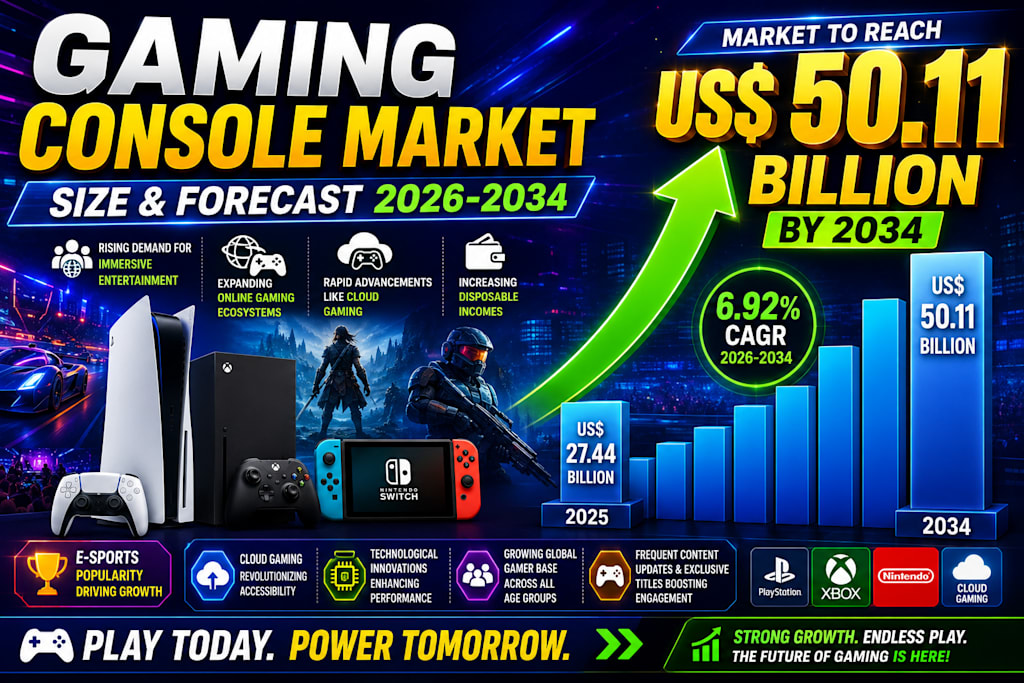
According to Renub Research, the global Gaming Console Market is projected to grow from US$ 27.44 billion in 2025 to US$ 50.11 billion by 2034, expanding at a compound annual growth rate (CAGR) of 6.92% from 2026 to 2034. This growth is being fueled by increasing demand for immersive entertainment, expanding online gaming ecosystems, technological innovation, rising disposable incomes, and the growing popularity of competitive gaming.
As gaming becomes a mainstream cultural phenomenon rather than a niche hobby, the future of gaming consoles appears brighter than ever.
Gaming Has Become a Global Entertainment Powerhouse
The gaming industry has undergone a dramatic transformation over the last two decades. Once viewed primarily as a pastime for children and teenagers, gaming now attracts people of all ages and backgrounds.
Modern games offer cinematic storytelling, realistic graphics, complex multiplayer experiences, and interactive worlds that rival blockbuster movies in both scale and production value. As a result, gaming has become one of the largest segments of the global entertainment industry.
Gaming consoles play a crucial role in this growth. Unlike PCs, consoles provide a simplified experience that allows users to access high-quality gaming without the need for extensive technical knowledge. Players can simply turn on their devices and begin playing, making consoles attractive to both casual and dedicated gamers.
This accessibility continues to drive demand across global markets and helps explain why consoles remain a dominant force despite increasing competition from mobile gaming and cloud-based platforms.
Technology Is Redefining the Console Experience
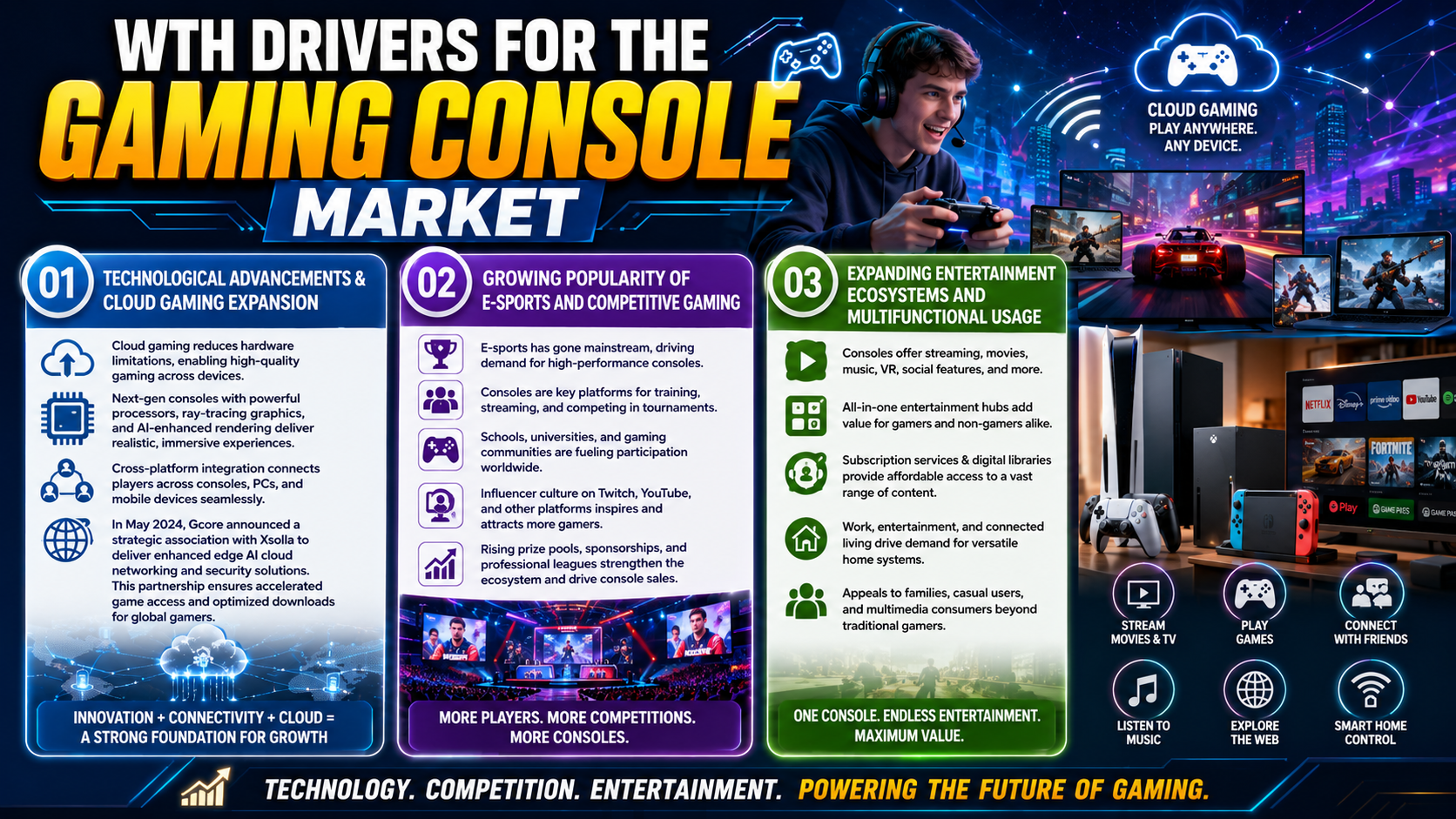
One of the strongest drivers behind the gaming console market is rapid technological advancement.
Modern consoles feature powerful processors, advanced graphics units, ultra-fast storage systems, and artificial intelligence capabilities that create increasingly immersive experiences. Features such as ray tracing, real-time lighting effects, high frame rates, and 4K gaming have become standard expectations among consumers.
The push toward 8K gaming and enhanced visual realism is further raising the bar for console manufacturers. Today's players expect detailed environments, realistic character animations, and smooth gameplay that delivers a cinematic level of immersion.
Artificial intelligence is also transforming game development and player experiences. AI-powered systems help create more intelligent opponents, realistic behaviors, personalized recommendations, and dynamic gameplay experiences that adapt to individual users.
As hardware capabilities continue to improve, console manufacturers are finding new ways to deliver richer and more engaging entertainment experiences.
Cloud Gaming Is Expanding Accessibility
Perhaps one of the most important developments shaping the future of gaming consoles is the rise of cloud gaming.
Traditionally, gamers needed powerful hardware to run advanced titles. Cloud gaming changes this model by allowing games to be processed in remote data centers and streamed directly to devices over the internet.
This innovation reduces hardware limitations and allows players to access high-quality games from multiple devices. Cloud technology also makes gaming more accessible to consumers who may not wish to invest in expensive hardware upgrades.
Major technology companies and gaming platforms continue to invest heavily in cloud infrastructure. Improvements in internet connectivity, reduced latency, and stronger network performance are making cloud gaming increasingly practical for mainstream audiences.
Rather than replacing consoles entirely, cloud gaming is enhancing the overall gaming ecosystem. Many manufacturers are integrating cloud functionality directly into their consoles, allowing players to enjoy greater flexibility and convenience.
The combination of traditional hardware and cloud-based services is expected to drive significant growth throughout the next decade.
E-Sports Is Creating New Opportunities
Competitive gaming has evolved into a global industry worth billions of dollars. Professional tournaments now attract millions of viewers, substantial sponsorship deals, and prize pools that rival traditional sporting events.
Gaming consoles play a significant role in this ecosystem by providing accessible platforms for both amateur and professional players. Many competitive titles are optimized specifically for console gameplay, making these devices an important entry point into the world of e-sports.
Streaming platforms have amplified this trend further. Content creators on Twitch, YouTube, and other platforms regularly showcase console-based gameplay, encouraging viewers to purchase similar systems and participate in gaming communities.
Educational institutions are also embracing e-sports programs, introducing competitive gaming opportunities at schools and universities. This growing acceptance is helping expand the player base and create long-term demand for gaming hardware.
As e-sports continues to gain mainstream recognition, gaming consoles will remain central to the industry's expansion.
Consoles Are Becoming Entertainment Hubs
The role of gaming consoles has expanded far beyond gaming itself.
Modern systems allow users to stream movies, watch television shows, listen to music, browse the internet, and access a wide variety of applications. Many households now view consoles as central entertainment devices rather than specialized gaming equipment.
Streaming platforms such as Netflix, Disney+, YouTube, and Spotify are fully integrated into most major consoles. This multifunctionality increases their value proposition and broadens their appeal to families and casual users.
The integration of virtual reality technologies further expands the possibilities. VR gaming offers immersive experiences that place players directly inside virtual worlds, creating new forms of entertainment that were once impossible.
As consumers increasingly seek all-in-one digital solutions, gaming consoles continue to strengthen their position within the modern connected home.
Handheld Gaming Is Making a Strong Comeback
Portable gaming devices are experiencing renewed popularity as manufacturers introduce more powerful handheld consoles.
Consumers increasingly value flexibility and mobility, especially in an era where entertainment is expected to be available anywhere and anytime. Modern handheld devices offer performance levels that were previously limited to traditional home consoles.
Recent product launches demonstrate growing industry confidence in this segment. Companies are investing heavily in portable gaming systems that combine high-end performance with mobility.
The emergence of hybrid consoles, which function as both handheld and home gaming devices, reflects changing consumer preferences. Players want the ability to enjoy their favorite games whether they are at home, traveling, or commuting.
This trend is expected to create new opportunities for manufacturers while expanding the overall console market.
Regional Markets Are Fueling Global Growth
The United States remains one of the largest gaming console markets in the world. Strong consumer spending, advanced broadband infrastructure, and a deeply established gaming culture continue to support demand.
Germany represents one of Europe's most mature gaming markets. Consumers in the country have demonstrated strong interest in premium gaming experiences, digital content, and subscription-based services.
India is emerging as one of the most promising growth markets globally. Rising disposable incomes, increasing internet penetration, and a large youth population are driving rapid adoption of gaming consoles and related technologies.
Saudi Arabia is also experiencing substantial growth. Government-backed initiatives aimed at promoting digital entertainment and e-sports are helping transform the country into a major regional gaming hub.
These diverse regional markets highlight the global nature of the gaming industry and its expanding influence across different cultures and economies.
Challenges Still Exist
Despite its positive outlook, the gaming console industry faces several challenges.
One of the most significant barriers is affordability. Advanced gaming consoles require powerful components that increase manufacturing costs and retail prices. For many consumers, especially in emerging markets, premium pricing remains a major obstacle.
Additional expenses such as accessories, online subscriptions, and game purchases can further increase the overall cost of ownership.
Supply chain disruptions also continue to affect the industry. Semiconductor shortages and manufacturing constraints have periodically limited console availability, creating frustration among consumers and delaying product rollouts.
Geopolitical tensions, transportation costs, and component sourcing challenges add further complexity to global supply chains.
To sustain long-term growth, manufacturers must continue finding ways to improve affordability while strengthening supply chain resilience.
Innovation Is Shaping the Next Generation
The future of gaming consoles will be defined by innovation.
Artificial intelligence, cloud infrastructure, virtual reality, augmented reality, and machine learning technologies are expected to play increasingly important roles in game development and player engagement.
Cross-platform gaming will likely become even more common, allowing users to move seamlessly between consoles, PCs, smartphones, and cloud services. Subscription-based gaming models will continue expanding as consumers seek greater value and access to extensive content libraries.
Manufacturers are also exploring device-agnostic ecosystems where players can access games across multiple platforms without restrictions.
This shift reflects a broader industry trend focused on flexibility, accessibility, and user convenience.
Looking Ahead to 2034
The gaming console market is entering a period of sustained growth supported by technological innovation and evolving consumer behavior.
As internet infrastructure improves, cloud gaming expands, and digital entertainment becomes increasingly integrated into everyday life, consoles will continue to evolve beyond their traditional role.
Future devices will likely offer more immersive experiences, stronger connectivity, enhanced AI capabilities, and deeper integration with broader entertainment ecosystems.
For manufacturers, developers, and investors, the opportunities are substantial. For consumers, the future promises richer experiences, greater accessibility, and unprecedented levels of interaction.
Final Thoughts
The gaming console industry has come a long way from its early beginnings. What was once a simple entertainment device has evolved into a sophisticated platform that combines gaming, social interaction, streaming, and digital experiences within a single ecosystem.
With the global Gaming Console Market expected to reach US$ 50.11 billion by 2034, the industry shows no signs of slowing down. Advances in cloud gaming, artificial intelligence, virtual reality, and cross-platform connectivity are creating new possibilities for players around the world.
As technology continues to reshape how people play, connect, and consume entertainment, gaming consoles will remain at the heart of one of the fastest-growing and most influential industries in the digital age.
About the Creator
Enjoyed the story? Support the Creator.
Subscribe for free to receive all their stories in your feed.
Comments
There are no comments for this story
Be the first to respond and start the conversation.