
The Future of Healthcare Mobile Apps in the USA
Emerging Trends, AI Innovations, and Patient-Centric Digital Transformation

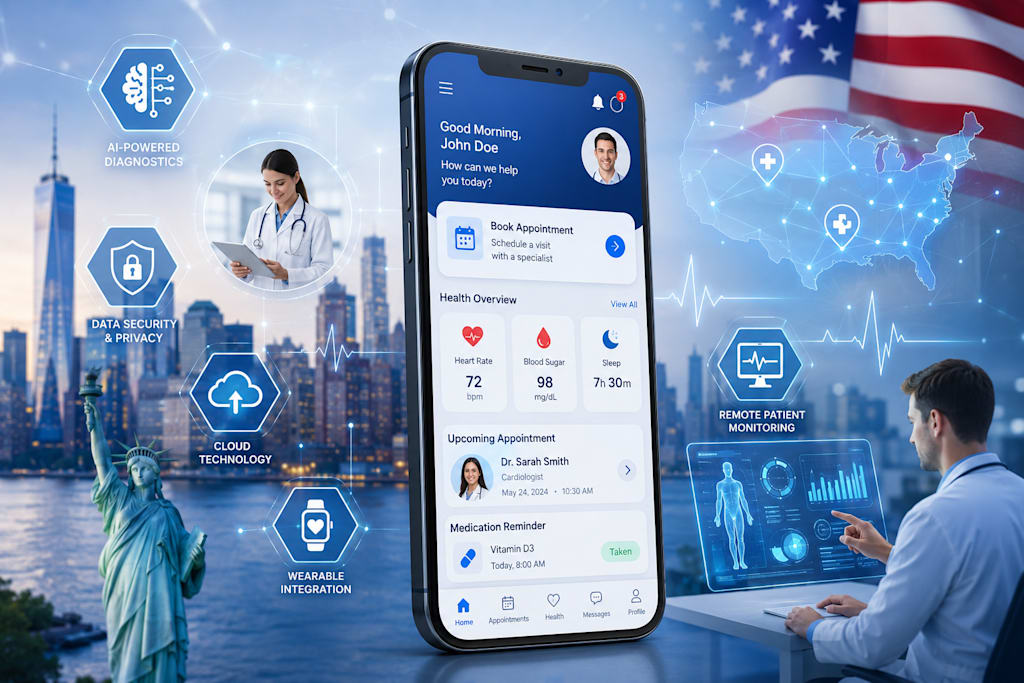
In the past few years, the healthcare landscape in the U.S. has undergone significant transformation, particularly since patients are more comfortable using digital channels for their daily activities. In this modern era, individuals anticipate that health care delivery will be quicker, easier and more convenient than the traditional health care system which can be costly and limited in communication.
One reason demand for healthcare app development among hospitals, clinics, healthcare startups and insurance companies is still increasing is this transition.
Mobile healthcare applications are becoming more than appointment booking or step counting tools. Many of these today provide virtual consultations, AI-powered health analytics, remote monitoring and safe communication between doctors and patients.
Why Healthcare Apps Are Expanding So Quickly
Patients today expect an easier access to healthcare without necessarily having to physically go to the clinic.
To address this, healthcare institutions are investing more in the mobile technology to make patient care more user-friendly and efficient.
Some of the biggest reasons healthcare apps are growing include-
- Faster appointment scheduling
- Virtual consultations
- Easier access to medical records
- Better communication with providers
- Remote care management
- Improved patient engagement
Telemedicine Is Becoming a Standard Part of Care
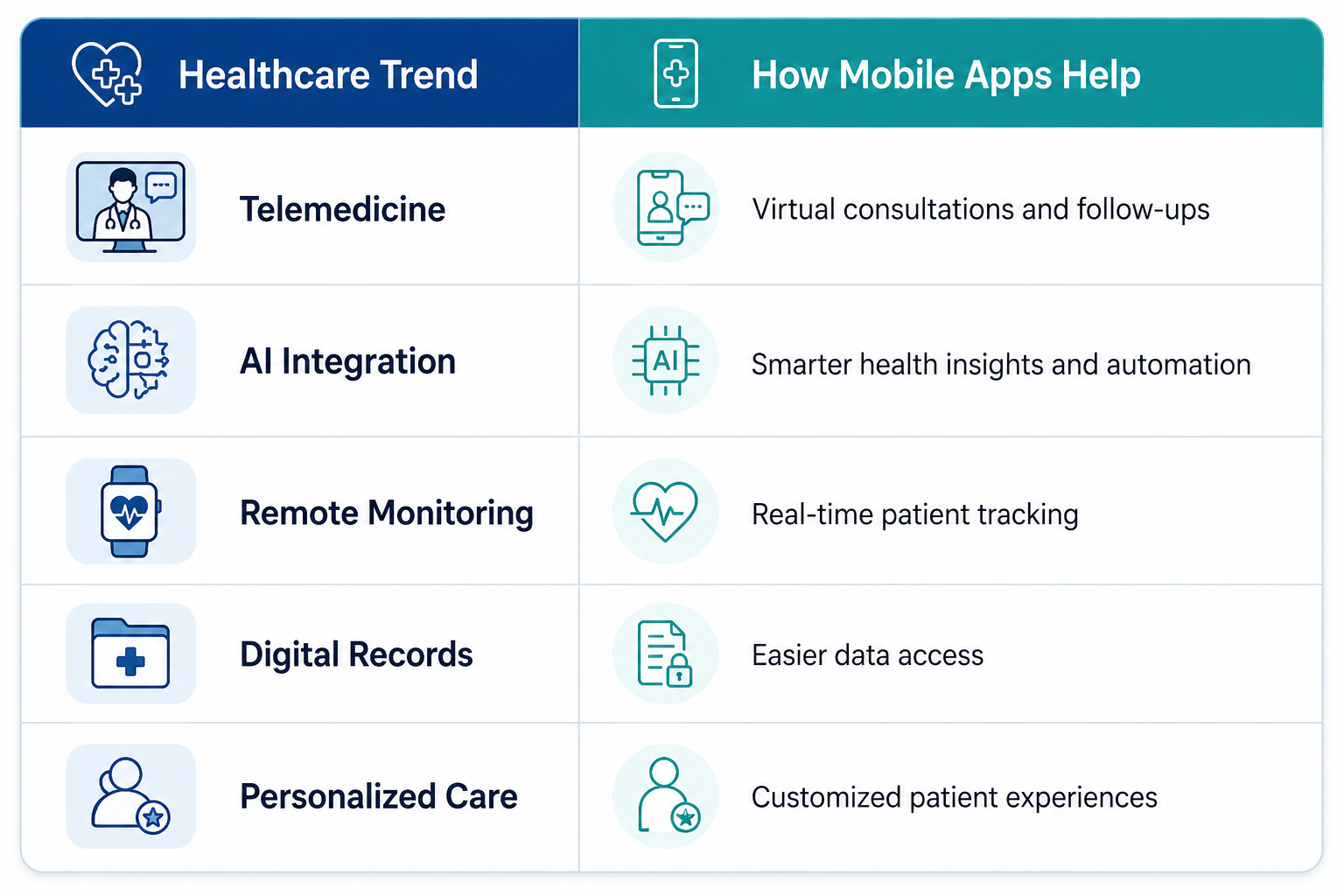
Virtual healthcare used to be seen as an alternative option. Now, many patients expect it to be available by default.
That is why the creation of telemedicine applications is one of the fast-emerging sectors of digital healthcare.
Telemedicine apps help healthcare providers-
- Reduce patient wait times
- Improve access for rural communities
- Offer follow-up consultations more efficiently
- Reduce unnecessary hospital visits
Virtual care is no more a transitory solution, but rather becoming part of ordinary day-to-day operations for many clinics and healthcare enterprises.
AI Is Playing a Bigger Role in Healthcare Apps
Another major shift happening right now involves AI-powered healthcare apps.
Healthcare companies are using AI tools to help with-
- Symptom analysis
- Patient support chat systems
- Appointment recommendations
- Health tracking
- Predictive care insights
AI is also helping providers organize large amounts of healthcare data more efficiently.
While AI is not replacing doctors, it is helping healthcare teams make faster decisions and improve patient communication.
Remote Monitoring Is Growing Rapidly
Wearable devices and connected apps are making healthcare more continuous instead of only happening during clinic visits.
Modern remote patient monitoring solutions now allow providers to track-
- Heart rate
- Blood pressure
- Glucose levels
- Sleep patterns
- Medication adherence
This is especially useful for patients managing long-term conditions like diabetes or heart disease.
Remote monitoring also helps reduce unnecessary emergency visits while giving doctors better visibility into patient health between appointments.
Security and HIPAA Compliance Matter More Than Ever
Healthcare apps handle highly sensitive patient information, so security remains one of the most important parts of development.
Businesses investing in HIPAA-compliant healthcare apps are focusing heavily on-
- Encrypted communication
- Secure cloud storage
- Biometric authentication
- Access control systems
- Privacy protection
Patients are far more likely to trust healthcare platforms that clearly prioritize data protection.
Why Healthcare Businesses Are Investing in Mobile Apps
Healthcare organizations are also seeing operational benefits from mobile technology.
Many companies working with a healthcare software development company are trying to improve-
- Patient retention
- Service accessibility
- Administrative efficiency
- Data management
- Communication workflows
Mobile healthcare platforms also give providers more flexibility as patient expectations continue changing.
Concluding Thoughts
The US healthcare industry is going to become more sophisticated in digitalization, connectivity and patient-centricity. Mobile applications are now becoming a major element of the connection that healthcare providers have with their patients in healthcare settings.
Investing in contemporary healthcare app development is not a technological trend for businesses just. Many are reacting to actual changes in patient behaviour and the expectations of healthcare delivery.
As AI technologies, virtual care platforms and remote monitoring systems continue to evolve, healthcare applications will probably play a bigger role in regular medical treatment going forward.
About the Creator
Liza kosh
Liza Kosh is a senior content developer and blogger who loves to share her views on diverse topics. She is currently associated with Seasia Infotech, an enterprise software development company.
Enjoyed the story? Support the Creator.
Subscribe for free to receive all their stories in your feed.
Comments
There are no comments for this story
Be the first to respond and start the conversation.