
The Evolution of Software Development: From Coding to Low-Code
Low-code platforms are transforming modern software development with faster delivery and smarter innovation

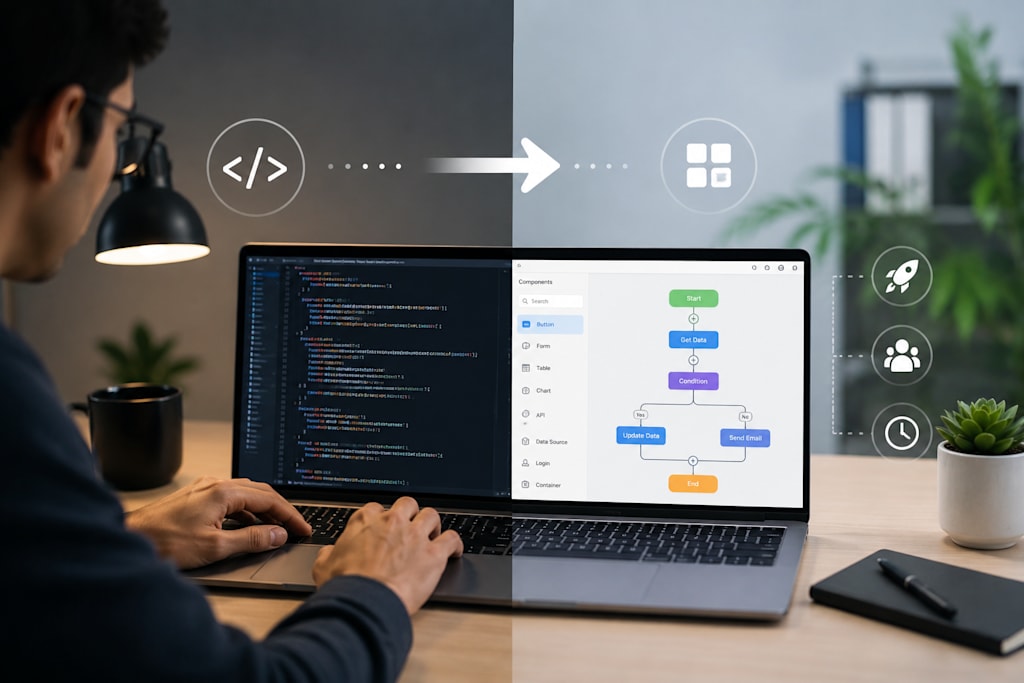
Software development used to look very different from what teams experience today. Earlier, even simple business applications required long development cycles, large coding teams, and months of testing before release. Developers spent huge amounts of time writing everything manually, including interfaces, workflows, and backend logic.
That strategy is still there, particularly for complicated corporate structures, but development requirements have evolved swiftly. Nowadays, businesses require programs to start up faster, receive consistent updates, and get quick resolutions from software teams. That shift plays a major role in what businesses are currently experiencing across the evolution of software development.
Coding Everything Manually Started Becoming Slower
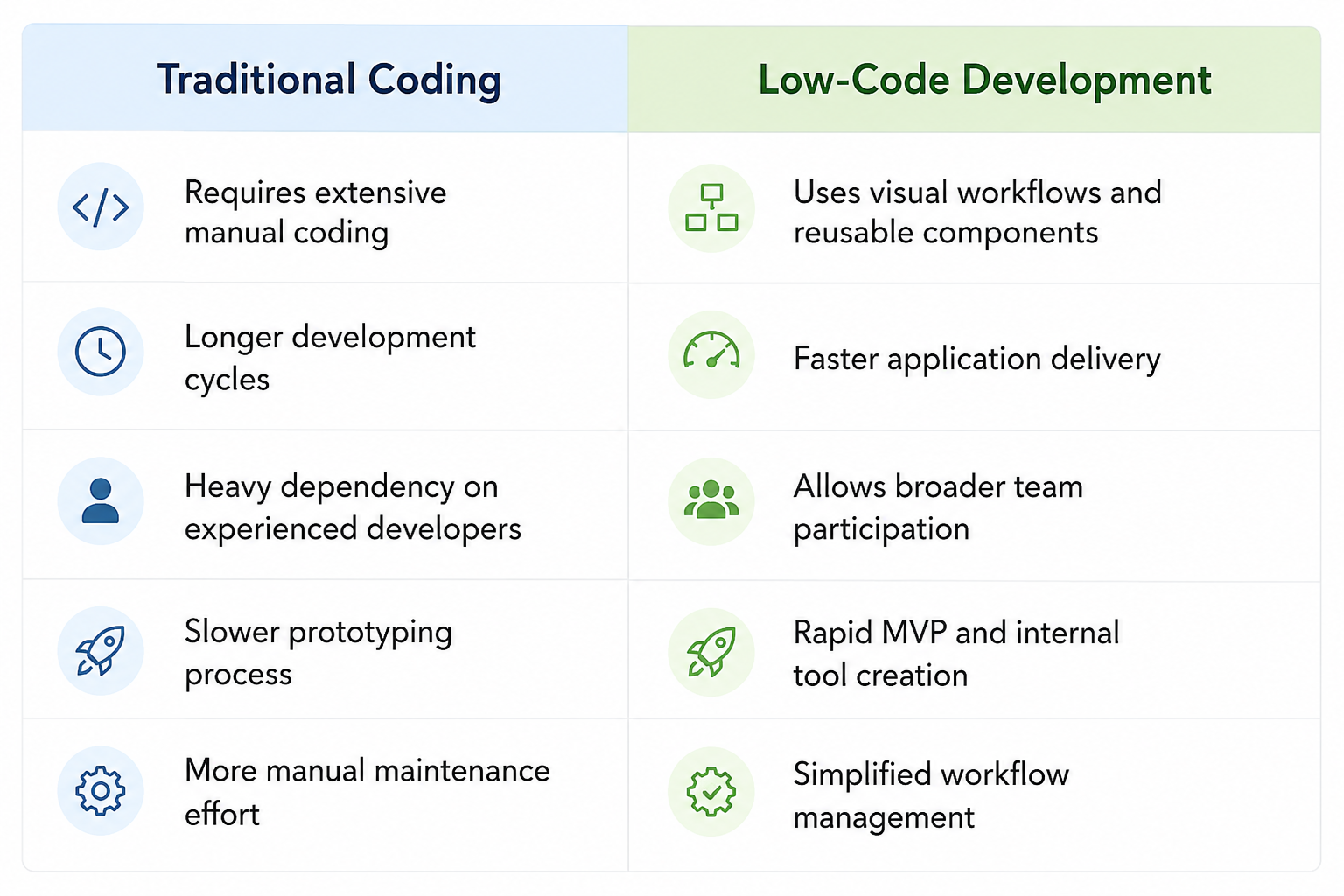
Traditional coding gives developers full flexibility, which is still important for advanced systems and large-scale applications. But building everything manually also takes time, especially when teams repeatedly create the same dashboards, workflows, forms, and internal business tools.
As cloud adoption increased and businesses accelerated digital operations, development teams were suddenly expected to-
- Release updates faster
- Build applications more frequently
- Maintain multiple platforms at once
- Handle infrastructure and deployment issues simultaneously
This changed how modern software development teams operated.
The adoption of agile methodologies, the use of DevOps tools, automation solutions, and cloud development enhanced efficiency in the delivery process; however, it also added considerable pressure on developers. In many organizations, developers had to handle coding, deployment processes, cloud architecture, testing, and monitoring all together.
For smaller teams especially, that workload became difficult to sustain.
Why Low-Code Started Getting Attention
A lot of businesses reached a point where waiting months for internal applications no longer made sense.
Teams needed-
- Customer portals
- Workflow automation tools
- Reporting dashboards
- Approval systems
- Internal enterprise applications
The problem was not a lack of ideas. The problem was development capacity.
This is one reason low-code development started growing quickly. Instead of building every component manually, teams could use visual builders and reusable workflows to speed up parts of the process.
For many companies, low-code platforms became less about replacing coding and more about reducing repetitive work.
Developers could still focus on-
- Custom integrations
- Security logic
- Complex backend systems
- Performance optimization
while simpler workflows were handled faster through low-code tools.
Why Businesses Are Using Low-Code Platforms
One reason businesses like low-code platforms is speed. Many companies simply cannot afford long development delays anymore, especially when customer expectations and market conditions change quickly.
Instead of waiting months for small updates, teams can often launch improvements much faster.
Faster Development Cycles
Low-code tools help reduce the amount of repetitive coding involved in application development.
That often means-
- Faster MVP launches
- Quicker internal tool development
- Rapid workflow updates
- Shorter deployment timelines
This has become especially useful in enterprise application development, where businesses regularly need process changes and operational updates.
Better Collaboration Between Teams
Low-code platforms also changed how business and technical teams work together.
In traditional development environments, non-technical departments often depended completely on developers for even minor workflow changes. Low-code tools simplified some of those processes.
Now, business teams can sometimes assist with-
- Workflow configuration
- Dashboard setup
- Form management
- Process automation
This improves collaboration without completely removing developers from the process.
Developers Spend Less Time on Repetitive Tasks
One thing many developers quietly appreciate about low-code platforms is that they reduce repetitive project work.
Instead of rebuilding similar admin panels or approval systems repeatedly, developers can focus more attention on complex engineering problems and architecture decisions.
That shift helps improve developer productivity while reducing unnecessary development effort.
Traditional Coding vs Low-Code Development
Low-Code Is Not Replacing Traditional Development
One common misunderstanding is that low-code platforms will completely replace traditional software engineering. That is probably not happening anytime soon.
Highly customized platforms, advanced backend systems, and large-scale infrastructure projects still require experienced developers and strong engineering expertise.
What is changing is how businesses approach development speed.
Many organizations now combine-
- Traditional coding
- Low-code development
- Automation tools
- Cloud-native workflows
To improve delivery timelines without overwhelming development teams completely.
This hybrid approach is becoming increasingly common in software development services and custom software development projects.
The Future of Software Development
In the future, coding proficiency and automated platforms will be used together in development.
On one side, businesses require good coders for developing highly sophisticated systems. On the other hand, they require rapid development and short release cycles.
That duality is the reason for continued growth in low-code platform use.
In many cases, businesses do not use low-code to replace software engineering. Instead, they rely on the technology to help developers work faster through reduced repetition.
Concluding Thoughts
The evolution of Software Development shows how fast businesses’ needs have evolved. Classic coding is vital for creating sophisticated software products; however, low code is altering the way some companies develop their products.
With continued investments in digital transformation tools by companies, the low-code approach is now a viable option for enhancing efficiency and cooperation without eliminating conventional engineering methods altogether.
About the Creator
Liza kosh
Liza Kosh is a senior content developer and blogger who loves to share her views on diverse topics. She is currently associated with Seasia Infotech, an enterprise software development company.
Enjoyed the story? Support the Creator.
Subscribe for free to receive all their stories in your feed.
Comments
There are no comments for this story
Be the first to respond and start the conversation.