
The Employee Left Without Exporting their Outlook Mailbox
A routine employee transition can quickly become a serious data recovery challenge when critical Outlook mailbox data is left behind or becomes inaccessible.

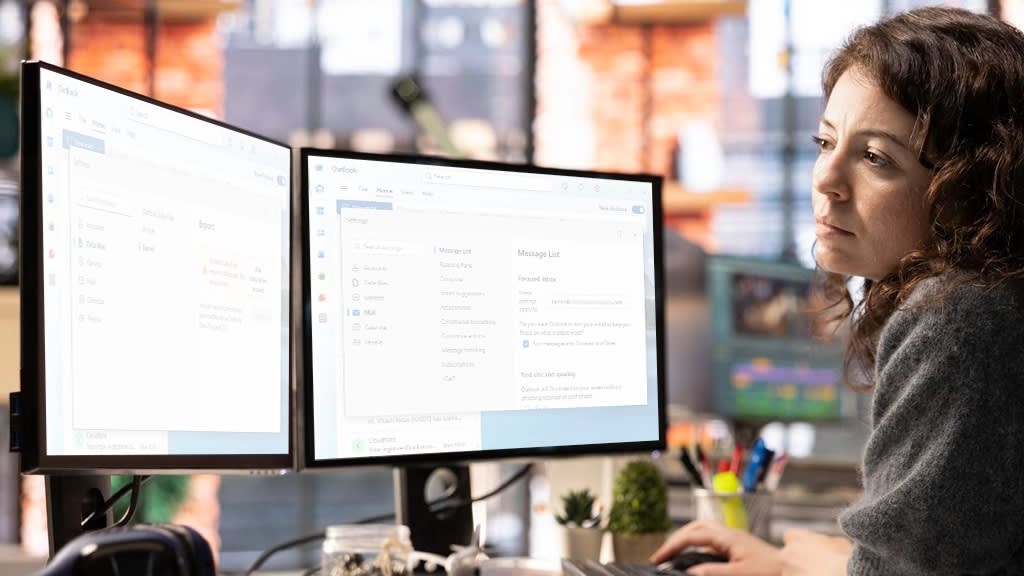
Some transitions are seamless, but we all too often suffer from those that put our carefully organized and planned procedure to the real test. Our own recent experience with transition occurred when a senior sales executive abruptly left the company and, in the process, neglected to export his Outlook mailbox data properly.
He had several longstanding accounts that had been under his control, and it was agreed that they would be passed to his successor in due time. The most plausible scenario, as many thought, implied simply giving the account manager access to his former mailbox and carefully reviewing all existing opportunities to make sure they would be maintained in due time.
The transition plan was in place, and the only possible issue could have occurred if his successor needed to access the account manager’s mailbox and failed to do so successfully. Little did we know that we faced a severe challenge in waiting.
The IT department soon enough identified the problem: the OST file the senior sales executive had utilized had become detached and corrupted after his account had been de-provisioned (taking away user access rights, deleting accounts, and shutting down IT resources when they are no longer needed) in the process, a standard procedure in our offboarding protocol.
Thus, we no longer had access to the file containing years of sales data, pricing, and client interaction information that was crucial to the continuation of the account management service.
Notably, our sales director seemed particularly frustrated with the turn of events, insisting that we had to regain control of the OST file before any client could suspect anything was wrong, as we had already fallen behind in our preparations for the transition. He was right, of course, as his demands placed the entire team in a race against time to recover the mailbox.
The IT department soon began their research into the matter in search of a plausible solution that would allow us to regain access to the mailbox without having to utilize the Outlook profile that had failed them in the first place.
Their efforts led them to the Kernel OST to PST Converter tool, a software designed specifically for such occasions, claiming to recover data from inaccessible OST files. The software they selected appeared quite reliable, as the description pointed to its ability to recover mailbox data from OST files corrupted and inaccessible in Outlook.
They proceeded to test the application on the detached and corrupted OST file in question and, to their surprise, it managed to recover almost everything that had been lost in the process.
All emails, attachments, and calendar events had been retrieved and compiled into a PST file that was subsequently delivered to the new account manager. The transition process was eventually completed successfully later that same week, with little to no disruptions, and the newly appointed senior sales executive was able to continue his work without the need to ask for much further clarification.
The experience we gained from this situation was certainly an eye-opening one for all of us, teaching us a valuable key takeaway about transition procedures and the responsibilities associated with de-provisioning.
We now consider mailbox continuity a mandatory item on our deprovisioning checklist, not an afterthought. I personally feel grateful that this particular episode played out as it did, with a little disturbance rather than outright catastrophe. After all, not many may realize how fragile such a routine procedure is, as a mailbox handover can be, until it is nearly lost.
We now know that our future transition will remain smooth and uninterrupted, as we have taken the necessary precautions to make sure mailbox continuity throughout the handover process.
About the Creator
Layla Darzi
I’m Layla, a content writer dedicated to creating meaningful, engaging, and results-driven content. I specialize in writing blogs, articles, website copy, and brand stories that blend creativity with strategy.
Enjoyed the story? Support the Creator.
Subscribe for free to receive all their stories in your feed.
Comments
There are no comments for this story
Be the first to respond and start the conversation.