
The Data Center Backlash: How a AI Boom Is Reshaping Texas Politics
A new poll finds that a majority of Texans oppose data centers in their communities, prompting politicians from both parties to call for stricter regulations and even moratoriums.

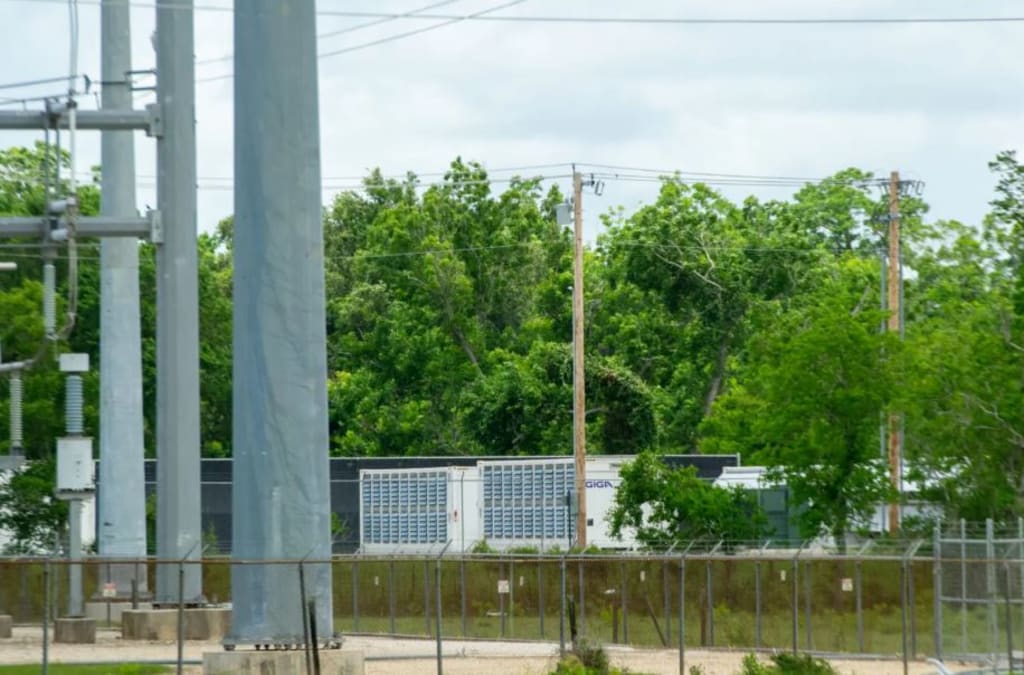
Texas is poised to become the No. 1 market for data centers in the United States, with more planned projects than any other state. But a growing backlash against the sprawling, water-guzzling facilities is reshaping the state's political landscape and forcing candidates to take sides.
A June 2026 poll from the University of Texas at Austin and the Texas Politics Project found that 56% of Texans oppose the construction of data centers in their communities, with 42% saying they are strongly opposed. Only 29% said they support the projects. The opposition is particularly intense in rural areas, where 62% of residents are against local data center development.
“What the data underlines is how much of a problem the business stakeholders that are heavily in favor of data center development have on their hands,” said James Henson, co-director of the poll and head of the Texas Politics Project. “The pushback on the issue emerged more quickly and is more widespread than the conventional response to economic development in Texas has historically.”

Why Texans Are Worried
The concerns driving the opposition are rooted in real-world impacts. Data centers require massive amounts of electricity and water resources that are already strained in Texas. All the data centers in Texas today use less than 1% of the state's water, but with close to 400 new projects planned across the state, that figure is expected to rise sharply.
Residents and local officials have raised alarms about:
Water consumption: A proposed data center near Cedar Creek Reservoir in Henderson County would have consumed 5 million gallons of lake water per day by its fifth year. The lake supplies water to the Fort Worth area, and with little rainfall in the region, residents worried about the impact on already low water levels.
Electricity demand: Data centers are massive power users, and their rapid growth is raising concerns about the stability of the Texas grid. Gov. Greg Abbott has ordered a comprehensive audit of pending data center projects seeking connections to the state's electric grid.
Noise and quality of life: Residents living near existing data centers have reported constant noise from cooling systems and backup generators.
Loss of local control: About half of the 248 planned data centers identified by the Texas Tribune are located in unincorporated areas of counties, which have limited regulatory oversight compared to cities.
Democrats Seize on the Issue
Texas politicians of both major parties are catching up to the sentiment. This week, U.S. Senate candidate James Talarico and gubernatorial candidate Gina Hinojosa, both Democrats, unveiled their agendas for data center regulations.
Talarico called for allowing Texans to decide locally whether or not data centers are constructed, as well as an end to tax breaks and subsidies for the facilities. He framed the issue in populist terms: “Energy and water utility bills are skyrocketing for Texans as billionaire-bought politicians give sweetheart tax deals to big AI data center projects and stick working Texans with the bill.”
Hinojosa went further, calling on Republican Gov. Greg Abbott to sign an executive order halting the construction of data centers until lawmakers can craft statewide regulations. “Data centers are coming in and doing as they please; they are guzzling up all our water, guzzling up all our electricity, and the people have no say. They have no power,” she said.
Other down-ballot Democrats have joined the chorus. Lt. Gov. candidate Vicki Goodwin, comptroller candidate Sarah Eckhardt and agriculture commissioner candidate Clayton Tucker have all called for a halt to construction.
Republicans Pivot
The data center backlash poses a particular challenge for Republicans, who have historically championed economic development and limited regulation. The poll found that Republican voters are split on the issue, with 44% opposing and 42% supporting data center construction. Opposition is strongest in rural areas the base of Republican support.
Gov. Greg Abbott has shifted his position rapidly in recent months. In November, he touted Texas as the “epicenter of AI development.” By June, he was ordering state regulators to ensure data centers do not pass on infrastructure costs to residential ratepayers. He has since called for:
Repealing the state sales tax exemption for data centers, which is costing the state more than a billion dollars a year
Outright banning data centers from rural areas
Requiring data centers to be “responsible stewards” of natural resources
Abbott has also effectively paused new data center projects pending a statewide grid audit. Under his directive, developers must provide information about their expected electricity and water use before they can connect to the state's electric grid. Projects that fail to comply must be denied connection.


A Victory and a Warning
Abbott's tougher stance has already produced results. In July, Kansas-based developer Diode Ventures withdrew its proposal for a data center in Henderson County near Cedar Creek Lake. The company cited Abbott's directives and community concerns in its decision. “Data centers that want to do business in Texas must meet a clear standard. This project did not,” Abbott said.
But the fight is far from over. More than 480 “large” data centers have requested to connect to the ERCOT grid. And as one county commissioner noted, Diode's withdrawal doesn't mean another developer won't try to build on the same site.

A New Political Reality
The data center debate reflects a broader shift in Texas politics. For decades, economic development was a bipartisan priority, and local communities often welcomed new industrial projects. But the scale and speed of the data center boom driven by the AI revolution has changed the calculus.
“The results echo with negative feelings about the impact of artificial intelligence on an economy voters already don't feel good about,” Henson said. The poll found that 49% of Texans expect AI to hurt the economy, compared with 29% who expect a positive impact.
As the November election approaches, data centers have become a litmus test for candidates across the political spectrum. The voters have spoken, and the politicians are listening. The circus of Texas politics is always evolving. But the data center backlash shows that when communities feel their resources are being taken for granted, they will demand accountability, and they will vote accordingly.
About the Creator
Mark Lim
Hi I am mark an automotive student and a car, tech and food enthusiast ! Im gonna try and post daily & hope you enjoy what I write and do share my page with people you know. I would gladly appreciate it! Cheers
Enjoyed the story? Support the Creator.
Subscribe for free to receive all their stories in your feed.
Comments
There are no comments for this story
Be the first to respond and start the conversation.