
The Creative Revolution: How AI Is Redefining Human Creativity in the Digital Age
A New Era of Creativity

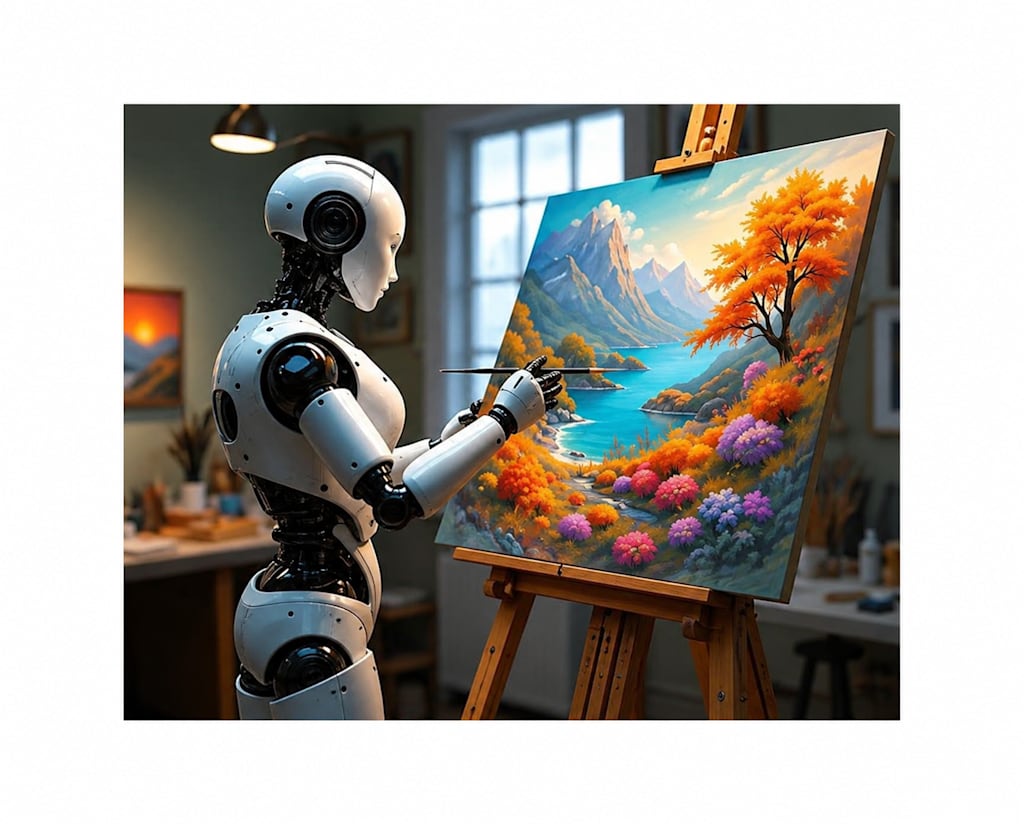
Human creativity has always been one of our greatest strengths. Every painting, scientific breakthrough, novel, business idea, architectural masterpiece, and technological invention began with imagination. Creativity has allowed civilizations to solve problems, inspire generations, and continuously reshape the world.
Today, artificial intelligence is becoming one of the most influential technologies ever created, and its impact on creativity is impossible to ignore. Some people fear that AI will replace artists, writers, musicians, and designers. Others believe it represents one of the greatest creative tools ever developed.
The reality is far more interesting.
Artificial intelligence is not ending human creativity—it is transforming how creative work begins, develops, and reaches audiences. Instead of replacing imagination, AI provides new ways to explore ideas, experiment with possibilities, and reduce the time required to turn inspiration into reality.
The digital age is entering a creative revolution, where humans and intelligent machines collaborate to achieve results that neither could accomplish alone.
Creativity Has Always Evolved with Technology
Every generation has experienced technological changes that transformed creative work.
The printing press expanded access to books.
Photography changed visual storytelling.
Radio connected voices across continents.
Television transformed entertainment.
The internet created global communication.
Smartphones placed creative tools into billions of hands.
Each innovation initially raised concerns about replacing existing forms of creativity. Yet history repeatedly shows that technology tends to expand creative opportunities rather than eliminate them.
Artificial intelligence represents the next chapter in this ongoing evolution.
Instead of replacing creators, AI is helping them work faster, experiment more freely, and bring ambitious ideas to life.
Understanding Artificial Intelligence as a Creative Tool
Artificial intelligence works by recognizing patterns, processing information, and generating outputs based on enormous amounts of training data.
Unlike humans, AI does not possess emotions, memories, or personal experiences.
It cannot dream about the future or understand the emotional meaning behind a life experience.
Those qualities remain uniquely human.
However, AI excels at supporting creative workflows by assisting with tasks such as:
Brainstorming ideas
Drafting content
Organizing information
Editing text
Designing concepts
Producing visual assets
Creating video storyboards
Generating presentation outlines
Summarizing research
Exploring alternative approaches
Rather than replacing creators, AI functions as an intelligent assistant that accelerates production while allowing people to focus on originality and purpose.
Why Creativity Matters More Than Ever
In a world where information is abundant, creativity has become increasingly valuable.
Businesses compete through innovation.
Creators build communities through original ideas.
Educators inspire curiosity through engaging learning experiences.
Entrepreneurs solve problems by imagining products and services that do not yet exist.
Artificial intelligence makes technical execution easier, but meaningful creativity still depends on human insight.
The ability to connect ideas, understand emotions, and recognize opportunities remains one of humanity's greatest competitive advantages.
AI Is Changing the Creative Process
Traditional creative work often followed a predictable sequence.
Research.
Planning.
Drafting.
Editing.
Publishing.
Each stage required significant time and manual effort.
AI transforms this process by supporting every stage.
For example, a writer can brainstorm article ideas, generate an outline, organize research, improve readability, and edit grammar in a fraction of the time previously required.
Designers can quickly explore multiple visual concepts before selecting a final direction.
Video creators can develop scripts, scene ideas, subtitles, and promotional materials more efficiently.
This acceleration allows creators to dedicate more energy to refining ideas rather than performing repetitive production tasks.
The Rise of Collaborative Creativity
The relationship between humans and AI is increasingly collaborative.
Think of AI as a creative partner rather than a replacement.
A designer provides artistic direction.
AI generates variations.
The designer selects the strongest concepts.
A writer develops the central message.
AI suggests alternative headlines and structures.
The writer refines the narrative.
A filmmaker imagines the story.
AI assists with planning, editing, and production.
The filmmaker shapes the emotional experience.
This collaborative model combines human imagination with computational speed.
The result is greater efficiency without sacrificing originality.
AI in Writing and Publishing
Writers are among the professionals experiencing the greatest changes.
Artificial intelligence now supports:
Topic research
Outline creation
Draft generation
Grammar improvement
SEO optimization
Headline ideas
Readability analysis
Translation
Content repurposing
However, successful writing continues to depend on human judgment.
Readers connect with stories because of lived experience, authentic emotion, and unique perspectives.
AI can accelerate the writing process, but the author's voice remains the heart of compelling content.
Visual Design Without Traditional Limits
Creating visual content once required expensive software, years of technical training, and significant production time.
Today, AI helps creators explore ideas rapidly.
Applications include:
Marketing graphics
Concept art
Product mock-ups
Website visuals
Advertising campaigns
Educational illustrations
Social media content
Book covers
Brand identity concepts
Instead of beginning with a blank page, creators can develop multiple visual directions within minutes before refining the strongest concepts.
This encourages experimentation and innovation.
Music, Audio, and Creative Expression
Artificial intelligence is also influencing music production.
Musicians use AI to assist with:
Melody exploration
Harmony suggestions
Lyric brainstorming
Audio enhancement
Noise reduction
Practice support
Mixing guidance
Importantly, AI does not replace the emotional experiences that inspire music.
Artists continue to shape meaning through performance, interpretation, and personal expression.
Technology simply provides additional creative possibilities.
AI and the Entrepreneurial Mindset
Entrepreneurs succeed by imagining solutions before others recognize opportunities.
AI strengthens entrepreneurial creativity by helping founders:
Explore business ideas.
Research industries.
Analyze competitors.
Develop marketing strategies.
Create branding concepts.
Improve customer communication.
Generate product descriptions.
Organize business plans.
This enables smaller businesses and independent creators to compete more effectively in increasingly competitive markets.
Education in the Creative Age
Education is evolving beyond memorization.
Students increasingly need skills such as:
Critical thinking
Creative problem-solving
Collaboration
Communication
Adaptability
Digital literacy
AI supports educators by creating personalized learning materials, generating examples, explaining difficult concepts, and helping students learn at their own pace.
Rather than replacing teachers, AI allows them to spend more time mentoring, inspiring, and supporting learners.
The Human Advantage
Despite impressive technological progress, several qualities remain uniquely human.
These include:
Empathy
Curiosity
Moral judgment
Personal experience
Emotional storytelling
Cultural understanding
Vision
Purpose
Artificial intelligence can organize information and generate ideas, but it does not experience joy, loss, hope, ambition, or love.
These experiences shape meaningful creativity.
The future belongs not to humans or AI alone, but to those who learn how to combine technological capability with human imagination.
Looking Ahead
Artificial intelligence is changing the creative landscape faster than almost any previous technology. It is helping individuals work more efficiently, overcome creative barriers, and transform ambitious ideas into reality.
Yet the greatest creative breakthroughs of the coming years will not result from technology alone. They will emerge from people who use AI responsibly while preserving originality, ethical thinking, and authentic human expression.
Part 2: The Future of Creativity in an AI-Powered World
AI and the Future of Filmmaking
The film industry has always embraced technological innovation. From the introduction of sound and color to computer-generated imagery and digital editing, each advancement has expanded the possibilities for storytelling.
Artificial intelligence is becoming the next major milestone.
Today, filmmakers use AI to assist with:
Script analysis
Storyboarding
Shot planning
Video enhancement
Subtitle generation
Audio cleanup
Visual effects
Editing workflows
Production scheduling
Independent creators now have access to capabilities that were once reserved for large studios with significant budgets.
This democratization of filmmaking allows talented storytellers to compete based on ideas rather than resources alone.
Architecture and Product Design
Design professionals are also embracing AI to explore concepts more efficiently.
Architects can generate multiple building layouts, analyze environmental performance, and evaluate design alternatives before construction begins.
Product designers can rapidly create prototypes, test variations, and visualize improvements without producing multiple physical models.
AI accelerates experimentation, enabling designers to spend more time refining solutions and less time repeating routine tasks.
The result is faster innovation without sacrificing human creativity.
Scientific Innovation Through Creative Thinking
Some of history's greatest scientific discoveries began with imaginative questions.
Artificial intelligence helps researchers explore these questions more efficiently by processing vast amounts of information that would otherwise require months or years to analyze.
AI supports research in areas such as:
Medicine
Climate science
Renewable energy
Materials engineering
Agriculture
Space exploration
Drug discovery
Robotics
Scientists remain responsible for asking meaningful questions, designing experiments, and interpreting results, while AI provides computational speed and analytical support.
Together, they accelerate the pace of discovery.
Building Businesses with Creative Intelligence
Modern entrepreneurs face constant pressure to innovate.
Artificial intelligence helps transform creative ideas into practical business strategies by supporting:
Market research
Customer analysis
Brand development
Product planning
Pricing strategies
Marketing campaigns
Sales content
Business forecasting
Instead of replacing entrepreneurial thinking, AI gives founders more information and more time to make informed decisions.
This allows small businesses and independent professionals to compete more effectively in global markets.
The Creator Economy Continues to Expand
The internet has created unprecedented opportunities for creators to build audiences and businesses.
Writers, educators, designers, musicians, filmmakers, developers, and consultants now reach millions of people worldwide.
AI strengthens the creator economy by making it easier to:
Produce educational content.
Repurpose articles into videos.
Generate presentation materials.
Design promotional graphics.
Plan publishing schedules.
Translate content for international audiences.
Improve accessibility with captions and transcripts.
Rather than replacing creators, AI removes many technical barriers that previously limited growth.
Ethical Responsibility in Creative AI
As AI becomes more powerful, responsible use becomes increasingly important.
Creators should consider several ethical principles.
Maintain Transparency
Be honest about how AI supports your creative process when appropriate.
Transparency helps build trust with audiences and clients.
Protect Intellectual Property
Respect copyright laws and avoid reproducing protected work without permission.
Originality remains essential for long-term success.
Verify Information
AI-generated content should always be reviewed for accuracy, particularly when discussing health, finance, law, science, or current events.
Preserve Human Judgment
Technology can suggest ideas, but people remain responsible for the final decisions, creative direction, and ethical standards behind every project.
Strengthening Your Own Creative Skills
While AI is an excellent assistant, entrepreneurs and creators should continue developing their own abilities.
Helpful habits include:
Reading widely across different subjects.
Keeping an idea journal.
Studying successful creators.
Learning new creative techniques.
Experimenting with unfamiliar formats.
Seeking constructive feedback.
Reflecting on completed projects.
The stronger your creative foundation becomes, the more effectively you can use AI as a collaborative tool.
What the Next Decade May Look Like
Artificial intelligence will continue to evolve rapidly.
Future developments may include:
More capable AI creative assistants.
Advanced multimedia content generation.
Better collaboration between creative software platforms.
Highly personalized educational experiences.
Smarter design and engineering systems.
Improved accessibility tools for creators worldwide.
More natural voice and language interactions.
AI-powered brainstorming tailored to individual creative styles.
These advances will not eliminate human imagination. Instead, they will give creators more powerful tools for transforming ideas into meaningful work.
Balancing Innovation with Authenticity
One of the greatest challenges for creators will be maintaining authenticity in an increasingly automated world.
Audiences are drawn to genuine stories, personal experiences, and unique perspectives.
No matter how sophisticated AI becomes, people continue to value:
Authentic voices.
Original experiences.
Emotional storytelling.
Honest opinions.
Personal lessons.
Creative vision.
Technology can accelerate production, but authenticity remains a uniquely human strength.
The most successful creators will combine AI efficiency with genuine human insight.
Final Thoughts
The relationship between artificial intelligence and human creativity is not a competition—it is a collaboration.
Throughout history, every major technological advancement has changed how people create, communicate, and innovate. Artificial intelligence represents another important step in that evolution.
Rather than diminishing imagination, AI expands the range of possibilities available to writers, artists, entrepreneurs, educators, scientists, and business leaders.
The future belongs to those who embrace lifelong learning, remain curious, and use technology responsibly.
Creativity has always been about imagining what does not yet exist.
Artificial intelligence simply provides new ways to transform those ideas into reality more quickly, efficiently, and creatively than ever before.
As this creative revolution continues, the greatest innovations will come from people who combine imagination, ethical responsibility, technical knowledge, and a genuine desire to improve the world around them.
Frequently Asked Questions
Will AI replace creative professionals?
AI is more likely to change creative workflows than replace creative professionals. Human originality, emotional intelligence, and strategic thinking remain essential.
Can beginners use AI for creative projects?
Yes. Many modern AI platforms are designed for users with little or no technical experience, making creative tools more accessible than ever.
Does using AI reduce originality?
Not necessarily. Originality comes from how people guide, refine, and develop ideas. AI should support your creative process rather than define it.
Which industries benefit most from AI creativity?
Writing, marketing, education, design, software development, filmmaking, architecture, healthcare, engineering, publishing, and entrepreneurship are all benefiting from AI-assisted creativity.
What is the most important skill for creators in the AI era?
Adaptability. People who continue learning, experimenting, and combining AI with authentic human creativity will be well positioned for long-term success.
Recommended AI Tools
1. ChatGPT
ChatGPT is a versatile AI assistant for brainstorming, writing, research, editing, planning, summarization, and creative ideation. It helps creators and entrepreneurs turn ideas into polished content more efficiently while maintaining full control over the final result.
2. Adobe Firefly
Adobe Firefly provides AI-powered image generation and creative editing tools that integrate with Adobe's creative ecosystem. It is useful for concept art, marketing visuals, graphic design, and creative experimentation while supporting professional design workflows.
Continue Exploring AI
If you enjoyed this article and want more in-depth insights into artificial intelligence, creativity, and the future of digital innovation, explore these platforms:
Medium
https://medium.com/@mrscallimi
Read additional articles covering AI trends, productivity, entrepreneurship, business strategy, and emerging technologies.
Ghost
https://global-ai-intelligence.ghost.io
Discover premium long-form articles, practical AI guides, and deeper analysis designed for creators, professionals, and lifelong learners interested in the future of artificial intelligence.
Thank you for reading. The future of creativity will not be defined by artificial intelligence alone—it will be shaped by people who use these powerful tools with imagination, integrity, curiosity, and purpose. Every great innovation begins with an idea, and there has never been a more exciting time to bring those ideas to life.
About the Creator
Siamak Callimi
Siamak Callimi
I’m Siamak Callimi — a passionate creator, storyteller, and entrepreneur dedicated to helping people unlock their potential and achieve real results.
THE 30-DAY DISCIPLINE BLUEPRINT
https://samurai301.gumroad.com/l/zkhwk
Enjoyed the story? Support the Creator.
Subscribe for free to receive all their stories in your feed.
Comments
There are no comments for this story
Be the first to respond and start the conversation.