
The Complete Technical Guide to Tennis Court Surfaces: Why Synthetic Acrylic Flooring Is the Gold Standard
Complete Technical Guide to Tennis Court Surfaces
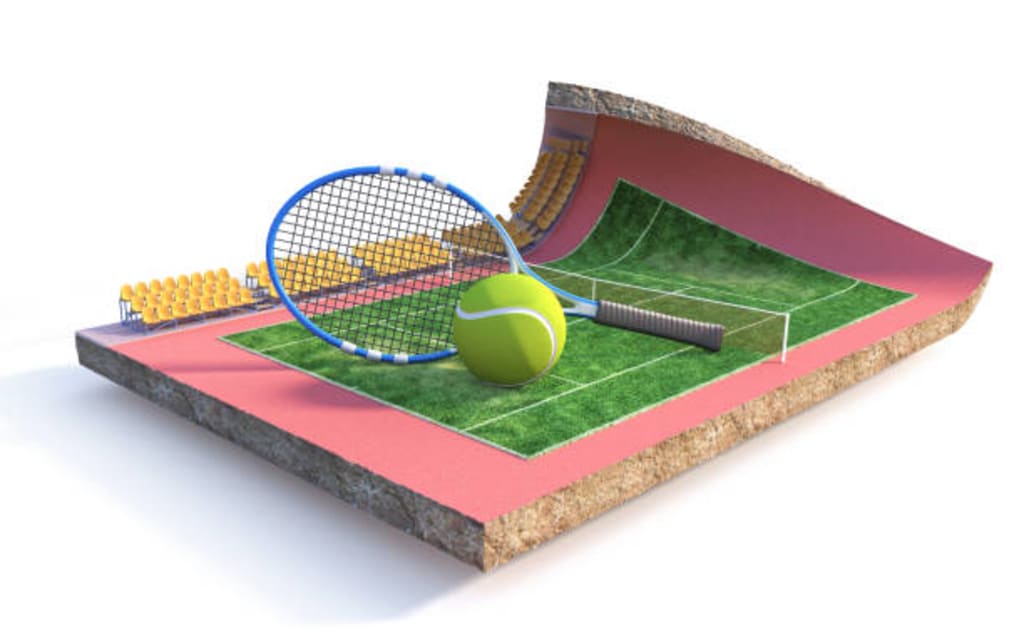
Tennis is one of the few sports where the playing surface fundamentally changes the game itself. The speed of the ball, the height of the bounce, the strain on a player's joints — all of these are directly determined by what lies beneath the player's feet.
For facility managers, club owners, architects, and sports developers, choosing the right court surface is not merely an aesthetic decision. It is a technical, financial, and performance-critical one.
This guide breaks down everything you need to know about tennis court surfaces — and why synthetic acrylic flooring has emerged as the industry's preferred choice for professional and recreational courts alike.
Understanding the Main Types of Tennis Court Surfaces
Before diving into synthetic acrylic, it is important to understand the broader landscape of court surfaces and what each one offers.
Clay Courts Clay is one of the oldest and most traditional surfaces in tennis. It slows the ball down significantly and produces a high bounce, favouring baseline players with strong topspin games. Clay is common across Europe and South America. However, clay courts require intensive maintenance — regular watering, rolling, and line sweeping — and they are highly susceptible to weather disruption.
Grass Courts Grass is the original tennis surface and remains the most prestigious, synonymous with Wimbledon. It produces a fast, low bounce that rewards serve-and-volley play. The drawbacks are significant for most operators: grass courts are extremely expensive to maintain, require specialist groundskeeping expertise, and have a very short playing season in most climates.
Carpet and Indoor Surfaces Indoor carpet surfaces are fast-playing and relatively low maintenance, but they lack durability for outdoor use and offer limited performance consistency. They are largely being phased out of professional tennis and replaced by more reliable alternatives.
Hard Courts — Including Synthetic Acrylic Hard courts are now the most widely used surface across the world, from the US Open to thousands of community facilities. Within the hard court category, synthetic acrylic has become the dominant material of choice — and for good reason.
What Is Synthetic Acrylic Flooring?
Synthetic acrylic tennis court surfaces are multi-layer systems applied over a prepared base — typically asphalt or concrete. The system is built up in carefully engineered layers, each serving a specific technical function.
A standard synthetic acrylic system consists of:
Base layer — A compacted and levelled asphalt or concrete foundation. The quality and precision of this base is critical; any imperfections will telegraph through to the playing surface over time.
Resurfacing or levelling coat — Applied to correct minor surface irregularities and ensure a uniform substrate.
Acrylic cushion layers — Multiple coats of rubber-filled acrylic compound that provide the court's cushioning properties. The number of cushion coats directly affects the court's pace classification and player comfort.
Colour coats — Two or more coats of acrylic colour coating, providing the court's visual appearance and weather resistance. Standard ITF-approved pigments are used for professional installations.
Texture coat — The final layer, containing silica sand to create the playing surface's friction and ball response characteristics.
The entire system is typically 4–8mm thick once fully applied, though premium cushioned systems can be deeper.
ITF Court Pace Classification
The International Tennis Federation (ITF) classifies court surfaces on a pace rating scale from 1 to 5:
Category
Pace Rating
Description
Slow
1
High friction, heavy topspin play
Medium-Slow
2
Standard clay-like response
Medium
3
Balanced all-round play
Medium-Fast
4
Lower friction, faster game
Fast
5
Minimal friction, serve-dominant
Synthetic acrylic courts can be engineered to meet any pace category by adjusting the silica sand content in the texture coat. This flexibility is one of acrylic's greatest technical advantages — the same base system can produce very different playing characteristics depending on specification.
Most recreational and club facilities opt for a Category 3 (Medium) pace, which suits the broadest range of player abilities and playing styles.
Key Technical Advantages of Synthetic Acrylic Flooring
1. Consistency of Ball Bounce Synthetic acrylic surfaces produce an exceptionally uniform ball bounce across the entire court. Unlike clay, which can develop bare patches or uneven compaction, or grass, which varies by wear patterns, a well-installed acrylic court delivers predictable, repeatable performance. This is why all four Grand Slam hard court events — the Australian Open and US Open — use acrylic-based systems.
2. Durability and Longevity A properly installed synthetic acrylic court on a sound asphalt or concrete base will typically last 8–12 years before full resurfacing is required. Periodic maintenance — crack filling, cleaning, and a refresh coat every 4–6 years — can extend this lifespan considerably. Compared to grass or clay, the lifetime cost of ownership is significantly lower.
3. Low Maintenance Requirements Acrylic courts require no daily preparation. They do not need watering, rolling, or specialist groundskeeping. Routine maintenance consists of periodic brushing or jet washing to remove organic debris, and inspections for crack development. This makes acrylic the practical choice for facilities without large grounds maintenance teams.
4. All-Weather Performance Synthetic acrylic surfaces drain quickly after rain and can typically resume play within 20–30 minutes of a shower ending, depending on the court's drainage specification. Some premium systems incorporate additional drainage profiles into the base design to accelerate this further.
5. Player Safety and Joint Protection The cushion layers in a synthetic acrylic system play a vital role in player safety. By absorbing impact energy, cushioned acrylic courts reduce the stress transmitted to players' knees, ankles, and hips compared to non-cushioned hard surfaces. For facilities catering to older recreational players or high-volume junior programmes, cushioned acrylic is not just a performance choice — it is a duty of care decision.
6. Colour Stability and UV Resistance Quality acrylic colour coatings are formulated with UV-stabilised pigments that resist fading significantly better than alternative surface types. Professional-grade installations typically carry colour stability warranties of 5–7 years.
Common Technical Failures and How to Avoid Them
Even the best acrylic surface will fail prematurely if installation errors occur. The most common issues are:
Surface Cracking The most frequent complaint on acrylic courts. Cracking is almost always a base problem, not a surface problem. Thermal expansion and contraction in the asphalt or concrete base, poor sub-base preparation, tree root intrusion, or inadequate drainage beneath the base will all cause cracking that mirrors through the acrylic layers above. The solution is rigorous base preparation before any surface work begins.
Delamination and Bubbling Occurs when acrylic coats are applied to a surface that is insufficiently dry, or when moisture migrates up through a concrete base. Proper damp-proof membrane installation under concrete bases and strict moisture testing before application are essential preventative measures.
Uneven Playing Speed Can result from inconsistent texture coat application or contamination of the final coat during installation. Specifying experienced contractors and requiring post-installation pace testing against the ITF classification will catch this before the court is handed over.
Algae and Moss Growth In shaded or humid environments, biological growth on acrylic surfaces reduces grip and accelerates surface degradation. Regular cleaning and the application of biocidal treatments as part of a maintenance programme will manage this effectively.
Choosing the Right Specification for Your Project
When specifying a synthetic acrylic court, the key decisions are:
Cushioned vs non-cushioned — Cushioned systems cost more upfront but are recommended for any facility with significant player volumes, particularly junior or masters programmes.
Number of colour coats — A minimum of two is standard; three or more provides better durability and colour depth.
Base material — Asphalt bases are more flexible and better suited to sites with minor ground movement. Concrete bases are harder, more durable, and preferred for indoor or covered facilities.
Drainage design — Ensure the court falls at the ITF-recommended gradient of 1:100 in a single plane to facilitate surface drainage without affecting play.
Line marking — Thermoplastic or acrylic paint lines should be specified to match the surface system for adhesion compatibility.
Final Thoughts
Synthetic acrylic flooring represents the optimal balance of performance, durability, safety, and value in tennis court construction. Its technical versatility — allowing pace customisation, cushioning specification, and all-weather use — makes it suitable for everything from elite tournament facilities to community parks and private club installations.
For anyone involved in specifying, constructing, or managing a tennis facility, understanding the technical principles behind synthetic acrylic systems is the foundation of making the right decisions — for players, for budgets, and for the long-term success of the facility.
About the Creator
Enjoyed the story? Support the Creator.
Subscribe for free to receive all their stories in your feed.
Comments
There are no comments for this story
Be the first to respond and start the conversation.