
The Augmented Human: How Exoskeletons Are Redefining Physical Limits
From wilderness rescues to front-line combat and warehouse floors, wearable robotics are transitioning from science fiction to essential industrial infrastructure, fundamentally changing how we work, heal, and survive.

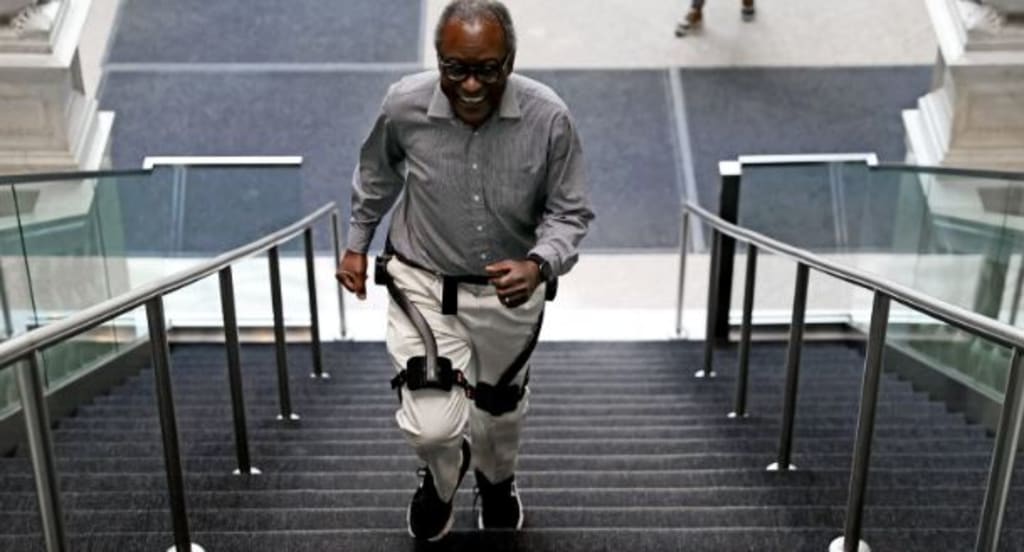
Deep in the rugged, unforgiving wilderness of the US Pacific Northwest, members of the Seattle Mountain Rescue are testing a piece of equipment that looks like it was pulled straight from the pages of a cyberpunk novel. Strapped to their hips and legs are powered assistive devices designed to amplify lower-body strength. As these rescuers navigate treacherous terrain and carry heavy, life-saving loads, the technology is being rigorously evaluated for its ability to boost speed and endurance during critical search-and-rescue operations.
These devices are human exoskeletons. By attaching to the body to create an external, or "exo," mechanical structure, they enhance the wearer’s physical capabilities, blurring the line between human biology and machine precision. While they may seem like a futuristic novelty, exoskeletons are rapidly becoming a vital tool in physically demanding fields, signaling a profound shift in how we approach human labor, rehabilitation, and endurance.
The Industrial and Tactical Frontier
The adoption of exoskeleton technology is already well underway across diverse, high-stakes industries. In the corporate world, retail giant IKEA has utilized SuitX exoskeletons for several years to assist warehouse workers in safely handling heavy materials, drastically reducing the risk of chronic workplace injuries. Similarly, manufacturing titans like Ford, Boeing, Mazda, and Toyota have integrated the technology into their assembly lines to alleviate the physical toll of repetitive, strenuous tasks on their workforce.
The benefits extend far beyond the warehouse. In Finland, a recent initiative known as the ExoPELA project assessed the viability of exoskeletons in rescue and firefighting operations. The findings confirmed noticeable, tangible benefits for users performing real-world, high-intensity tasks, validating the technology's role in public safety.
Perhaps most strikingly, the technology has proven its worth in the most extreme environments imaginable. In early 2026, the Ukrainian military revealed that its soldiers were deploying Hypershell exoskeletons on the front lines to assist with the grueling task of carrying heavy artillery shells. According to test results cited by Colonel Vitalii Serdiuk, soldiers wearing the devices experienced significantly less fatigue, worked faster, and maintained their combat effectiveness for much longer durations.
Driven by these compelling use cases, the global exoskeleton market is experiencing explosive growth. Currently valued at approximately $500 million, industry estimates predict the sector could double or even triple in size by the mid-2030s, encompassing a wide array of consumer, clinical, and industrial devices.
A Century in the Making
While the recent proliferation of exoskeletons feels sudden, the conceptual foundation is over a century old. The quest to augment human performance with mechanical aids dates back to 1890, when Nicholas Yagn, a self-taught Russian inventor, patented a wearable apparatus designed to assist with exercising and walking. In 1919, American inventor Leslie C. Kelley took the concept a step further, receiving a patent for a steam-powered device intended to support human locomotion, one of the earliest known concepts for a powered exoskeleton.
However, it wasn’t until the end of the 1960s that the necessary technological convergence occurred. Researchers successfully developed multiple actuated robotic exoskeletons incorporating early electronic control systems. Since that pivotal decade, research and development have advanced at a breakneck pace, driven by the miniaturization and affordability of robotic motors, advanced sensors, and sophisticated control systems, leading to the diverse commercial and clinical applications we see today.
The Mechanics of Augmentation
At their core, modern, active robotic exoskeletons are designed to generate forces that make the wearer stronger, move faster, or fatigue more slowly. Some also improve movement accuracy, dexterity, or overall posture.
Structurally, these devices typically consist of a lightweight mechanical frame with ergonomic attachments that secure to the human body at the trunk, waist, and upper or lower limbs. For example, the Hypershell device used in Ukraine attaches to the waist and thighs to assist with hip flexion and extension, directly strengthening lower-body movement. Conversely, the SuitX device used by IKEA attaches to the torso and upper limbs, providing crucial support to the back and shoulders during lifting.
The magic lies in the synergy between hardware and software. Mechanical components called actuators convert electric power from onboard batteries into precise mechanical movement. These actuators are orchestrated by embedded control units that define the trajectories of the exoskeleton’s movements and the amount of force applied to the wearer.
Crucially, these systems are highly responsive. Using an array of sensors, the device constantly monitors the task and the state of the user. If a wearer begins to run, the exoskeleton automatically speeds up its supportive movements. If sensors detect the onset of muscle fatigue, the system can increase its power output to compensate. While control units are traditionally pre-programmed for specific tasks, modern exoskeletons are becoming increasingly adaptive, utilizing machine learning algorithms that learn from the user’s actual working behaviors to provide seamless, intuitive support.
Generally, the assistance provided by these devices falls into three distinct categories:
Power Augmentation: This increases the force capabilities of the user and is the most common application in industrial and military settings, such as those used by IKEA and the Ukrainian military.
Assist-as-Needed or Resist-as-Needed: This setting provides support to the body only when necessary. It is predominantly used in medical rehabilitation devices, helping patients train their bodies to recover lost motor capabilities by providing just enough support to complete a movement, thereby encouraging neuroplasticity.
to walk.
Overcoming Hurdles
Despite remarkable progress, the exoskeleton industry still faces significant technological hurdles. Currently, most devices rely on mechanical feedback from external sensors to dictate their behavior. The holy grail of exoskeleton research is the development of direct neural or myoelectric interfaces, where the device is operated directly by signals from the wearer’s muscles or brain. While research in brain-computer interfaces (BCI) is accelerating, it remains a formidable challenge, often requiring invasive interfaces and extensive, user-specific calibration.
Power management is another critical bottleneck. Batteries must be integrated directly into the exoskeleton and regularly recharged, introducing weight and size constraints that can offset the very benefits the device is meant to provide. However, as the energy density of lithium-ion and solid-state batteries steadily improves, this limitation is gradually being mitigated.
Furthermore, the materials themselves are evolving. The rigid, metallic frames of the past are giving way to "soft exoskeletons." Researchers are developing devices made from advanced textiles and rubber-like materials that can be seamlessly integrated into everyday clothing, footwear, or protective gear, making the technology lighter, more comfortable, and less conspicuous.
Interestingly, the development of exoskeletons has come full circle. Research into walking exoskeletons during the 1960s and 1970s directly contributed to the development of the first humanoid bipedal robots. Today, that relationship is symbiotic. The massive, well-funded surge of interest in humanoid robotics is rapidly accelerating the development of smaller, more efficient actuators and higher-capacity batteries. These advancements will, in turn, directly feed back into and advance the wearable robotic technologies of tomorrow.
Ultimately, the human exoskeleton is no longer just a tool for the disabled or a staple of science fiction. It is a fundamental evolution of human capability. As the technology becomes lighter, smarter, and more accessible, it promises to redefine the physical limits of the human body, ensuring that whether we are rescuing the stranded, building the future, or healing the injured, we no longer have to do it alone.
About the Creator
Mark Lim
Hi I am mark an automotive student and a car, tech and food enthusiast ! Im gonna try and post daily & hope you enjoy what I write and do share my page with people you know. I would gladly appreciate it! Cheers
Enjoyed the story? Support the Creator.
Subscribe for free to receive all their stories in your feed.
Comments
There are no comments for this story
Be the first to respond and start the conversation.