
The Artificial State: Jill Lepore on Why Tech Giants Are Replacing Democracy and Why It's Doomed to Fail
"My beef is the ways in which private corporations have increasingly taken on the functions of the state," the Pulitzer-winning historian says. "No one consented to that."

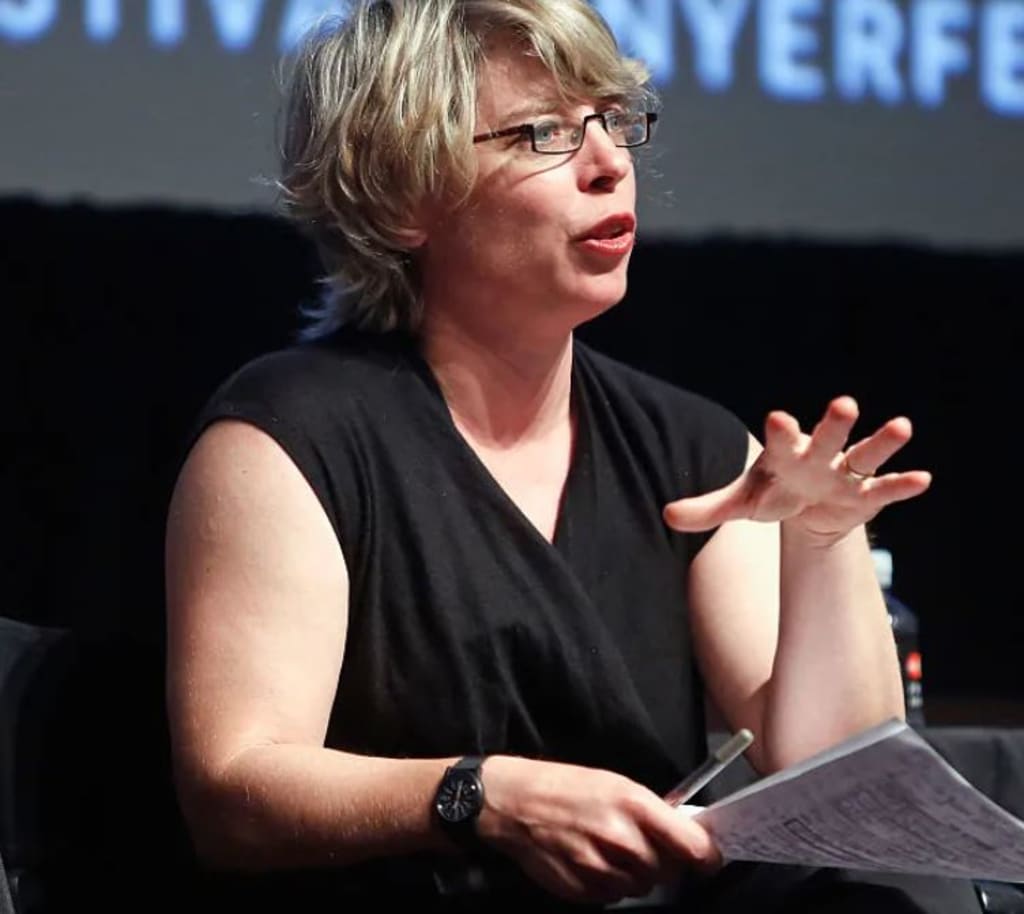
In her upcoming book The Rise and Fall of the Artificial State, Harvard historian and New Yorker staff writer Jill Lepore warns that tech companies are increasingly replacing the functions of democratic government. This shift, she said, marks "a return to tyranny and mystification in the form of rule by algorithms, corporations, machines."
On the latest episode of TechCrunch's Equity podcast, I spoke to Lepore, who recently won a Pulitzer Prize for her history of the U.S. Constitution, about the evolution of what she described as "the idea that we should live under an artificial state or government by machines."
"I'm not an anti-technologist," Lepore insisted. Instead, she said, "My beef is how private corporations have increasingly taken on the functions of the state."
What Is the Artificial State?
"By the artificial state, I mean a kind of state that is replacing the liberal democratic nation-state in the United States and around the world," Lepore explained. "It's both a real thing, a construct, but it's also an idea."
In the book, she traces the rise of the idea that we should live under an artificial state or government by machines, and she also traces the notion that this is an inevitable failure, that the artificial state cannot survive. She tracks that idea through centuries of history and, crucially, through science fiction.
"I think often these innovations in bringing new technologies to the operations of government have been extremely well intentioned; they originate with an interest in efficiency and speed and cheapness," she said. "And then, I think, only in the last 20, 25 years or so have these decisions been purposeful and deliberate as a kind of usurpation of the role of the nation-state."
Lepore points to the rhetoric of tech entrepreneurs themselves. "You hear a lot of very prominent tech entrepreneurs talk about wanting to move beyond the era of the nation-state," she noted. "A lot of futurists in the '90s were libertarians, and they had a specific interest in using the advance of the internet and the successive innovations that followed as a means to eradicate the nation-state."
The Road Not Taken: What If the Internet Had Been Different?
Lepore emphasized that the current trajectory was not inevitable. "One of the things that I'm really interested in unraveling for readers in this book is all the what-ifs, all the alternatives, the paths along the road that were not taken and why."
She pointed to the 1996 Telecommunications Act as a pivotal moment. "I think a lot of people would say that just was a mistake, not an act of sinister intent. But it was a product of a particular political moment, really was deeply influenced by Newt Gingrich and his Contract with America, and it's been very difficult to revisit."
The promise that better computer technology would make for better democracies, she argues, can be traced back to Apple's famous "1984" Super Bowl ad for the Macintosh. "Apple was really big on the idea that mainframe computers represented totalitarianism. They were trying to dismantle the giant gray IBM machines, as in representing them in that ad as a totalitarian state. And the lithe, beautiful, quick, adorable, personal Macintosh would be the ax that would destroy that machine and would usher in a new era in which 1984 would not be '1984.'"
"That was clever advertising," she said. "I doubt that anybody at Apple really believed the personal computer was going to be an instrument of personal liberation."
The Rise of the Tech State: From Twitter's Town Hall to AI Presidents
Lepore traces the path from that advertising fantasy to the present moment: "Stops along the way include the 2016 election when Facebook News, in response to its critics, establishes a Supreme Court. You get to last year, when Anthropic hired a moral philosopher to write a constitution. You get to recently, when Sam Altman was on Joe Rogan and said, 'Oh, an AI president would be a great idea.'"
"In some ways, they're silly examples," she acknowledged. "But you see the ways in which these corporations, these tech companies from Silicon Valley, and especially their charismatic or not-so-charismatic leaders, are just taking on the trappings of the nation-state and the functions of democracy."
The shift is not grounded in sophisticated political philosophy, she argued. "It's like a cartoon version of that 1984 Macintosh ad, except that it takes itself so seriously. And these companies have so much power."
The Twitter Mirage: When a Platform Confused Itself for a Town Hall
Lepore was particularly pointed about Twitter's self-mythologizing. "When it was launched, when Jack Dorsey started it, it didn't announce itself as, 'We're going to save humanity, we're going to rescue human civilization from extinction.' It was kind of a goof."
"It was actually really fun," she added wryly. "It was like, 'I made a tuna fish sandwich today. What did you have for lunch?'"
What changed, she argues, was that politicians began using Twitter in ways that enhanced their power. "Twitter came around to like, 'Twitter's gotten so big, and people post about politics so often that it's almost like Twitter is a town hall.'"
By 2012, the company published the "Twitter Politics and Elections Handbook" and began rolling out the narrative that it was "a town hall in your pocket," improving democracy. "That's all just bananas," Lepore said. "Objectively, nothing could be further from the truth."
She noted that at that time, one in five Americans had a Twitter account, most had never used it, and "above 90% of all tweets about politics were posted by fewer than 10% of the people that did use Twitter all the time."
"Twitter was a representation of the most extreme, politically active, hyper-partisan among Americans," she concluded. "Looking at it now, we can see, 'Well, that's really just a distortion machine.'"
The Data Center Backlash as a Democratic Awakening
Lepore sees the current data center backlash as a sign that the artificial state is meeting resistance. "You see this in all the little data center crises, town to town, county to county, state to state," she said, noting that this is partly a consequence of the decline of local newspapers.
"What you see is a lot of people show up at these town meetings and say, 'We don't even have housing. We don't have healthcare. We don't have jobs. Who said we're building this data center? I need to know a lot more about it. I need to know what its energy costs are going to be. Tell me about the water consumption. Are there going to be jobs? Are the jobs going to be long-lasting? Are they just going to be for six months?'"
"More and more, you see people are like in the Salt Lake example, where well over 70% of the people really were opposed to this data center, and their representatives supported it. That's not representing the people," she said. "I think there are political costs, and we'll begin to see those at elections."
Artificial State Is Doomed to Fail
Lepore is unequivocal: the artificial state cannot survive. "To erect an artificial state and rule humans within it, you must alienate them from the natural world because you are destroying it. The artificial state will destroy the natural world, and yet it needs the resources of the natural world to run."
She pointed to the science fiction tradition that foresaw this. "It's not an Asimov story, but it's one of Asimov's favorite stories from his boyhood ['The Man Who Awoke' by Laurence Manning] about a future in which the foresters have defeated the wasters. The war that the future humans had was between the wasters, who just figured you could just use everything up and waste it, and the foresters, who really believed in we would call reforestation and rewilding."
"There is not a possibility that the natural world, a habitable planet habitable for humans, can survive the full construction and reliance on the devices of the artificial state," she said.
The Problem with "Disruptive Innovation"
Lepore, who wrote a scathing critique of Clayton Christensen's "disruptive innovation" theory for The New Yorker more than a decade ago, stands by her analysis. "I stand by everything in that piece," she said.
She argued that the theory which has become a mantra in Silicon Valley is "a theory of history" that doesn't hold up to historical scrutiny. "His use of evidence is completely unacceptable by any proper understanding of historical method. Its argument is in conversation with no meaningful understanding of how change happens."
She wished that historians were more in conversation with technologists. "People really want to think, 'What is this? What am I doing? What are going to be the consequences? Is there anything I could learn from history? What happened when the automobile replaced the horse?'"
"I just wish that historians were more in conversation with technologists over these years, and with entrepreneurs. Not just because we can stand around and say, 'You know, I have a lecture to offer you on history,' but I think there's a real conversation to be had."
Lepore's book is a sweeping indictment of the tech industry's slow-motion takeover of democratic functions but it's also a call to action. The artificial state, she argues, is not inevitable. It is a choice, one made through decades of policy decisions, corporate overreach, and public acquiescence.
And like the science fiction stories that have been warning us for more than a century, it is doomed. The question is whether we will let it destroy the natural world and our democracy before it falls.
The circus of tech is always evolving. But as Jill Lepore warns, the artificial state is a show we never asked to see and one we can still choose to leave.
About the Creator
Mark Lim
Hi I am mark an automotive student and a car, tech and food enthusiast ! Im gonna try and post daily & hope you enjoy what I write and do share my page with people you know. I would gladly appreciate it! Cheers
Enjoyed the story? Support the Creator.
Subscribe for free to receive all their stories in your feed.
Comments
There are no comments for this story
Be the first to respond and start the conversation.