
The Architecture Decision That Quietly Decides Whether Your SaaS Survives Year Three
Multi-tenant choices made on day one come back as expensive rebuilds when the user base grows. Most teams pick wrong without realizing it.

A founder of a B2B analytics startup sent me a message last year. His product had hit 200 paying customers. Revenue looked healthy. The team had just closed a Series A. Then his largest client ran a heavy query during a Monday morning rush. The platform froze for everyone else for nineteen minutes.
The cause sat in a decision made two years earlier. His team had put every client in one shared database. It made sense at the time. They had four customers and a small server budget. The architecture worked fine until it did not. The fix took eight months of engineering work and delayed the product roadmap by a quarter.
This pattern shows up across SaaS companies that grow faster than their original architecture planned for. The mistake is rarely dramatic. It hides inside a reasonable early decision that ages badly.
The Tenant Isolation Question Nobody Asks Early
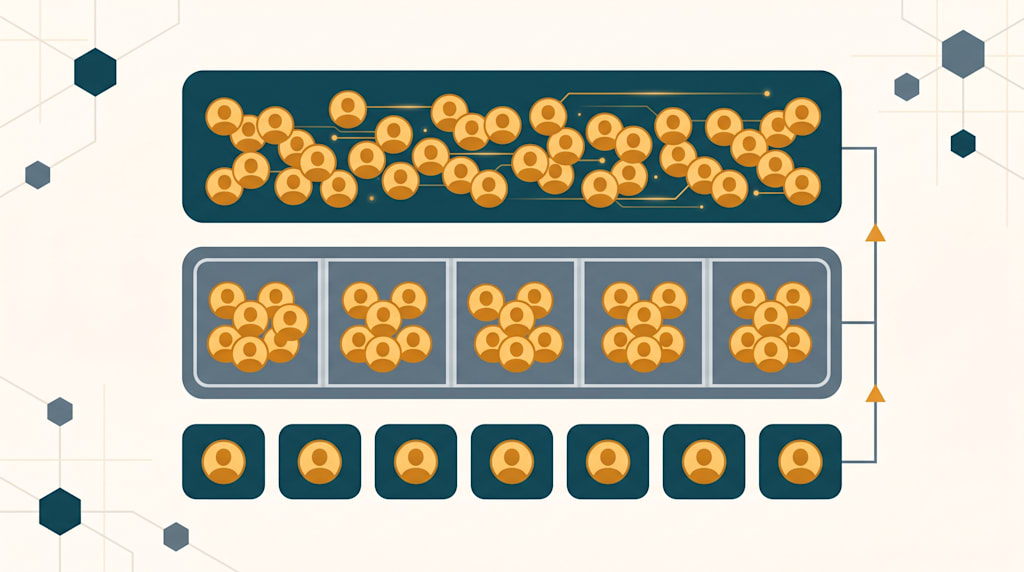
Multi-tenant architecture has three main shapes. A single shared database holding all customers. Separate schemas for each customer inside one database. Fully separate databases per customer. Each option trades cost against isolation.
The shared model costs the least. One database, one set of migrations, one backup process. The numbers look great on a finance spreadsheet. The risk hides inside the words "noisy neighbor." One client running a heavy report can consume CPU, memory, or I/O that other clients need. The other clients see slow response times or outright failures.
The separate-database model gives the strongest isolation. Each client gets their own engine, their own storage, their own performance ceiling. The cost climbs fast. Schema migrations now run across hundreds of databases. A single bug fix turns into a deployment marathon. Global analytics across all customers becomes a hard engineering problem.
The schema-per-tenant model sits in the middle. It offers more isolation than the shared approach, with less operational cost than fully separate databases. Most growing SaaS products end up here eventually.
The mistake is not picking one of these. The mistake is picking before understanding which customer types you actually serve.
What the Wrong Choice Costs
The wrong choice does not announce itself. It compounds quietly.
A healthcare SaaS that puts every clinic in one shared database faces a HIPAA audit. The auditors ask how the company guarantees that patient data from one clinic cannot be mixed with that of another. The answer involves a costly rebuild before the next compliance cycle.
A financial reporting tool that uses separate databases for every customer who signs an enterprise deal worth $400,000 a year. The new customer wants the same analytics dashboard the marketing site promised. The dashboard pulls data across all tenants. The engineering team realizes that the query touches 800 separate databases. The dashboard ships nine months late.
A productivity SaaS adds AI features to compete with newer AI-first platforms. The vector embeddings and inference costs multiply across tenants in ways the original architecture never accounted for. Margins drop. The team rebuilds the data layer while still shipping features.
Research from AWS on SaaS tenant isolation strategies reinforces what experienced engineering leaders already know. Isolation is not a single setting. It is a layered set of decisions that touch storage, compute, identity, and network design.
The Tiered Approach That Works
Teams that handle SaaS scalability well tend to use tiered architectures. Different customer segments get different isolation models. The cost matches the value.
Freemium and small-business tiers share a database. The cost stays low. Resource quotas and rate limits keep any single tenant from breaking the experience for others. Compute caps trigger before any one customer can monopolize the system.
Mid-market customers get a separate schema. They get cleaner isolation, faster queries, and better backup recovery times. The operational cost stays manageable because the schemas live inside a smaller number of database instances.
Enterprise customers with regulated data get a dedicated database. They pay for it. The pricing reflects the actual infrastructure cost plus the operational overhead. Compliance audits go more smoothly. Security reviews close faster.
This tiering also matches how customers buy. Enterprise procurement teams expect dedicated infrastructure. They will pay for it. Selling them shared-database hosting often kills the deal during the security review.
What to Decide Before Writing Code
A few questions surface the right architecture early. The questions sound simple. The answers shape the next five years.
What regulations will the largest customer expect compliance with? GDPR, HIPAA, SOC 2, and PCI each push the architecture in specific directions. The answer cannot be solved at the application layer alone.
What does the heaviest customer workload look like? If one customer runs analytics queries 100 times larger than the median, sharing resources becomes risky. Plan the isolation around the outliers, not the average.
Where will AI features land in the product roadmap? AI workloads consume resources differently from traditional CRUD operations. Embedding generation, vector search, and inference all add load patterns that older multi-tenant designs did not anticipate.
How fast will the customer count grow in the next 24 months? Operational overhead scales with tenant count for some models more than others. The right answer for 50 customers is often the wrong answer for 5,000.
Firms offering SaaS application development services see these patterns play out across many builds. Companies like ViitorCloud, which writes about how SaaS application development services support scaling, often run the isolation conversation before any database schema gets written. The order matters. A SaaS product development company that skips this step usually ends up rebuilding the data layer within three years.
The founder of the opening eventually moved his platform to a tiered model. Shared database for self-serve customers. Dedicated schemas for mid-market. Separate databases for the three enterprise clients. The rebuild was painful. The platform has held steady through 4x growth since then.
That is the actual lesson. The architecture question is a business question wearing technical clothes. Answer the business question first.
About the Creator
ViitorCloud Technologies
As a leading software development company, we’ve empowered 500+ startups, SMBs, and enterprises to transform their operations. Upgrade your business with our AI-First Software and Platforms that automate and scale, keeping you future-ready.
Enjoyed the story? Support the Creator.
Subscribe for free to receive all their stories in your feed.
Comments
There are no comments for this story
Be the first to respond and start the conversation.