
The AI Tightrope: How the Artificial Intelligence Boom is Propelling Global Growth While Teetering on the Edge of Systemic Risk
At the IMF-World Bank Annual Meetings in Bangkok, top economic officials warn that a sudden faltering in AI investment could trigger a global market correction, urging a delicate balance between breakneck innovation and robust regulatory safeguards.

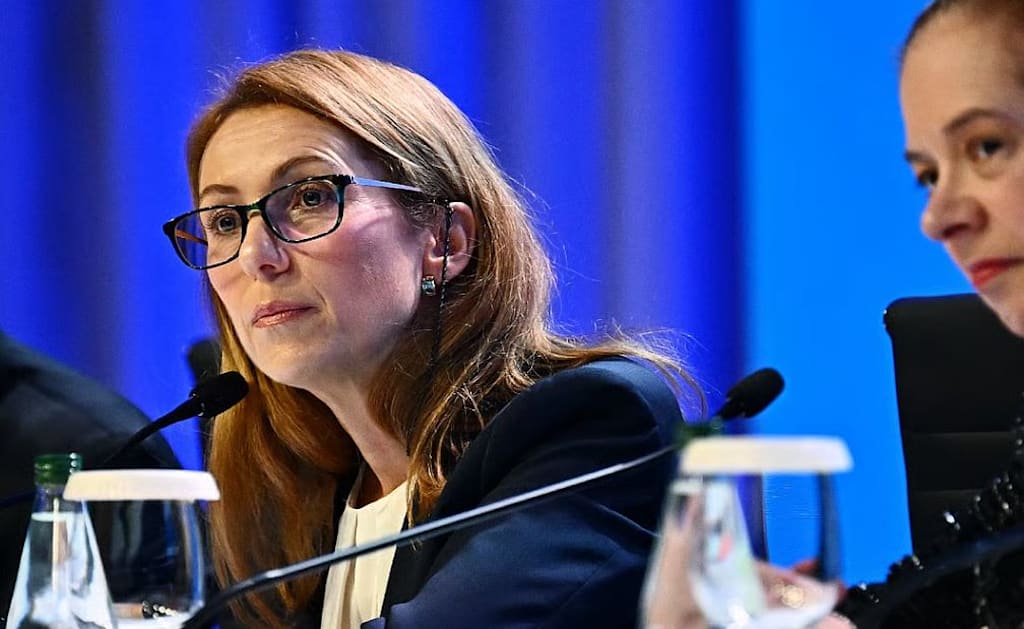
The artificial intelligence revolution has undeniably become the primary engine of global economic growth, cushioning the world economy against severe geopolitical shocks. However, at the IMF-World Bank Annual Meetings this week, a chorus of top policymakers and financial experts issued a stark warning: the global economy is becoming dangerously over-reliant on AI investment, and a sudden loss of momentum in the sector could trigger widespread financial instability.
The Undeniable Growth Catalyst
Propelled by massive capital expenditures on data centers, microchips, and related infrastructure, the AI boom has acted as a vital economic shock absorber. According to a new report released Tuesday by the International Monetary Fund (IMF), AI-related trade has significantly softened the global economic impact of soaring energy prices driven by the ongoing war in the Middle East.
The data underscores the technology's pervasive influence. Silvana Tenreyro, the IMF’s chief economist, highlighted that global trade surged by 8.3% between 2023 and 2025. Strikingly, she noted that without the explosive demand for AI-related products, that figure would have been a mere 4.6%.
“It is everywhere in the global economy,” Tenreyro observed. This sentiment was echoed by Bank of Canada Governor Tiff Macklem, who emphasized the technology's deep integration into global finance. “You see it in GDP. You see it in the stock market. You see it in the bond market… So it is here, and it’s just the beginning,” Macklem stated.
The Looming Specter of an AI Bust
Despite the current euphoria, top officials in Bangkok cautioned against the systemic vulnerabilities inherent in a market so heavily concentrated around a single, unproven technological paradigm.
Federal Reserve Chair Kevin Warsh described AI as the “most consequential change” to the global economy in his lifetime, acknowledging its “huge benefit.” However, he warned that the transition would be far from smooth. “The path from where we are to there is likely to be a very bumpy one,” Warsh said, citing uncertainties surrounding both the fundamental understanding of the technology and the eventual market structure of these new industries.
IMF Managing Director Kristalina Georgieva reinforced this caution, noting that because the AI boom is now so deeply woven into the fabric of global growth, any slowdown in the industry “would be felt across the world.” She warned that a loss of investor confidence could lead to capital flight from the sector, creating severe financial stability risks.
The IMF’s latest projections quantify this danger: a sustained decline in AI investment could reduce global GDP by 0.4% by 2028. The report explicitly warned that “weaker or less durable AI investments and profitability could be a shock that triggers a market correction,” echoing fears of a speculative bubble similar to the dot-com crash, but on a much larger, more interconnected scale.
Geopolitical and Regulatory Headwinds
Compounding the financial risks are severe geopolitical and regulatory headwinds. While AI trade has thus far helped offset the economic damage of the Middle East conflict, economists at Moody’s Analytics warn that a drawn-out war could ultimately “puncture” the AI boom. Prolonged conflict threatens to keep energy prices elevated and financial conditions tight, which would drive up operating costs and interest rates. This, in turn, could cast serious doubt on the long-term profitability and viability of capital-intensive AI business models.
Furthermore, the regulatory landscape remains deeply fractured, adding another layer of uncertainty for investors. A fierce tug-of-war is underway between political leaders advocating for minimal interference and industry voices calling for guardrails. US President Donald Trump has consistently urged limited government regulation to maintain American competitive dominance.
However, IMF chief Georgieva drew a direct line between responsible regulation and sustainable investment. Speaking in Bangkok, she cautioned that a laissez-faire approach could ultimately destroy the very industry it seeks to protect. “If there are no safeguards, then the risks may exceed the opportunities,” she warned, suggesting that public backlash or catastrophic failures stemming from unregulated AI could prompt a draconian regulatory crackdown that would stifle innovation entirely.
The message from Bangkok is clear: the artificial intelligence boom is a double-edged sword. While it has provided a much-needed lifeline to a global economy battered by war and inflation, its sheer scale makes it a potential single point of failure. As policymakers and central bankers look to the future, their challenge is no longer just about fostering innovation, but about engineering a "soft landing" for the AI sector—ensuring that its growth is built on durable profitability and robust safeguards, rather than speculative fervor.
About the Creator
Mark Lim
Hi I am mark an automotive student and a car, tech and food enthusiast ! Im gonna try and post daily & hope you enjoy what I write and do share my page with people you know. I would gladly appreciate it! Cheers
Enjoyed the story? Support the Creator.
Subscribe for free to receive all their stories in your feed.
Comments
There are no comments for this story
Be the first to respond and start the conversation.