
Talent, Transition, and Tension: China’s Push to Turn the “Engineer Dividend” into AI Leadership
A Nation’s Ambition and Its Demographic Clock

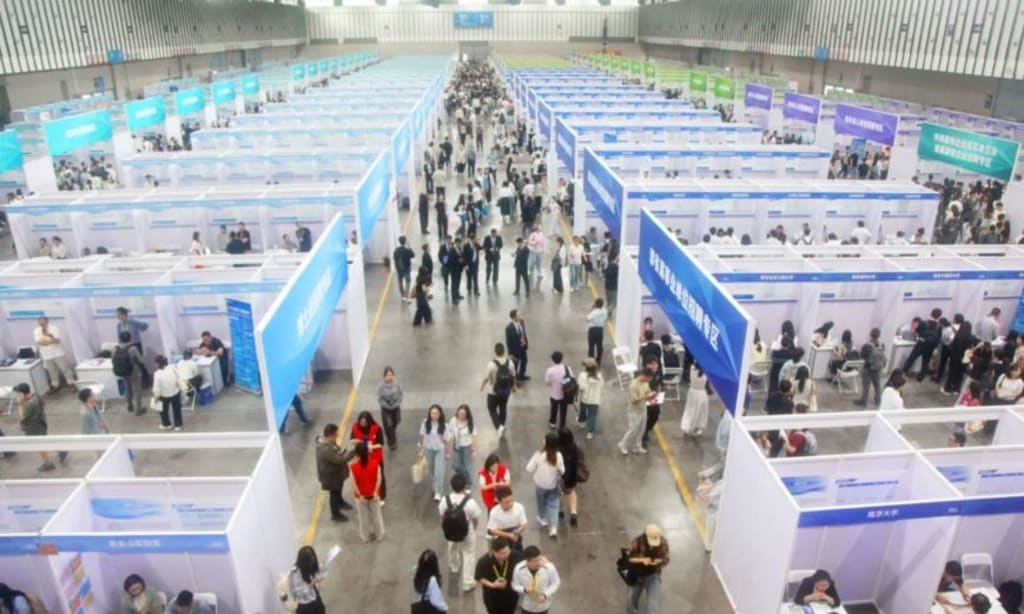
For decades, China has drawn strength from what observers call its “engineer dividend,” a vast and growing workforce of technically trained professionals built up through sustained investment in education and national development. Today, that advantage is being directed toward the most consequential technological competition of the era: the global race in artificial intelligence and advanced computing. Yet this ambitious push is unfolding against a backdrop of deepening concern. Youth unemployment has climbed to nearly nineteen percent, record numbers of graduates are entering a crowded job market, and the country’s demographic trajectory means the window to capitalise on this moment will narrow sharply within the decade. The result is a high‑stakes balancing act between building global technological leadership and ensuring that millions of young people can find meaningful work in the economy they are helping to build.
From Millions of Minds to Frontier Breakthroughs
The scale of the talent pool is already extraordinary. The number of engineers in China rose from roughly five million two hundred thousand in the year two thousand to more than seventeen million seven hundred thousand in two thousand twenty, a surge unmatched anywhere else in the world. By last year, researchers based in China accounted for forty‑one percent of the world’s most cited elite AI scientists, surpassing the United States at thirty‑four percent and marking a quiet but profound shift in where frontier innovation originates. Products such as DeepSeek and Kimi K3, the latter a massive two‑point‑eight trillion‑parameter model developed by Beijing‑based start‑up Moonshot AI, have narrowed the technological gap between the two nations to what some analysts describe as a matter of weeks, sparking genuine anxiety in Silicon Valley over whether the United States can sustain its long‑held lead.
Expanding Campuses for Strategic Advantage
To maintain this momentum, the Ministry of Education has announced plans to expand undergraduate enrolment at the country’s top universities by seventy‑six thousand places between two thousand and twenty‑seven and two thousand and thirty, part of a broader drive to add more than one hundred thousand spots at “double first‑class” institutions by the end of the decade. These are not general increases; they are sharply targeted toward fields deemed critical to national strategy: artificial intelligence, integrated circuits, biomedicine, new energy, and advanced communications. Southeast University will add six hundred places focused on AI, chip design, and robotics; Xidian University is expanding enrolment by four hundred in high‑demand areas such as semiconductors and intelligent systems. Funding will come from central government allocations and special long‑term treasury bonds, supporting new laboratories, upgraded facilities, and expanded campuses designed to turn research capability into industrial strength.
A Closing Window Before the Tide Turns
The urgency behind this expansion is driven not only by geopolitical competition but also by a demographic clock that is already ticking. Official projections show the college‑age population will peak around two thousand and thirty‑two before entering a sustained, multi‑decade decline. Education policy experts warn that there is a narrow window to align the higher education system with the economy’s evolving needs before the number of students seeking places begins to fall, raising difficult questions about whether newly built campuses and expanded programmes will remain relevant or become underused infrastructure. As Xiong Bingqi, director of the Twenty‑First Century Education Research Institute, notes, the question will be what happens to these institutions once the demographic wave recedes.
Record Graduates, a Crowded Market, and the Skills Gap
Meanwhile, the immediate reality for many graduates remains far removed from high‑tech breakthroughs. Youth unemployment for those aged sixteen to twenty‑four reached eighteen‑point‑nine percent in August, up from seventeen‑point‑nine percent in July, as a record number of new graduates entered a market still weighed down by sluggish domestic consumption and the very technologies they are being trained to master. Artificial intelligence, while creating new fields at the cutting edge, is also streamlining entry‑level roles across industries, meaning that the skills gap is widening: in integrated‑circuit design, there are twenty‑five job openings for every qualified applicant; in algorithm engineering, fifteen; in autonomous driving, fourteen. For graduates without those specialised capabilities, the search becomes far harder. The mismatch is visible across the country: millions of highly educated young people are seeking work in an economy that rewards advanced technical expertise but is not yet generating enough suitable roles for everyone who has invested years in schooling.
Dividends Delivered or Promises Unfulfilled?
This tension lies at the heart of China’s strategy. The government is betting that building global leadership in AI and related sectors will eventually create enough high‑quality, high‑value employment to absorb the expanding cohort of graduates. For now, however, the transition is proving painful. The “engineer dividend” is real, and it is reshaping the global balance of technological power but dividends are only truly paid when the people who generate them can share in the prosperity they help create. Over the coming years, the success of this grand experiment will be measured not just in models built or patents filed, but in whether the next generation of innovators can find their place in the future they are building.
About the Creator
Mark Lim
Hi I am mark an automotive student and a car, tech and food enthusiast ! Im gonna try and post daily & hope you enjoy what I write and do share my page with people you know. I would gladly appreciate it! Cheers
Enjoyed the story? Support the Creator.
Subscribe for free to receive all their stories in your feed.
Comments
There are no comments for this story
Be the first to respond and start the conversation.