startup
A digital breakdown of Silicon Valley goings-on; insights into the next big startups, tech entrepreneurs to watch and emerging trends in the startup space.
Is Hiring a Grant Consultant Worth It for Early-Stage Startups in Canada?
Starting a business is no easy feat, especially when you're an early-stage startup. With limited resources, high competition, and the need for rapid growth, it can feel overwhelming to navigate the complex world of funding. One of the most crucial factors for the survival and success of a startup is obtaining the necessary financial support. But is hiring a grant consultant the right move for your startup in Canada? In this blog, we will explore the benefits and considerations of working with the best grant consulting for startups in Canada, especially for early-stage companies.
By Mentoria Teamabout a year ago in 01
Vancouver’s Complete Guide to Selling Pre-Owned Fitness Gear
Why Sell Online in Vancouver? Key Advantages Reach More Local Buyers: Listing online (on local Vancouver platforms or your own site) exposes your gear to thousands of potential fitness enthusiasts in the Lower Mainland. Whether someone is looking to build a home gym or outfit a small studio, your equipment can catch their eye online long before a neighborhood garage sale. Digital marketplaces connect you with a wide audience, and your own website ensures people find you through searches like “used treadmill Vancouver” or “affordable weights in Vancouver.” Convenience and Speed: Unlike paper classifieds or word-of-mouth, online listings mean you can post at any time from home. Buyers browse 24/7, so you often get interest faster. As one industry blog notes about online sales, the convenience is unbeatable. Buyers view your item when it suits them, and you can field inquiries on evenings or weekends without leaving the couch. Show Your Gear at Its Best: Online photos and descriptions highlight condition and features in detail. Shiny clean equipment will look its best in pictures and attract offers. (See Step 1 for tips on cleaning and photographing.) By contrast, a brief line in a flyer or newspaper can’t showcase the quality of your Life Fitness treadmill or Spinning bike. Great photos can literally make or break a sale. For example, demonstrating your cleaned-up dumbbells (as in the image below) helps buyers trust the condition.
By Steve Oscarabout a year ago in 01
Modern Web Development in 2025: Trends, Technologies & Why It Matters for Your Business. Content Warning. AI-Generated.
Why Modern Web Development Is Crucial in 2025 The internet has developed on a fast pace in the recent years. Turbo-fast load time, personalization and cross-device functionality are now user expectations. Meanwhile, security, scalability and system integration are no longer things that businesses can negotiate.
By sandun srimalabout a year ago in 01
How To Outsource Dedicated Software Development Teams
A dedicated software development team supplied by an external provider is best understood as a variable-capacity extension of an in-house engineering group. It follows three rules. First, every backlog item, milestone, and metric is aligned with the client’s business targets rather than the vendor’s utilization goals. Second, work remains transparent: repositories, test results, and decision logs are accessible to the client at all times. Third, the provider is obliged to deal with change, refining scope or priorities without lengthy renegotiation when market or regulatory events force adjustment.
By Dmitry Baraishukabout a year ago in 01
How to Hire a Backend Developer as an Executive
Investment in backend engineering talent is critical for software projects. While user-facing features receive the limelight, the invisible backbone – databases, APIs, security layers, deployment pipelines – governs the company’s ability to out-innovate competitors. A well-architected stack supports new software product lines. A high-performing backend engineer can reduce feature delivery times, protect critical apps from attacks, and cut infrastructure spend through optimization.
By Dmitry Baraishukabout a year ago in 01
A Warning in a Whisper
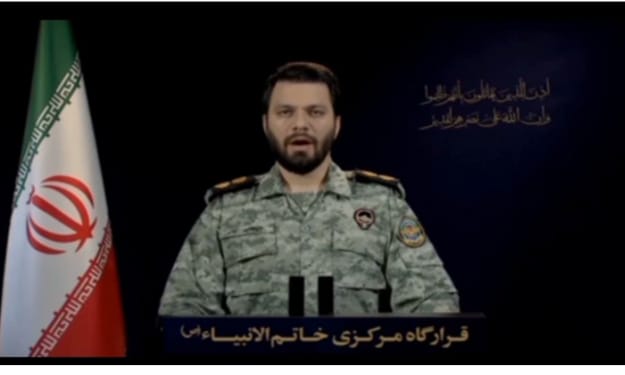
turated with noise, Iran’s latest military statement speaks louder through silence, posture, and precise diplomacy. Introduction In geopolitical communication, tone can be as decisive as content. Recently, a video statement from the spokesman of Iran’s Khatam al-Anbiya Central Headquarters attracted wide international attention. Not for its aggressive language, but for its composed delivery. Shared via Press TV’s official WhatsApp channel, this message carried more than policy—it conveyed presence, patience, and readiness. What makes this moment significant isn’t merely the message, but how it was delivered. The spokesperson’s calm demeanor, deliberate speech, and subtle yet firm posture presented a rare kind of warning—one that doesn’t shout, but still resounds. --- Context and Message The core statement was clear: > “Powerful and calculated operations with severe and unpredictable consequences await the United States in response to its direct aggression and violation of Iran’s sovereignty.” While many countries issue warnings, this one was structured, measured, and wrapped in certainty. It didn’t echo panic or provocation. Instead, it showed a nation quietly prepared to act with both force and focus. For seasoned observers of Middle Eastern diplomacy, this was not simply rhetoric—it was calibrated signaling. Iran has long practiced a threefold strategic doctrine: resilience, restraint, and response. Unlike impulsive actors in global politics, its military messaging follows a timeline of preparation and positioning. This statement was no exception. It fits into a larger pattern of Iran's geopolitical posture—particularly in how it manages tension with the United States. --- The Unspoken Message: Body Language and Demeanor What made this message especially powerful was not just what was said, but how it was presented. Watching the video reveals three major elements of non-verbal communication that magnify the weight of the message: 1. Unusual Calm in the Eyes The spokesman’s gaze did not shift nervously, nor did it seek to impress. It was direct, centered, and stable. This kind of eye contact sends one signal: full awareness without fear. It tells viewers that the message was not reactive—it was prepared. 2. Low, Measured Tone Every sentence was spoken slowly and clearly, as though rehearsed not for performance, but for impact. A low voice tends to carry authority, and the deliberate pacing indicated that every word had been chosen with care. 3. Composed Physical Presence There was no fidgeting, no exaggerated movements, and no dramatic hand gestures. The posture was straight but relaxed. The speaker looked like someone who has no need to convince—only to inform. This is often the posture of someone who knows their side holds leverage. These elements combined to send a message more powerful than military hardware: confidence. --- Beyond Words: The Broader Meaning This message is not a one-off outburst. It is part of a broader evolution in Iran’s foreign policy and strategic communication. Over the last decade, Iran has shifted from being a reactive actor to a calculated power center in the Middle East. Whether through alliances with Lebanon’s Hezbollah, military presence in Syria, political influence in Iraq, or support for groups in Yemen and Gaza, Iran’s geopolitical footprint has grown. In that context, this statement represents more than just defense—it reflects deterrence. By emphasizing unpredictability and readiness, Iran’s military command signals that any aggression will not be met with standard retaliation, but with intelligent, perhaps asymmetrical, operations. This is a page from the psychological warfare manual: don’t announce the counterstrike—imply it, project certainty, and make the other side guess when and how it will come. --- The Power of Media and Silence In a time when social media is saturated with shouting matches, exaggeration, and performative politics, Iran’s approach here stood out. No shouting. No chest-thumping. Just a quiet, intentional delivery. The silence behind the words amplified their meaning. This isn’t the kind of video that trends because of its drama—it stays in your mind because of its clarity. It doesn’t go viral for emotion. It spreads because it reflects a deeper calm—one that comes from being prepared. --- Strategic Silence: A New Era of Messaging Strategic silence has become one of Iran’s key soft power tools. This isn’t silence as in absence, but as in intention. It’s the silence that comes from knowing your next move but choosing not to reveal it. When a nation uses silence strategically, it creates space for doubt in the opponent’s mind. That’s more powerful than a direct threat. It shifts the psychological advantage. It suggests that the real battlefield might not be visible—and the real answer may already be in motion. This messaging tactic aligns with Iran’s long-standing concept of “Sabr-e-Strategic” (Strategic Patience), where time is used as a weapon, and clarity replaces chaos. --- Conclusion The statement issued by Iran’s military spokesman was more than policy—it was posture. In a brief video, Iran managed to signal resolve, strength, and strategic depth without ever raising its voice. It reminded observers that power does not always require volume, and clarity does not demand chaos. In today’s volatile global environment, such moments of composed messaging often say more than entire campaigns. Iran’s silent warning was, paradoxically, one of the loudest signals to come out of the region in recent months. When the spokesperson looked into the camera, calm and unwavering, the message was unmistakable: We are not reacting. We are ready. ---
By Riaz Gillani Exclusiveabout a year ago in 01
Business Intelligence Software for Healthcare — What to Expect
Modern healthcare operates inside a data deluge. Every blood gas result, every reimbursement code, and every nurse’s shift handoff generates data that, in aggregate, dwarfs the holdings of many national archives. For decades, that data collected dust in proprietary databases, accessible only to technical specialists and summoned slowly by retrospective reports that arrived long after the decisions they might have informed were already made.
By Dmitry Baraishukabout a year ago in 01
Custom CRM Development in the USA in 2025: Industry Trends
Key Takeaways Gain an edge by customizing your CRM to fit the unique needs of your business and outpace competitors. Streamline your operations by mapping out your customer journey before starting CRM development for a smoother rollout. Strengthen relationships by creating CRM features that help your team connect and respond to customers in more meaningful ways. Explore how custom CRM tools open up new ways to automate tasks and spark growth you might not expect.
By Dmitry Baraishukabout a year ago in 01
Echoes of Conflict U.S. Iran Tensions Unfold
artriting A powerful visual representation of escalating tensions between the United States and Iran, symbolizing the fragile state of peace in a region overshadowed by conflict, protests, and military aggression.
By Riaz Gillani Exclusiveabout a year ago in 01
The Gulf Ignites
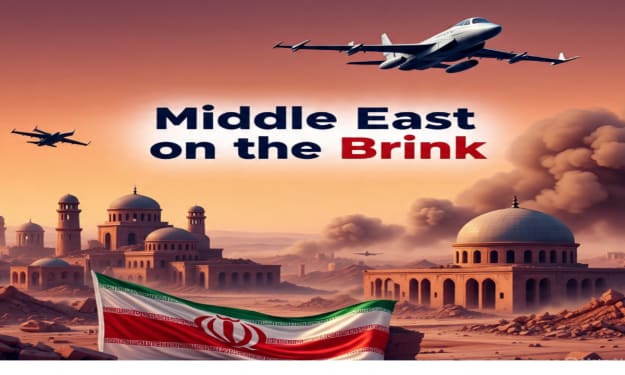
art writing...The United States, working closely with Israel, launched a series of precise airstrikes targeting Iran’s nuclear facilities in Fordow, Natanz, and Isfahan. These strikes employed advanced bunker-buster bombs and Tomahawk missiles, resulting in significant structural damage—particularly at the Fordow site, which was almost completely destroyed. Although Iran has officially denied any radioactive fallout resulting from these strikes, independent analysts and regional experts confirm that active conflict is now underway, with far-reaching implications that extend well beyond the immediate area. ho Stands With Whom? This conflict involves more than just the three main countries—United States, Israel, and Iran—it highlights a broader ideological and geopolitical divide across the globe. llies of Israel and the United States include: The United States itself, leading direct military operations and intelligence sharing. The United Kingdom, providing vital intelligence and logistical support. France, offering diplomatic support and possibly supplying arms. Saudi Arabia and the United Arab Emirates, quietly assisting by allowing the use of their airspace and logistical help. Select NATO members who offer unofficial or silent backing. ikely allies supporting Iran are: Russia, which provides diplomatic backing and defense cooperation. China, which maintains a strategic partnership with Iran and can leverage its position in the UN Security Council to block resolutions against Iran. Proxy groups such as Hezbollah in Lebanon, the Houthi rebels in Yemen, and various Iraqi militias, who act as Iran’s regional agents. Syria, which coordinates ground activities and provides safe passage to allied forces. Turkey, whose position is complicated; while it may sympathize with Iran’s anti-Israel stance, it also balances diplomatic ties with the West. amage and Realities on the Ground The airstrikes have inflicted significant damage. Iranian official sources report at least 224 deaths and more than 1,800 injuries as a result. Public anger and unrest have surged, but so far, Iran has avoided launching a full-scale military counterattack. That said, Iran’s ballistic missile programs, drone operations, and extensive network of proxy forces remain largely intact and operational. This suggests Iran could continue to engage in asymmetric warfare and possibly wage a prolonged proxy conflict across the region. an the War Be Stopped? And How? The fate of this conflict depends on several key factors: Diplomatic efforts are ongoing, with the United Nations, China, and the European Union actively trying to mediate and reduce tensions. Economic fallout is a major concern. Disruptions to oil supplies in the Gulf could have serious consequences for the global economy, possibly prompting intervention by other international powers. Public pressure in the involved countries—particularly unrest within Iran, Israel, and the United States—may influence government policies and decisions regarding the war. The nuclear threat remains a critical factor. If Iran feels its existence is at risk, the conflict could escalate beyond control. egional Fallout This war is already affecting neighboring countries. Jordan, Lebanon, and Iraq have expressed serious concerns over repeated airspace violations, an increasing influx of refugees, and growing political instability. The deep-rooted sectarian tensions that exist in the region risk being inflamed further, which could trigger a wider wave of conflict across the Middle East. edia and Disinformation Alongside the military conflict, an information war is underway. State-controlled media outlets in all involved nations are presenting conflicting narratives. Social media platforms are flooded with misinformation, fake news, and AI-generated visuals, making it difficult to discern truth from propaganda. The battle for control over public perception is nearly as intense as the fighting on the ground. inning or Losing? No Simple Answer This is not a straightforward conflict with clear winners or losers. Israel and the U.S. currently possess superior military technology and firepower, but prolonged involvement could lead to political fatigue, economic strain, and growing domestic opposition. Iran, on the other hand, may not match this conventional power but could still claim symbolic victories if it successfully uses proxy groups and asymmetric tactics to resist. onclusion: A Choice Between Power and Peace If this conflict drags on, it could fundamentally reshape the Middle East and affect global stability. History has shown that war often results in devastating consequences. However, it also teaches us that with diplomatic efforts, public pressure, and clear strategic goals, peace can be achieved even after the most intense conflicts. Now, the world faces a critical decision: whether to continue down the dangerous path of power struggles and military confrontation or to pursue the more challenging but necessary path toward peace and stability.
By Riaz Gillani Exclusiveabout a year ago in 01