gadgets
The future is here; discover the latest gadgets and electronics on the market making life a whole lot simpler and cooler.
West Palm Beach’s Luxury EV Market Faces an Unexpected Challenge: Charging Accessibility
West Palm Beach has become one of Florida’s most concentrated markets for luxury electric vehicles. Along Worth Avenue and throughout gated communities stretching from Palm Beach Gardens to Boca Raton, high-end EVs are now a common sight. Sleek sedans and performance-driven electric models signal both environmental awareness and technological sophistication.
By charliesamuel9 months ago in 01
Boston’s Electric Vehicle Boom Meets New England’s Oldest Challenge: Winter
Boston’s electric vehicle (EV) adoption has accelerated significantly over the past two years. However, as winter settles across New England, colder temperatures are exposing persistent weaknesses in the region’s charging infrastructure.
By charliesamuel9 months ago in 01
What is a Golden Birthday? | How to Calculate It?
A Golden Birthday is one of those rare, "once-in-a-lifetime" milestones that feels like a cosmic alignment of your age and the calendar. It’s the ultimate excuse to go big on celebrations and frankly, who doesn't love a bit of chronological synchronicity?
By charliesamuel10 months ago in 01
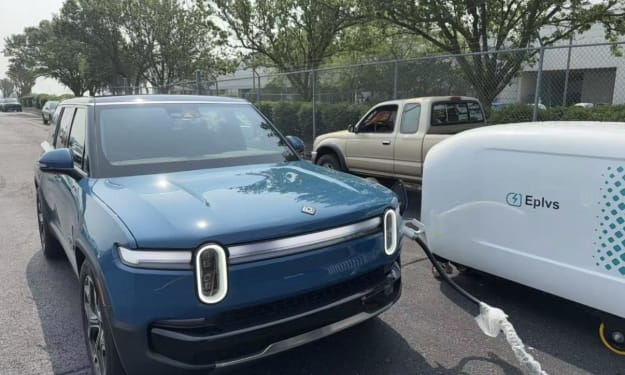
Miami’s EV Infrastructure Gap Finds an Unlikely Solution in Mobile Charging
Florida’s electric vehicle market is expanding rapidly, but charging infrastructure in some regions has struggled to keep pace. In South Florida, EV sales have risen sharply year over year, yet public charging availability remains inconsistent. For many drivers, that imbalance has translated into longer waits, limited station access, and persistent range anxiety.
By charliesamuel10 months ago in 01
What Every Internet User Needs to Know About the New AI Laws and Updates to Digital Privacy in 2026
What Every Internet User Needs to Know About the New AI Laws and Updates to Digital Privacy in 2026 In comparison to just a few years ago, the digital landscape in 2026 looks very different. Artificial intelligence is no longer a new or experimental tool; rather, it is now an essential component of everyday life.
By Farida Kabir10 months ago in 01
How Indi IT Solutions Prepares US Firms for Next-Gen Connectivity
US firms are hitting a connectivity wall. Legacy 4G-era systems are failing now. Static cloud models do not work well. They fail to meet sub-15ms latency needs. These needs are vital for 2026 operations.
By Devin Rosario10 months ago in 01
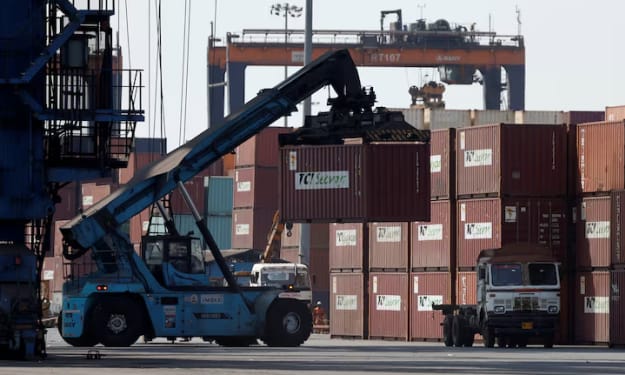
India Signals Strategic Shift by Expanding U.S. Oil, Arms, and Aircraft Purchases. AI-Generated.
India is preparing to significantly expand its purchases of U.S. oil, military equipment, and aircraft, while also signaling limited openness to American agricultural products. The move reflects a careful recalibration of India’s global strategy—one that blends economic pragmatism with geopolitical foresight as New Delhi navigates a rapidly changing world order. Rather than a sudden pivot, this approach represents a gradual but deliberate alignment of interests between the world’s largest democracy and the United States. For India, the goal is not dependence, but diversification. For Washington, it is an opportunity to deepen ties with a key Indo-Pacific partner at a time of mounting global uncertainty. Energy Security Takes Center Stage India’s growing appetite for energy is one of the strongest drivers behind the push to ramp up U.S. oil purchases. As one of the world’s fastest-growing economies, India’s demand for crude oil continues to rise, even as it invests in renewable energy. Traditionally reliant on Middle Eastern suppliers and, more recently, discounted Russian crude, India is now seeking to broaden its energy portfolio. U.S. oil offers India a stable, politically reliable source that reduces overexposure to any single region. While American crude is often more expensive due to transportation costs, Indian refiners value the consistency and long-term predictability of supply. Increased imports from the U.S. also help India hedge against geopolitical disruptions that can rattle global energy markets overnight. For Washington, higher exports to India strengthen America’s role as a global energy supplier and reinforce economic ties that extend beyond short-term market conditions. Defense Cooperation Deepens Arms purchases form another critical pillar of the evolving relationship. India has historically sourced military hardware from a wide range of countries, with Russia long serving as its primary defense partner. However, shifting global dynamics and concerns over supply reliability have prompted New Delhi to diversify its defense procurement. U.S. defense systems—ranging from surveillance drones to advanced aircraft—offer cutting-edge technology and interoperability with Western allies. Recent years have already seen India acquire American military platforms, and further expansion signals growing trust between the two countries’ defense establishments. This shift does not mean India is abandoning its strategic autonomy. Instead, it reflects a calculated effort to balance relationships while ensuring access to modern technology. For the United States, arms sales to India are not just commercial transactions; they are a means of strengthening a security partnership in the Indo-Pacific, where concerns about regional stability continue to grow. Aviation and Commercial Aircraft Beyond military hardware, aircraft purchases—particularly commercial jets—are also part of India’s broader engagement with the U.S. India’s aviation sector is booming, fueled by a rapidly expanding middle class and increasing domestic and international travel. Airlines are placing massive orders to modernize fleets and meet future demand. American aircraft manufacturers stand to benefit from this expansion, offering fuel-efficient models and long-term maintenance partnerships. These deals create ripple effects across supply chains, generating jobs and investment on both sides. For India, access to advanced aircraft supports economic growth, tourism, and global connectivity. A Cautious Opening of Farm Access Perhaps the most sensitive element of this evolving relationship is agriculture. India has long protected its farm sector, which employs a significant portion of the population and carries immense political weight. Any suggestion of opening agricultural markets often sparks concern among farmers worried about competition from heavily subsidized foreign producers. Still, India appears willing to consider limited access for certain U.S. agricultural products. This is not a sweeping liberalization, but a selective, carefully negotiated opening designed to avoid domestic backlash. Products that do not directly threaten small farmers or that complement domestic supply shortages are more likely to be considered. For the U.S., even modest gains in farm access represent progress in a market known for its protective barriers. For India, the challenge lies in balancing trade concessions with social stability—an equation that requires precision rather than speed. Geopolitics Behind the Economics While trade and commerce dominate headlines, geopolitics looms large in the background. India’s decisions are shaped by its desire to maintain strategic independence while strengthening partnerships that align with its long-term interests. Deepening ties with the U.S. sends a signal about India’s role in the Indo-Pacific without locking it into rigid alliances. At the same time, New Delhi remains cautious. It continues to engage with a wide range of global players, ensuring that closer ties with Washington do not come at the cost of diplomatic flexibility. From the American perspective, India represents a vital partner in maintaining a balance of power in Asia. Economic engagement—through energy, defense, and aviation—is one of the most effective ways to anchor that partnership in mutual benefit rather than abstract strategy. Not a Deal, but a Direction It is important to note that these moves do not amount to a single, comprehensive deal. Instead, they reflect a direction—one marked by incremental steps, ongoing negotiations, and mutual testing of boundaries. India is signaling openness without surrendering control, while the U.S. is offering partnership without formal guarantees. Critics on both sides remain watchful. Some in India fear overreliance on American systems, while some in the U.S. question whether India will fully open its markets. Yet diplomacy often advances not through dramatic breakthroughs, but through steady alignment of interests. As India ramps up purchases of U.S. oil, arms, and aircraft, and cautiously opens limited farm access, it is crafting a strategy rooted in realism. In a fragmented global landscape, such pragmatism may prove to be one of its greatest strengths.
By Saboor Brohi 10 months ago in 01