
Suno Deploys Audio Watermarking and Download Limits Amid Intensifying Legal and Industry Pressure
Facing copyright rulings and label demands, the AI music generator introduces transparency tools to combat fraud and streaming manipulation but technical vagueness and ongoing litigation raise questions about efficacy and long-term viability.

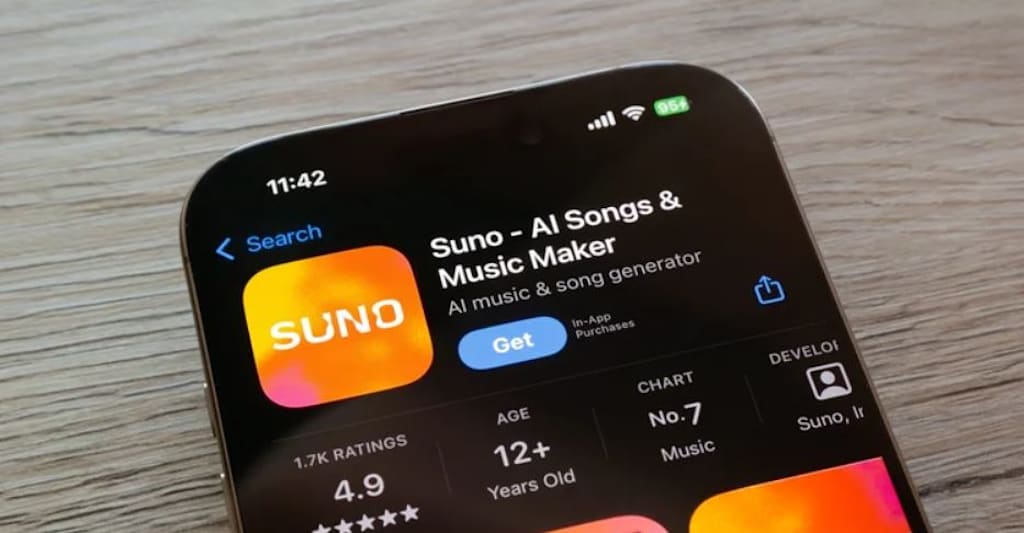
Suno, one of the leading AI music generation platforms, has announced a suite of new measures aimed at addressing mounting legal challenges and industry concerns over AI-generated content. In a blog post, co-founder and CEO Mikey Shulman revealed that Suno will implement audio watermarking and fingerprinting technology to make AI-generated songs identifiable when distributed outside its platform. The company will also impose download limits to curb mass uploading of AI tracks to streaming services, and partner with content recognition firms Audible Magic and Musixmatch to screen for potential copyright misuse. These steps come as Suno navigates a precarious landscape: while it recently settled with Warner Music Group, a German court just ruled against it for copyright infringement, and major labels continue to demand action against AI “slop” flooding charts.
Transparency Tools: Promise Without Precision
The centerpiece of Suno’s announcement is its commitment to audio watermarking, a technique that embeds imperceptible identifiers into generated audio to trace origin even after compression or editing. Shulman likened the approach to Google’s SynthID but provided no technical specifics on implementation, robustness, or interoperability with existing detection systems. Crucially, he emphasized that disclosure should remain optional: “We believe it should ultimately be at the discretion of artists and platforms to decide whether they communicate when something was made with AI.” This stance reflects a tension between transparency advocates (who argue mandatory labeling protects consumers and creators) and AI companies wary of stigmatizing synthetic content. Without standardized, enforceable watermarking protocols, however, voluntary disclosure risks becoming meaningless in an ecosystem rife with unmarked AI output.
Similarly vague are the new download limits designed to prevent bulk distribution to DSPs like Spotify and Apple Music. While intended to address label complaints about AI tracks gaming streaming algorithms, Suno offered no thresholds, enforcement mechanisms, or appeal processes. Given that bad actors can easily circumvent soft limits via multiple accounts or third-party distributors, the measure’s effectiveness hinges on undisclosed backend safeguards. Until details emerge, skeptics may view these announcements as performative compliance rather than substantive reform.
Legal Crosscurrents: Settlements vs. Rulings
Suno’s timing underscores its urgent need for credibility. Just weeks ago, it reached a licensing agreement with Warner Music Group, granting access to WMG artists’ catalogs and likenesses a significant win that validates negotiated coexistence over litigation. Yet this progress is offset by a devastating loss in Germany: a Munich court ruled that Suno trained its models on copyrighted music without authorization, siding with collecting society GEMA. Suno disputes the ruling and may appeal, but the decision sets a troubling precedent in Europe, where copyright enforcement is stricter than in the U.S. Meanwhile, Sony, Universal, and Warner have jointly urged streaming platforms to disqualify AI-generated tracks from charts, arguing they distort cultural metrics and devalue human artistry. Suno’s new tools appear calibrated to preempt such exclusionary measures by demonstrating good-faith efforts to police misuse.
Notably, Suno maintains it never uses artist names in training metadata and blocks prompts referencing specific copyrighted works. But courts and rights holders remain unconvinced, pointing to stylistic mimicry and latent memorization as forms of infringement. Partnerships with Audible Magic and Musixmatch aim to address this by screening uploads for lyrical and melodic similarities to protected works. Yet these systems were designed for human-created content; their efficacy against AI outputs that blend influences non-linearly is unproven. False negatives could perpetuate infringement; false positives might suppress legitimate creativity.
Strategic Implications for AI Music
Suno’s moves reflect a broader industry inflection point. As AI music matures, platforms must balance innovation with accountability. Watermarking and upload controls signal recognition that unchecked growth invites regulatory backlash and creator alienation. However, technical solutions alone cannot resolve foundational disputes over training data legality. Until courts clarify fair use boundaries or legislatures establish licensing frameworks, AI companies operate in legal gray zones where goodwill gestures offer temporary shelter but not permanent safety.
For now, Suno’s announcements serve dual purposes: reassuring partners like WMG while placating critics ahead of potential appeals or new lawsuits. Whether these tools become industry standards or footnotes depends on execution and whether competitors adopt similar measures voluntarily. If Suno succeeds in making watermarking robust and disclosure normative, it could help legitimize AI music as a collaborative tool rather than parasitic imitation. If not, the gap between technological capability and social license will only widen.
Ultimately, Suno’s challenge mirrors that of all generative AI: proving that creation need not come at the expense of consent. The new transparency tools are a necessary step but without clearer technical commitments and resolution of core copyright questions, they risk being perceived as damage control rather than genuine stewardship. In an era where AI can compose symphonies in seconds, trust remains the scarcest resource. Earning it requires more than announcements; it demands verifiable action, sustained dialogue, and humility before the law.
About the Creator
Mark Lim
Hi I am mark an automotive student and a car, tech and food enthusiast ! Im gonna try and post daily & hope you enjoy what I write and do share my page with people you know. I would gladly appreciate it! Cheers
Enjoyed the story? Support the Creator.
Subscribe for free to receive all their stories in your feed.
Comments
There are no comments for this story
Be the first to respond and start the conversation.