
Station F Is Betting Everything On European AI And It Might Actually Work
A Paris startup hub just launched the second batch of its AI accelerator. But here's what really matters: Europe is finally trying to compete with the US on its own terms.

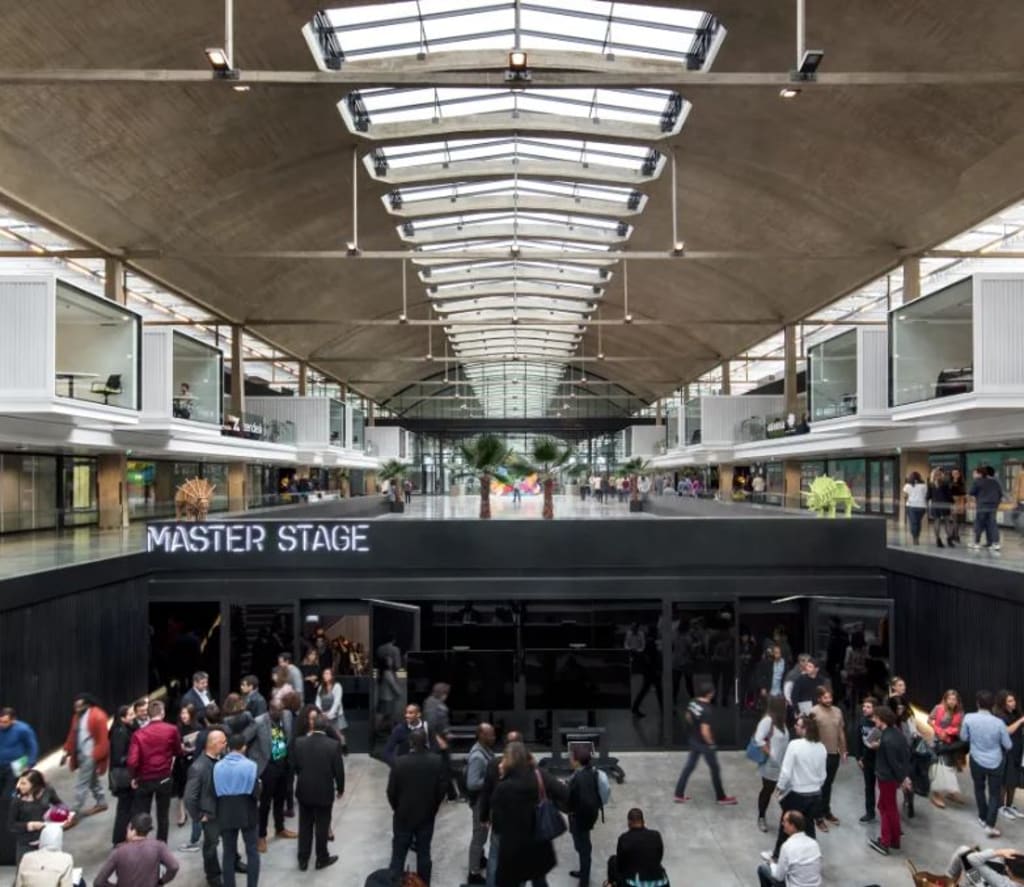
There's a billboard in Paris that says: "You don't need to go to Silicon Valley to build the future."
Station F put it there. And in July 2026, they might actually be right.
Station F is a 538,000 square-foot startup hub founded by French billionaire Xavier Niel. It's described as a co-working space, but that's underselling it. It's become the epicenter of European tech ambition, the place where government officials, presidential candidates, and AI pioneers show up to see what Europe's building.
Now they're ramping up. Hard.
The F/ai accelerator program, which launched earlier this year, is kicking off its second batch in September 2026. And the lineup of companies backing it reads like a Silicon Valley all-star team: AMD, Anthropic, AWS, Google, Meta, Microsoft, OpenAI, Mistral AI. Plus new partners like Eleven Labs, GitHub, and HubSpot.
This isn't a small European initiative trying to catch up. This is a serious bet that Europe can build world-class AI startups without the Valley.
But there's a catch. And it's a big one.
The Problem With European AI (And How Station F Is Trying To Fix It)
For years, European startups have had a reputation: they're slow.
They build good products. They're technically excellent. They have brilliant founders. But they take forever to get to revenue. They're cautious. They're pessimistic about monetization. They build for perfection instead of profit.
Meanwhile, American startups move fast. They get to revenue quickly. They raise money aggressively. They think about profit from day one.
Station F noticed this gap. So F/ai set an explicit target: €1 million ($1.14 million) in revenue within six months.
That's fast. That's aggressive. That's not how European startups traditionally operate.
"We'd heard quite a bit of criticism about the slow pace of commercialization of European startups," said Roxanne Varza, Station F's director. "This brings them on par with what investors are seeing in the U.S."
The first cohort already proved this can work. Twenty AI startups collectively raised $34 million in pre-seed funding. And 80% of the founders were repeat entrepreneurs. A third hold PhDs.
These aren't first-time founders trying to prove themselves. These are people who've already succeeded, who know how to build companies, who are now going all-in on AI.
The Elite Selection Problem (Which Station F Isn't Really Solving)
Here's the problem: F/ai doesn't accept open applications.
You can't just sign up. You can't submit your pitch. You can't hope that someone will read your application.
Instead, F/ai selects startups exclusively through recommendations from founders, partners, and investors.
This is efficient. It gets smart people in the room. It works.
But it's also exactly the kind of thing that France's tech scene gets accused of: elitism. Cliquishness. Access for the connected. Difficulty for outsiders.
Varza acknowledges this: "The founder profile skews that way mostly because F/ai selects its cohort exclusively via recommendations from founders, partners, and investors, a process that could add to the cliquishness and elitism France's tech scene is at times accused of."
Which is honest. But it's also kind of missing the point.
If you're trying to build a global AI hub competing with Silicon Valley, you probably want to be selective. You probably do want the best founders. You probably do want people who know what they're doing.
The question is whether that selectivity hurts your long-term ambitions by creating a closed network or helps by maintaining quality.
Varza points out that Station F has 30 other programs where startups can apply directly. So F/ai is elite, but it's not a gatekeeper. There are other ways in.
Still. The message is clear: if you want F/ai, you need to be connected. You need someone to recommend you. You need to be part of the network.
That's how Europe's tech scene has always worked. The question is whether that's going to be enough to compete with America's version of elitism (which is just called "venture capital").
Why This Actually Matters
Station F is betting that European founders with serious backing and serious ambition can move fast enough to compete with American startups.
The first cohort proves this might be true. Two teams have already won international competitions. The cohort collectively raised $34 million. The founders are experienced, educated, and motivated.
But more importantly, Station F is trying to solve Europe's fundamental problem: brain drain. The reason talented European founders leave for the US isn't just opportunity. It's narrative.
The narrative says: "If you want to build something big, you go to Silicon Valley."
Station F is trying to change that narrative. They're bringing in Sam Altman, Yann LeCun, and all the major tech companies. They're saying: "You can build something big here. You don't need to go to America."
And for the first time, European founders might actually believe it.
The Real Competition
The competitors aren't other European accelerators. They're American accelerators. Y Combinator. 500 Global. Techstars.
Those programs have scale, reputation, and access to American venture capital. Station F has something different: location, government support, and Xavier Niel's personal network.
It's not clear that's enough. But the first cohort's results suggest it might be.
Station F's F/ai program is Europe's serious bet on AI dominance. Fast commercialization. Elite founders. Major corporate backing. Presidential visits.
It's not a guarantee. But for the first time in years, Europe's tech scene feels like it's trying to compete with the US on its own terms, instead of playing catch-up.
The question is whether that's going to matter when the real competition happens.Because ultimately, this isn't about accelerators or programs or billionaire founders.
It's about whether talented people choose to build in Paris instead of San Francisco.Station F thinks they can make that choice attractive.September will tell us if they're right.
About the Creator
Mark Lim
Hi I am mark an automotive student and a car, tech and food enthusiast ! Im gonna try and post daily & hope you enjoy what I write and do share my page with people you know. I would gladly appreciate it! Cheers
Enjoyed the story? Support the Creator.
Subscribe for free to receive all their stories in your feed.
Comments
There are no comments for this story
Be the first to respond and start the conversation.