
South East Asia’s Smart Building Revolution: Why Building Management Systems Are Becoming Essential for the Future
From energy efficiency to smart city development, Building Management Systems are transforming how Southeast Asia designs, operates, and optimizes modern buildings.

As cities across Southeast Asia continue to expand at an unprecedented pace, a silent technological revolution is taking place inside commercial towers, shopping malls, airports, hotels, hospitals, and residential complexes. The technology driving this transformation is known as the Building Management System (BMS), and it is quickly becoming one of the most important components of modern infrastructure.
While skyscrapers and large developments often attract attention for their architecture, the real intelligence behind these structures lies in the systems that manage them. Building Management Systems enable property owners and facility managers to monitor and control critical building functions such as heating, ventilation, air conditioning (HVAC), lighting, energy consumption, security, and fire safety through a centralized digital platform.
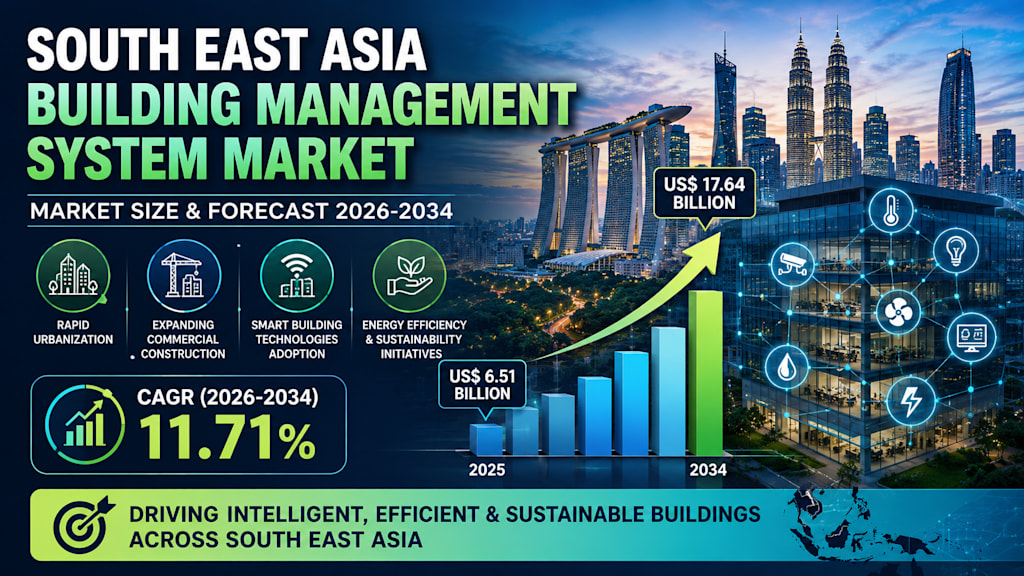
As urbanization accelerates and sustainability becomes a regional priority, demand for BMS solutions is growing rapidly. Industry forecasts indicate that the South East Asia Building Management System market is expected to increase from approximately US$ 6.51 billion in 2025 to US$ 17.64 billion by 2034, representing a strong compound annual growth rate of 11.71 percent between 2026 and 2034. This remarkable growth reflects a broader shift toward smarter, greener, and more efficient buildings throughout the region.
The Growing Importance of Intelligent Buildings
Modern buildings are becoming increasingly complex. Large commercial properties can contain thousands of interconnected systems responsible for temperature control, lighting, security monitoring, emergency response, and energy management.
Managing these systems manually is not only inefficient but also costly. Building Management Systems solve this challenge by integrating multiple functions into a single platform that provides real-time monitoring and automated control.
Instead of relying on separate systems for lighting, HVAC, and security, building operators can access all building functions from a centralized dashboard. This improves operational efficiency, reduces energy waste, enhances occupant comfort, and lowers long-term maintenance costs.
For rapidly developing economies in Southeast Asia, where commercial construction is booming, the value of such technology is becoming increasingly evident.
Urbanization Is Reshaping Infrastructure Needs
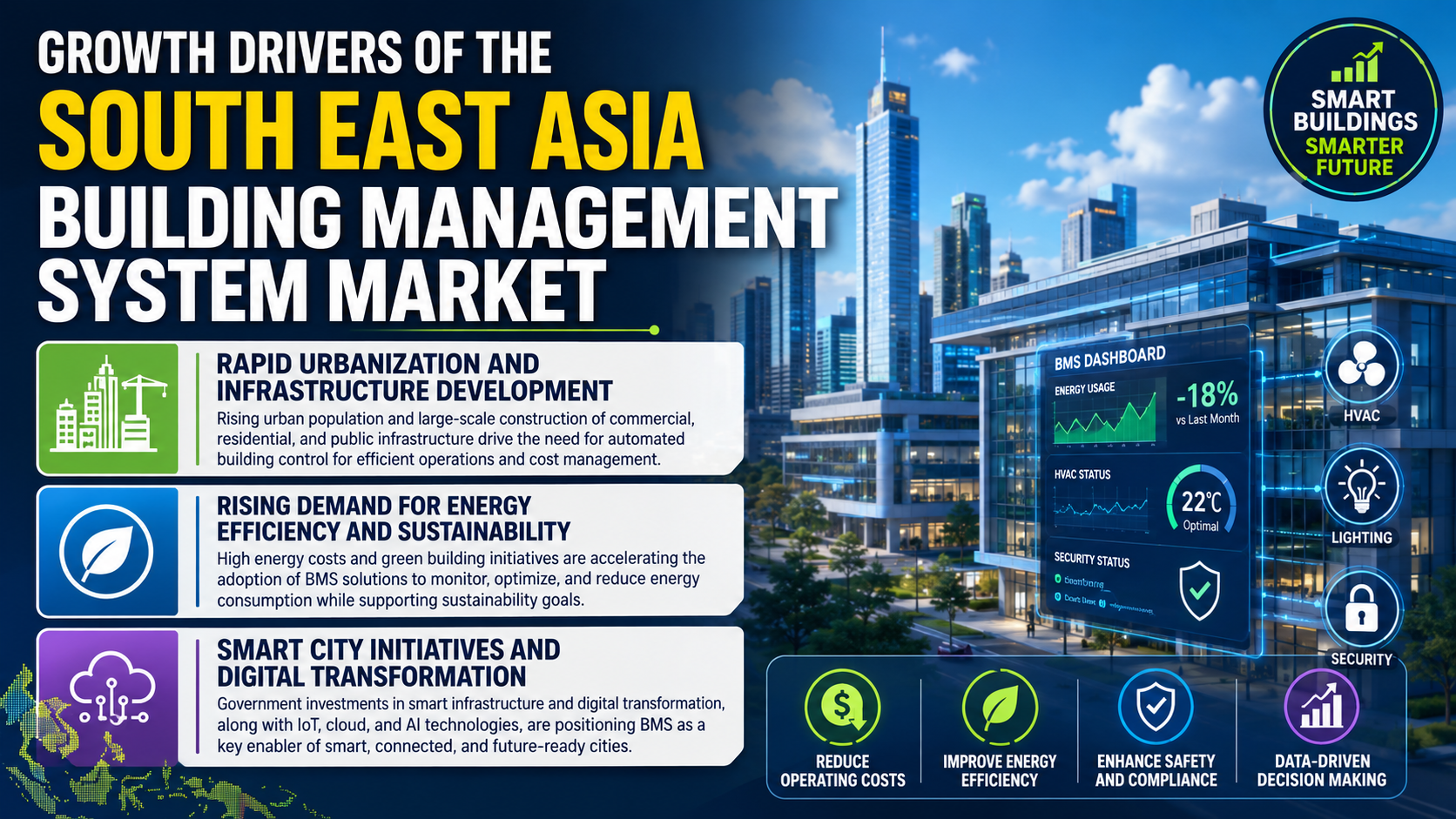
One of the strongest drivers behind the growth of the Building Management System market is urbanization.
Across Southeast Asia, millions of people continue to migrate from rural communities to urban centers in search of employment, education, and better living standards. Major cities such as Jakarta, Manila, Bangkok, Ho Chi Minh City, and Kuala Lumpur are experiencing sustained population growth, leading to increased demand for residential and commercial infrastructure.
As urban populations rise, governments and private developers are investing heavily in office buildings, shopping centers, transportation hubs, mixed-use developments, and residential towers.
These modern facilities require sophisticated management systems capable of handling complex operational requirements. Building Management Systems provide the automation and oversight necessary to maintain efficiency while supporting growing populations.
Without digital building controls, large-scale developments would face significantly higher operational costs and reduced energy efficiency.
Energy Efficiency Is No Longer Optional
Energy consumption has become one of the most pressing concerns for property owners across Southeast Asia.
Commercial buildings account for a substantial share of electricity usage, particularly in tropical climates where air conditioning systems often operate continuously. Rising energy prices are encouraging organizations to explore technologies that reduce consumption while maintaining comfort and productivity.
Building Management Systems play a critical role in achieving this objective.
Through intelligent monitoring and automation, BMS platforms can optimize HVAC performance, adjust lighting based on occupancy levels, and identify inefficiencies before they become costly problems. These capabilities can generate substantial energy savings over time.
In many countries throughout Southeast Asia, governments are also introducing stricter environmental regulations and promoting green building certifications. As sustainability goals become more ambitious, BMS technology is emerging as an essential tool for achieving compliance and reducing environmental impact.
The combination of financial savings and environmental responsibility makes intelligent building management an increasingly attractive investment.
Smart Cities Are Accelerating Adoption
Another major factor fueling market growth is the emergence of smart city initiatives throughout the region.
Governments across Southeast Asia are investing heavily in digital infrastructure designed to improve transportation, public services, energy management, and urban living conditions. Smart buildings serve as foundational elements within these broader smart city ecosystems.
Building Management Systems connect physical infrastructure with digital technologies, creating opportunities for greater efficiency and data-driven decision-making.
Advanced BMS solutions increasingly incorporate technologies such as the Internet of Things (IoT), cloud computing, artificial intelligence, and predictive analytics. These innovations allow buildings to communicate with connected systems, analyze performance trends, and automatically optimize operations.
For example, AI-powered building management platforms can predict maintenance requirements, identify equipment failures before they occur, and recommend operational adjustments that reduce energy usage.
As smart city development continues throughout Southeast Asia, demand for intelligent building technologies is expected to expand significantly.
The Evolution of HVAC Management
One of the most important applications of Building Management Systems is HVAC control.
Southeast Asia's hot and humid climate creates a constant need for efficient temperature regulation. Air conditioning often represents one of the largest operational expenses for commercial buildings.
Modern BMS platforms enable facility managers to monitor HVAC performance in real time, regulate temperatures across multiple zones, and optimize equipment schedules based on occupancy patterns.
The result is improved comfort for occupants alongside significant reductions in electricity consumption.
Additionally, smart HVAC systems can identify maintenance issues early, preventing costly breakdowns and extending equipment lifespan.
As businesses seek ways to improve operational efficiency while meeting sustainability objectives, intelligent HVAC management remains a key growth area within the broader BMS market.
Security and Access Control Are Becoming Smarter
Security concerns are also driving demand for advanced building management solutions.
Today's commercial facilities require more than traditional locks and surveillance cameras. Organizations increasingly rely on integrated security systems that provide centralized monitoring and rapid response capabilities.
Building Management Systems allow security technologies such as biometric authentication, RFID access cards, video surveillance, and alarm systems to operate within a unified framework.
This integration improves situational awareness while reducing administrative complexity.
In addition, real-time monitoring enables facility managers to detect unusual activity, respond to emergencies more quickly, and maintain comprehensive security records.
As urban density increases and digital infrastructure expands, integrated security management is becoming a standard requirement for modern buildings.
Cloud-Based Building Management Is Gaining Momentum
Cloud technology is transforming nearly every industry, and building management is no exception.
Traditionally, BMS platforms relied on on-site servers and dedicated infrastructure. While effective, these systems often required significant investment and ongoing maintenance.
Today, cloud-based solutions are becoming increasingly popular because they offer greater flexibility, scalability, and remote accessibility.
Facility managers can monitor building performance from virtually any location using internet-connected devices. Real-time data can be accessed instantly, allowing faster decision-making and improved operational control.
Cloud-based platforms also simplify software updates, reduce infrastructure requirements, and support multi-site operations more effectively.
As internet connectivity continues to improve across Southeast Asia, cloud-enabled Building Management Systems are expected to become a dominant market segment.
Challenges That Could Slow Market Growth
Despite its strong growth potential, the Building Management System market faces several challenges.
One of the most significant barriers is the high upfront investment associated with implementation. Installing sensors, controllers, networking infrastructure, and software platforms can require substantial capital expenditure.
While long-term energy savings often justify these costs, smaller organizations may hesitate to invest due to budget constraints.
Retrofitting existing buildings can also be more expensive and complicated than integrating BMS technology during new construction projects.
Another challenge involves technical expertise.
Building Management Systems require specialized knowledge for design, installation, integration, and maintenance. Many organizations struggle to find qualified professionals capable of managing complex multi-vendor environments.
Addressing these skill gaps will be critical to ensuring the successful deployment and operation of advanced building technologies throughout the region.
Country Spotlight: Singapore Leads the Way
Among Southeast Asian nations, Singapore remains a clear leader in Building Management System adoption.
The city-state's commitment to sustainability, smart city development, and advanced digital infrastructure has created an ideal environment for intelligent building technologies.
Stringent energy-efficiency standards and green building requirements encourage developers to integrate sophisticated automation systems into both commercial and residential projects.
Singapore's high concentration of skyscrapers and limited land availability further increase the importance of efficient building operations.
As a result, many of the region's most innovative BMS deployments are being implemented in Singapore, serving as models for neighboring countries.
Indonesia and Malaysia Present Significant Opportunities
While Singapore leads in technological maturity, Indonesia and Malaysia represent major growth opportunities.
Indonesia's large population, rapid urbanization, and expanding infrastructure projects create substantial demand for intelligent building solutions. Government initiatives supporting smart cities and sustainable development are further encouraging investment.
Malaysia is also experiencing steady growth in commercial construction and green building adoption. Major urban centers such as Kuala Lumpur, Johor Bahru, and Penang are increasingly incorporating advanced building technologies into new developments.
As awareness of energy efficiency and operational optimization continues to rise, both markets are expected to contribute significantly to regional growth.
The Future of Smart Buildings in Southeast Asia
The future of Southeast Asia's Building Management System market appears exceptionally promising.
Several powerful trends are converging simultaneously: urban expansion, digital transformation, sustainability initiatives, rising energy costs, and smart city development. Together, these forces are creating a favorable environment for long-term market growth.
Building Management Systems are no longer viewed as optional enhancements reserved for premium developments. Instead, they are becoming essential infrastructure for modern buildings seeking to maximize efficiency, reduce costs, and meet evolving environmental standards.
Organizations that invest in intelligent building technologies today will likely benefit from improved operational performance, stronger sustainability credentials, and enhanced competitiveness in the years ahead.
Final Thoughts
The rapid rise of Building Management Systems reflects a broader transformation occurring across Southeast Asia's built environment. As cities grow smarter and sustainability becomes a central priority, the demand for intelligent building solutions will continue to accelerate.
With the market projected to nearly triple in value over the coming decade, Building Management Systems are poised to become one of the most influential technologies shaping the future of commercial and residential infrastructure. For developers, investors, facility managers, and policymakers alike, the message is clear: smart buildings are no longer the future—they are the present.
About the Creator
Enjoyed the story? Support the Creator.
Subscribe for free to receive all their stories in your feed.
Comments
There are no comments for this story
Be the first to respond and start the conversation.