
Smart Lighting Market Illuminates the Future as Smart Homes and Sustainable Cities Drive Global Demand
Rising adoption of connected technologies, energy-efficient lighting systems, and smart city initiatives is transforming the global lighting industry.

Lighting has evolved far beyond its traditional purpose of simply illuminating spaces. In today's increasingly connected world, lighting systems are becoming intelligent, responsive, and integrated into broader digital ecosystems. Smart lighting, powered by technologies such as the Internet of Things (IoT), wireless communication, automation, and advanced sensors, is changing how people interact with their homes, workplaces, and public environments.
From adjusting brightness automatically based on occupancy to allowing users to control lights remotely through smartphones and voice assistants, smart lighting offers a level of convenience and efficiency that conventional lighting systems cannot match. As consumers become more interested in connected living and governments invest heavily in sustainable infrastructure, the demand for smart lighting solutions continues to accelerate worldwide.
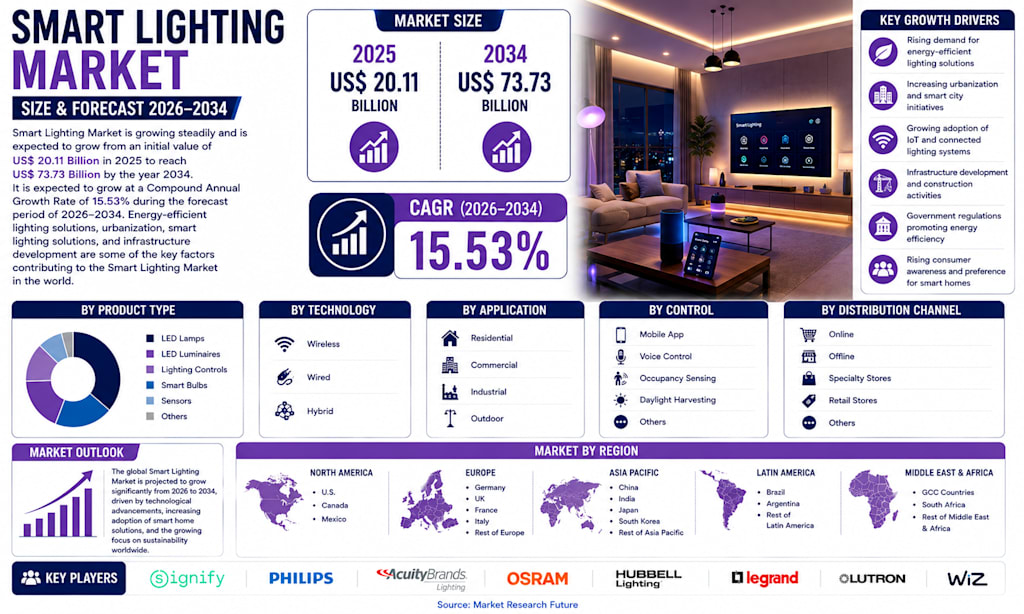
The shift toward energy conservation, urban modernization, and digital transformation is creating significant opportunities for manufacturers and technology providers. According to Renub Research, the global Smart Lighting Market is expected to grow from US$ 20.11 billion in 2025 to US$ 73.73 billion by 2034, expanding at a remarkable compound annual growth rate (CAGR) of 15.53% during the forecast period from 2026 to 2034. This substantial growth reflects the increasing role of intelligent lighting systems in shaping modern residential, commercial, and public environments.
Understanding the Evolution of Smart Lighting
Smart lighting refers to advanced lighting systems that use connected technologies to enable automated and remote control of lighting functions. Unlike traditional lighting systems, smart lighting solutions incorporate sensors, wireless communication protocols, software platforms, and intelligent controls that allow users to manage lighting according to specific preferences and environmental conditions.
These systems can adjust brightness levels, modify color temperatures, detect occupancy, and respond to daylight availability automatically. Many smart lighting products can also be controlled through smartphones, tablets, voice assistants, and centralized management platforms.
The integration of technologies such as Wi-Fi, Bluetooth, Zigbee, and cloud computing has made smart lighting increasingly accessible to both consumers and businesses. What once appeared to be a futuristic concept has now become a practical solution for improving comfort, convenience, security, and energy efficiency.
As digital connectivity expands globally, smart lighting is rapidly becoming an essential component of modern living and infrastructure development.
Smart Home Adoption Is Driving Market Growth
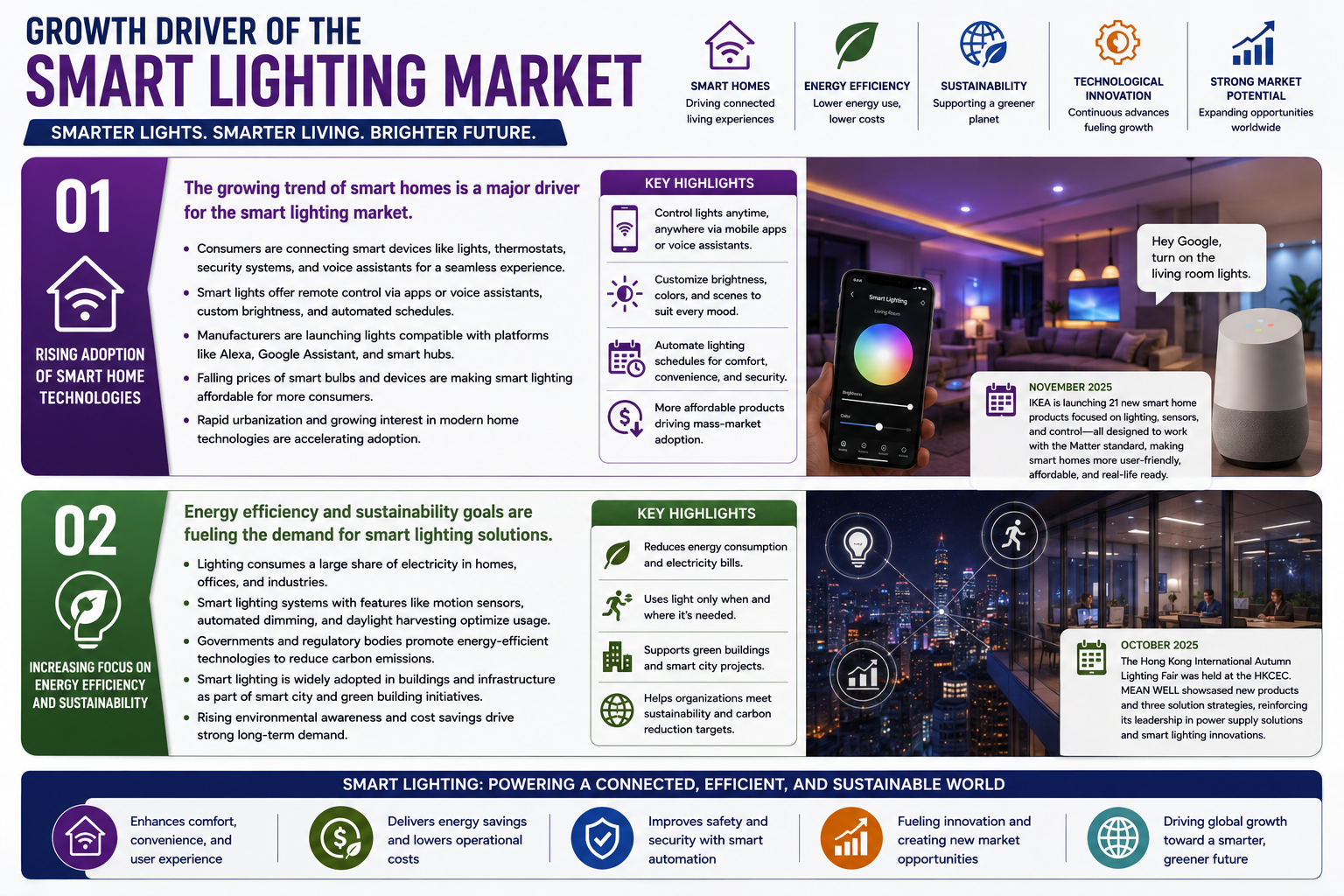
One of the most important factors fueling the expansion of the smart lighting market is the growing popularity of smart home technologies.
Consumers around the world are increasingly integrating connected devices into their homes. Smart thermostats, security systems, voice assistants, connected appliances, and intelligent lighting systems are becoming standard features in many households. Smart lighting plays a central role within these ecosystems because it offers immediate and noticeable benefits.
Homeowners can control lighting remotely, create automated schedules, adjust brightness levels, and customize lighting environments according to their preferences. Voice-controlled systems have made these capabilities even more convenient by enabling hands-free operation through popular digital assistants.
The affordability of smart bulbs and connected lighting systems has also improved significantly in recent years. As prices continue to decline, smart lighting is becoming accessible to a broader range of consumers.
The increasing popularity of smart homes is expected to remain one of the strongest drivers of market growth throughout the forecast period.
Energy Efficiency Remains a Major Priority
The global emphasis on energy conservation is another critical factor supporting market expansion.
Lighting accounts for a significant portion of electricity consumption in residential, commercial, and industrial environments. Smart lighting systems help reduce energy usage through features such as automated dimming, motion detection, occupancy sensing, and daylight harvesting.
These technologies ensure that lights operate only when needed, reducing unnecessary electricity consumption and lowering utility costs. Businesses and homeowners alike benefit from improved energy efficiency while contributing to broader environmental sustainability goals.
Governments worldwide are actively encouraging the adoption of energy-efficient technologies through regulations, incentive programs, and sustainability initiatives. Smart lighting aligns closely with these objectives by helping reduce greenhouse gas emissions and supporting responsible resource utilization.
As organizations and consumers continue prioritizing sustainability, demand for intelligent lighting solutions is expected to increase substantially.
Smart Cities Are Creating Significant Opportunities
The rapid development of smart cities is generating substantial demand for advanced lighting infrastructure.
Governments around the world are investing heavily in urban modernization projects that leverage digital technologies to improve public services, enhance safety, and optimize resource management. Smart street lighting has emerged as one of the most visible and impactful components of these initiatives.
Unlike conventional streetlights, smart lighting systems use sensors, communication networks, and centralized control platforms to adjust illumination levels based on real-time conditions. These systems can respond to traffic patterns, weather conditions, and pedestrian activity while reducing energy consumption.
Smart streetlights can also serve as platforms for additional technologies such as surveillance systems, environmental monitoring sensors, public Wi-Fi networks, and emergency communication infrastructure.
As investments in smart cities continue to grow globally, intelligent lighting solutions are expected to play an increasingly important role in urban development strategies.
Wireless Technologies Are Transforming Lighting Systems
Wireless communication technologies have significantly expanded the capabilities and appeal of smart lighting.
Modern wireless lighting systems utilize technologies such as Wi-Fi, Bluetooth, Zigbee, and Z-Wave to enable seamless connectivity without requiring extensive wiring or infrastructure modifications. This flexibility simplifies installation and reduces deployment costs.
Wireless smart lighting systems allow users to control lights through smartphones, tablets, and voice-enabled devices. Businesses benefit from easier system upgrades, while homeowners appreciate the convenience of managing lighting remotely.
The flexibility of wireless solutions has made them particularly attractive for retrofitting existing buildings, where extensive rewiring may be impractical or expensive.
As wireless communication technologies continue to improve, their integration with smart lighting systems is expected to drive further market growth and innovation.
Smart LED Lighting Leads Industry Innovation
Among the various product categories, smart LED lighting remains one of the most important drivers of market expansion.
LED technology offers significant advantages compared to traditional lighting solutions, including lower energy consumption, longer lifespan, reduced heat generation, and superior performance. When combined with intelligent connectivity features, LEDs become powerful tools for energy management and environmental sustainability.
Smart LED lights enable users to adjust brightness, customize colors, automate schedules, and monitor energy usage. Their versatility makes them suitable for residential, commercial, industrial, and public applications.
Governments and organizations increasingly promote LED adoption because of its potential to reduce energy demand and support sustainability objectives. As LED technology becomes more affordable and sophisticated, smart LED lighting is expected to remain at the forefront of market development.
Indoor Smart Lighting Is Enhancing User Experiences
The indoor smart lighting segment continues to experience strong growth as consumers and businesses seek more comfortable and efficient indoor environments.
Smart indoor lighting systems automatically adjust illumination based on occupancy, time of day, and natural light availability. These capabilities improve comfort while optimizing energy consumption.
In residential settings, homeowners use smart lighting to create personalized environments that enhance relaxation, productivity, and entertainment experiences. Commercial organizations utilize intelligent lighting systems to improve workplace conditions, increase employee productivity, and reduce operational costs.
Educational institutions, healthcare facilities, retail stores, and hospitality venues are also adopting smart lighting technologies to enhance user experiences and improve facility management.
As buildings become increasingly connected, indoor smart lighting is expected to become an integral component of modern architectural design.
Residential Applications Continue to Expand
The residential segment represents one of the fastest-growing areas within the smart lighting market.
Consumers are increasingly attracted to smart lighting because of its convenience, security benefits, and potential energy savings. Mobile applications and voice control technologies make it easy for homeowners to manage lighting systems according to their specific needs.
Features such as motion sensing, automated scheduling, remote monitoring, and customizable lighting scenes enhance both functionality and user experience. Smart lighting also contributes to home security by simulating occupancy when residents are away.
The availability of affordable smart lighting kits and plug-and-play solutions has accelerated adoption among mainstream consumers.
As smart home ecosystems become more prevalent, residential demand for intelligent lighting systems is expected to continue growing rapidly.
Smart Lighting Software Is Becoming More Important
Behind every successful smart lighting deployment lies sophisticated software that enables automation, monitoring, and optimization.
Smart lighting software serves as the operational backbone of intelligent lighting systems, allowing users to control devices, schedule operations, analyze energy consumption, and integrate lighting with broader building management platforms.
The incorporation of artificial intelligence and advanced analytics is further enhancing software capabilities. Predictive maintenance, real-time performance monitoring, and automated optimization help improve system reliability while reducing maintenance costs.
As lighting infrastructure becomes more complex and interconnected, demand for advanced software solutions is expected to increase significantly.
Regional Markets Are Driving Global Expansion
United States
The United States remains one of the world's most advanced smart lighting markets. High smart home adoption rates, strong technology infrastructure, and significant investments in smart city projects continue to support growth. Commercial organizations increasingly deploy intelligent lighting systems to improve efficiency and sustainability.
United Kingdom
The United Kingdom is experiencing steady market growth driven by increasing consumer interest in smart homes and government initiatives promoting energy efficiency. Wireless lighting systems and connected home technologies are becoming increasingly popular among British consumers.
India
India represents one of the fastest-growing markets for smart lighting. Rapid urbanization, expanding smart city initiatives, and government programs encouraging LED adoption are fueling demand across residential and public infrastructure sectors.
Saudi Arabia
Saudi Arabia's investment in smart cities, infrastructure modernization, and sustainable development is creating strong opportunities for smart lighting providers. Public lighting projects and luxury residential developments are contributing to market growth.
Challenges Facing the Market
Despite its strong growth potential, the smart lighting market faces several challenges.
One of the primary barriers is the relatively high upfront cost associated with installation and infrastructure upgrades. Although long-term energy savings often justify the investment, some consumers and organizations remain hesitant due to initial expenses.
Cybersecurity and data privacy concerns also represent important challenges. Because smart lighting systems rely on connected networks and cloud-based platforms, they can be vulnerable to unauthorized access and cyber threats.
Manufacturers and service providers must continue strengthening security measures while educating consumers about the benefits and protections associated with intelligent lighting technologies.
Addressing these concerns will be essential for sustaining long-term market growth.
Market Forecast: Strong Growth Through 2034
According to Renub Research, the global Smart Lighting Market is projected to grow from US$ 20.11 billion in 2025 to US$ 73.73 billion by 2034, representing a CAGR of 15.53% during the forecast period from 2026 to 2034. Growth will be supported by increasing smart home adoption, expanding smart city initiatives, rising demand for energy-efficient technologies, and continuous advancements in wireless communication and LED lighting solutions.
The market's impressive growth outlook highlights the increasing importance of intelligent lighting within the broader digital transformation of homes, businesses, and cities.
Final Thoughts
The smart lighting market is rapidly transforming the way people interact with their environments. By combining energy efficiency, connectivity, automation, and user convenience, smart lighting systems are helping create more sustainable, secure, and intelligent spaces.
With Renub Research forecasting growth from US$ 20.11 billion in 2025 to US$ 73.73 billion by 2034, the industry is positioned for substantial expansion over the coming decade. Smart homes, connected buildings, and smart city initiatives will continue driving demand, while technological innovation will unlock new possibilities for lighting applications.
As the world becomes increasingly connected, smart lighting is set to play a central role in shaping the future of modern living and urban development.
About the Creator
Enjoyed the story? Support the Creator.
Subscribe for free to receive all their stories in your feed.
Comments
There are no comments for this story
Be the first to respond and start the conversation.