
Smart Insulin Pumps Are Transforming Diabetes Care Through Automation and Personalized Treatment
Rising Diabetes Cases, Advanced Insulin Delivery Systems, and Growing Awareness Are Driving the Global Insulin Pump Market

Diabetes has become one of the most significant global health challenges of the 21st century. Millions of people worldwide live with the daily responsibility of monitoring blood sugar levels, managing insulin intake, and preventing potentially serious complications. As healthcare technology continues advancing, insulin pumps are emerging as one of the most effective tools for improving diabetes management and enhancing patient quality of life.
Modern insulin pumps have evolved far beyond traditional insulin delivery devices. Today's systems integrate artificial intelligence, continuous glucose monitoring (CGM), automated insulin dosing, and real-time data analytics to create personalized treatment experiences. These innovations are helping patients achieve better glucose control while reducing the burden of manual diabetes management.
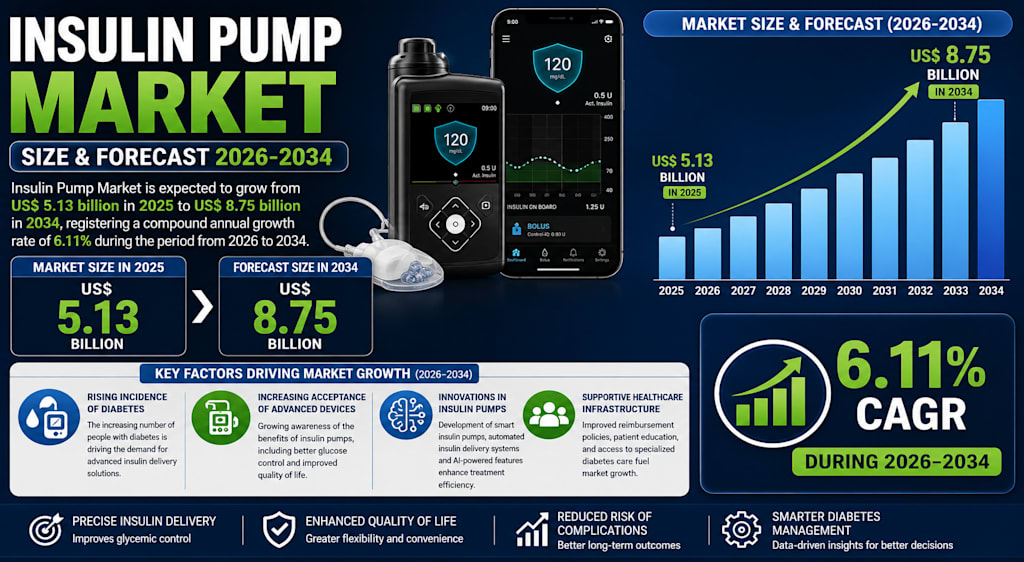
According to Renub Research, the Insulin Pump Market is expected to grow from US$ 5.13 billion in 2025 to US$ 8.75 billion by 2034, expanding at a compound annual growth rate (CAGR) of 6.11% between 2026 and 2034. The growing prevalence of diabetes, increasing adoption of advanced diabetes management devices, and rapid technological advancements in insulin delivery systems are key factors fueling market growth.
As healthcare providers increasingly emphasize personalized medicine and digital health solutions, insulin pumps are becoming an essential part of modern diabetes care.
Understanding How Insulin Pumps Work
An insulin pump is a small computerized medical device designed to deliver insulin continuously throughout the day.
The device mimics the natural function of a healthy pancreas by providing a steady background insulin supply, known as basal insulin, while also delivering additional doses during meals or when blood glucose levels rise.
Most insulin pumps are worn on the body and deliver insulin through a thin tube connected to a small cannula inserted under the skin. Some newer models utilize patch-based designs that eliminate traditional tubing altogether.
Unlike multiple daily injections, insulin pumps provide greater flexibility and more precise insulin dosing.
This allows patients to adjust insulin delivery according to lifestyle, activity levels, meals, and glucose fluctuations.
As a result, insulin pumps have become increasingly popular among individuals seeking improved diabetes control and enhanced convenience.
The Global Diabetes Epidemic Is Fueling Demand
One of the strongest growth drivers for the insulin pump market is the rising prevalence of diabetes worldwide.
Changing lifestyles, increasing obesity rates, aging populations, poor dietary habits, and reduced physical activity have contributed significantly to growing diabetes incidence.
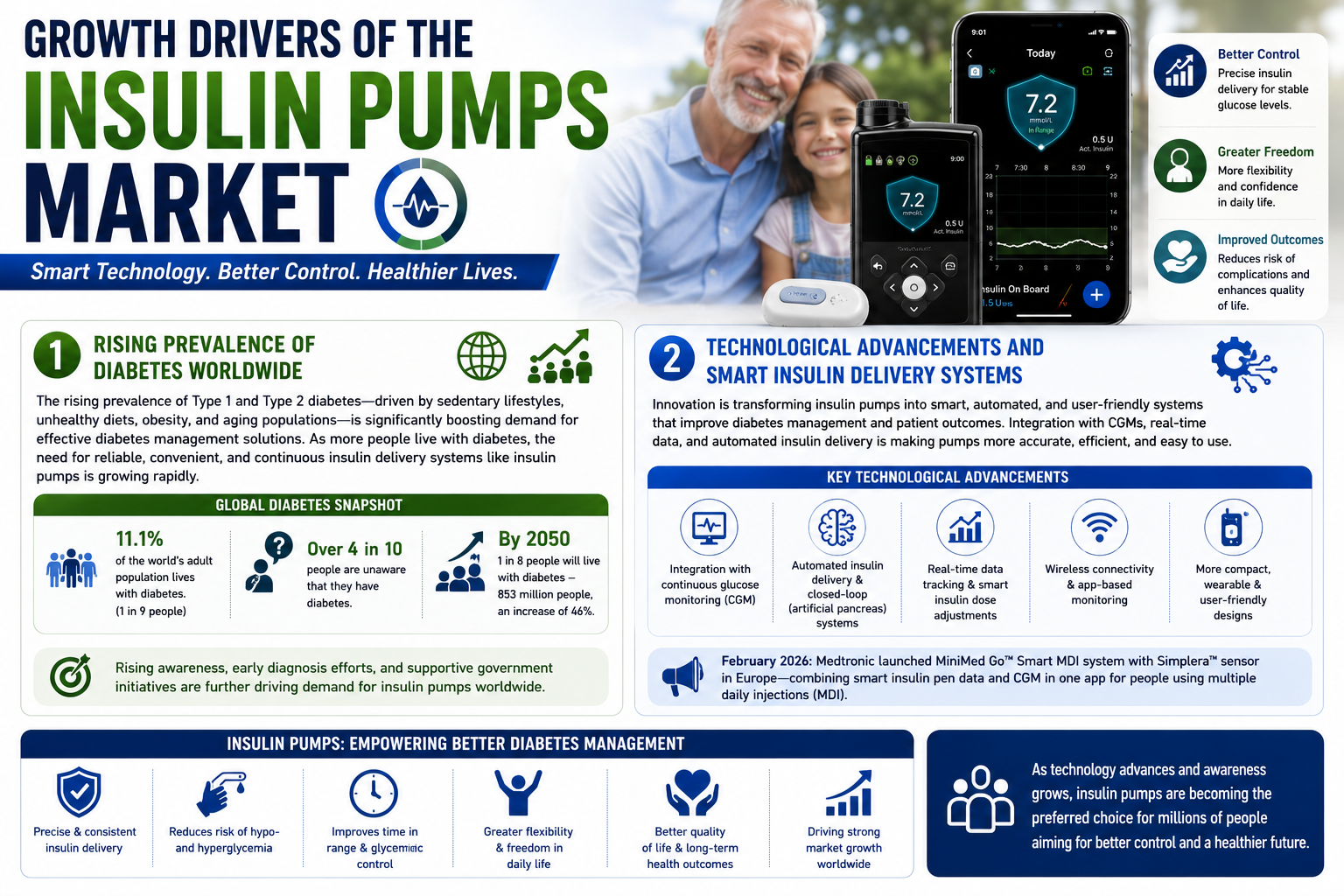
According to the International Diabetes Federation Diabetes Atlas 2025, approximately 11.1% of the world's adult population currently lives with diabetes, representing roughly one in every nine adults. More than 40% of affected individuals remain unaware of their condition. By 2050, the number of people living with diabetes is projected to reach approximately 853 million, representing an increase of 46%.
This growing patient population creates a substantial need for effective diabetes management solutions.
As more individuals require long-term insulin therapy, demand for advanced insulin delivery technologies is expected to rise steadily.
Smart Technology Is Revolutionizing Diabetes Management
Technology is transforming the insulin pump industry at an unprecedented pace.
Modern insulin pumps are no longer simple insulin delivery devices. Instead, they function as sophisticated diabetes management platforms capable of integrating with multiple digital health technologies.
Many current systems connect directly with continuous glucose monitoring devices, allowing real-time blood glucose data to influence insulin delivery decisions automatically.
These advanced systems can detect glucose trends and adjust insulin dosing accordingly, helping prevent dangerous episodes of hypoglycemia and hyperglycemia.
Closed-loop systems, often referred to as "artificial pancreas" technologies, represent one of the most important innovations within the market.
These systems continuously monitor glucose levels and automatically regulate insulin delivery with minimal user intervention.
As smart healthcare technologies continue advancing, insulin pumps are becoming increasingly intelligent, automated, and user-friendly.
Continuous Glucose Monitoring Is Improving Outcomes
The integration of continuous glucose monitoring (CGM) systems has dramatically enhanced insulin pump performance.
CGM devices provide real-time glucose readings throughout the day and night, enabling more precise insulin management.
Rather than relying solely on periodic finger-stick measurements, patients gain continuous visibility into glucose fluctuations.
When integrated with insulin pumps, CGM technology creates a dynamic feedback system capable of responding to changing conditions automatically.
This capability improves glycemic control while reducing the risk of diabetes-related complications.
Healthcare providers increasingly recommend integrated pump-CGM systems because of their ability to improve treatment outcomes and enhance patient confidence.
As sensor technology continues improving, demand for connected insulin delivery systems is expected to increase significantly.
Industry Innovation Is Accelerating Market Growth
Medical technology companies continue investing heavily in insulin pump innovation.
In February 2026, Medtronic announced the European launch of its MiniMed Go™ Smart MDI system integrated with the Simplera™ sensor. The solution combines smart insulin pen technology with continuous glucose monitoring through a unified mobile application, offering enhanced diabetes management capabilities.
Manufacturers are increasingly focused on creating smaller, more comfortable, and more intuitive devices.
Wireless connectivity, smartphone integration, cloud-based monitoring, and remote healthcare capabilities are becoming standard features.
These innovations help improve patient adherence while supporting more personalized treatment strategies.
As technology continues advancing, next-generation insulin pumps are expected to deliver even greater automation and convenience.
Growing Awareness Is Supporting Adoption
Increased awareness regarding diabetes management is another important factor driving market growth.
Healthcare professionals, patient advocacy organizations, and public health agencies continue emphasizing the importance of effective glucose control.
Educational campaigns are helping patients understand the benefits of advanced insulin delivery systems compared with traditional injection methods.
For example, in October 2025, Insulet Corporation launched its "The Day Diabetes Showed Up to Work" awareness campaign designed to highlight the daily realities of living with diabetes and the value of advanced management solutions.
As awareness grows, more patients are considering insulin pumps as part of their treatment plans.
Improved education is also helping reduce concerns regarding device usage and long-term management.
Tethered Insulin Pumps Continue to Lead the Market
Tethered insulin pumps remain one of the most widely used device categories.
These systems deliver insulin through tubing connected to a reservoir worn on the body.
Healthcare providers often recommend tethered pumps because they offer large insulin reservoirs, precise dosing control, and flexible adjustment capabilities.
Patients appreciate their reliability and ability to accommodate varying insulin requirements throughout the day.
Although patch pumps are gaining popularity, tethered pumps continue maintaining strong demand due to their proven performance and extensive clinical experience.
This segment remains an important contributor to overall market revenue.
Type 2 Diabetes Is Creating New Growth Opportunities
Historically, insulin pumps were primarily associated with Type 1 Diabetes management.
However, increasing numbers of patients with advanced Type 2 Diabetes are now adopting insulin pump therapy.
Many Type 2 Diabetes patients eventually require intensive insulin treatment to maintain glucose control.
Insulin pumps provide more consistent insulin delivery and greater flexibility than traditional injection regimens.
As awareness regarding pump therapy benefits expands, healthcare providers are increasingly recommending these devices to suitable Type 2 Diabetes patients.
Given the global prevalence of Type 2 Diabetes, this segment represents a significant long-term growth opportunity.
Homecare Is Becoming a Dominant End-User Segment
Homecare is emerging as one of the fastest-growing segments within the insulin pump market.
Patients increasingly prefer managing chronic conditions from the comfort of their homes rather than relying solely on hospital-based care.
Modern insulin pumps are portable, user-friendly, and designed for everyday use.
Remote monitoring technologies allow healthcare providers to track patient data and adjust treatment plans without requiring frequent clinic visits.
This trend aligns with broader healthcare shifts toward telemedicine, personalized care, and chronic disease self-management.
As digital health ecosystems continue expanding, home-based diabetes management is expected to become increasingly common.
Regional Markets Driving Growth
United States
The United States remains one of the world's most advanced insulin pump markets due to high diabetes prevalence, strong healthcare infrastructure, extensive reimbursement programs, and rapid adoption of smart medical technologies. The FDA's February 2025 safety communication regarding smartphone-connected diabetes devices highlights the growing importance of digital health integration.
United Kingdom
The United Kingdom continues expanding insulin pump adoption through support from the National Health Service and growing awareness of advanced diabetes management strategies. The commercial launch of the Omnipod 5 Automated Insulin Delivery System has further strengthened market growth.
India
India's insulin pump market is experiencing rapid growth due to rising diabetes prevalence, expanding healthcare infrastructure, and increasing awareness of advanced treatment options. Medtronic's launch of the MiniMed™ 780G system has enhanced access to next-generation diabetes management technologies.
Saudi Arabia
Saudi Arabia continues investing heavily in healthcare modernization and diabetes management initiatives. The launch of Insulet's Omnipod 5 Automated Insulin Delivery System across Middle Eastern markets reflects growing regional demand for advanced diabetes technologies.
Challenges Facing the Market
High Cost and Limited Accessibility
One of the biggest challenges facing the insulin pump market is affordability.
Insulin pumps often involve significant upfront costs along with ongoing expenses related to infusion sets, reservoirs, sensors, and accessories.
Limited insurance coverage and reimbursement gaps can restrict access, particularly in low- and middle-income countries.
Device Complexity and Training Requirements
Successful insulin pump use requires proper training and ongoing patient education.
Improper device usage can result in inaccurate insulin delivery, increasing the risk of serious complications.
Some patients may also find continuous device wear challenging initially.
Manufacturers and healthcare providers must continue improving education programs and user-friendly designs to support broader adoption.
Final Thoughts
Insulin pumps are transforming diabetes care by providing patients with smarter, more precise, and increasingly automated treatment options.
According to Renub Research, the Insulin Pump Market is expected to grow from US$ 5.13 billion in 2025 to US$ 8.75 billion by 2034, reflecting rising demand driven by increasing diabetes prevalence, technological innovation, and expanding healthcare awareness.
As artificial intelligence, continuous glucose monitoring, and automated insulin delivery systems continue advancing, insulin pumps will play an increasingly important role in helping patients achieve better health outcomes and improved quality of life.
The future of diabetes management is no longer centered solely on insulin delivery—it is focused on intelligent, connected, and personalized healthcare solutions that empower patients to live healthier and more independent lives.
About the Creator
Enjoyed the story? Support the Creator.
Subscribe for free to receive all their stories in your feed.
Comments
There are no comments for this story
Be the first to respond and start the conversation.