
Smart Façade / Curtain Wall Technology
Business & Service

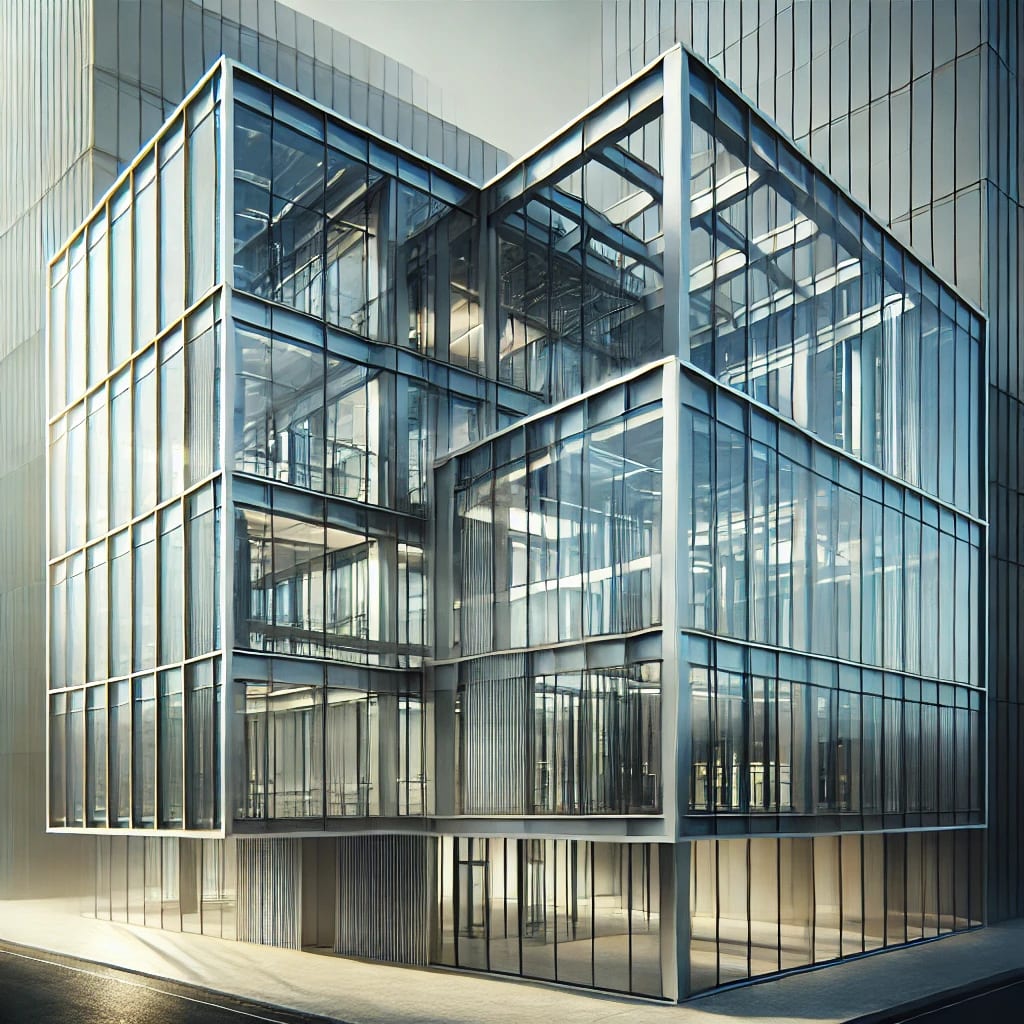
Future Trends in Curtain Wall Technology: Smart Facades and Automation
Curtain Wall Technology is currently witnessing a surge in new trends, driven by the demands of boundary-pushing architectural designs, complex façade shapes, sustainable design requirements, and more.
This evolution has changed curtain walls from something functional to paragons of design, sustainability, and technology. Here, we present the top trends in curtain wall detailing that you absolutely must be in the loop with!
1. Complex and Dynamic Facades for Enhanced Functionality
With the advanced curtain panels of today, architects no longer need to work with flat facades and are free to design buildings with curves, waves, and unconventional angles; this allows them to create building designs that, for example, blend in with the idiosyncrasies of their environment. These dynamic designs make the buildings a dynamic mechanism that responds to nature, while being visually aesthetic at the same time.
One stellar example is the Al Bahr Towers in Abu Dhabi, where the exteriors adjust according to the position of the sun to reduce solar gain – the thermal energy of a space. Another is the Guggenheim Museum where 33,000 thin titanium sheets shift colors in response to different weather and light conditions. This transmutable façade design is commonly known as Kinetic Facades and are a game changer in the Architecture, Engineering, and Construction (AEC) industry. They not only accentuate the appearance of buildings but also enhance the mood and well-being of the residence by creating a comfortable and well-insulated environment.
2. Innovative Facades for Efficient and Practical Construction
Lightweight curtain walls, made from aluminum, PVC, and stainless steel, offer significant benefits compared to their traditional counterparts. Their benefits are multifold: one, they reduce labor costs and construction times by being easier and quicker to install; two, their lightweight nature reduces structural load on buildings, which means enhanced design flexibility; and finally, the improved thermal performance from lightweight materials lead to better insulation, efficient energy usage, and reduced cooling costs –a necessity in a world moving towards more sustainable practices.
Another example of innovative façade types are translucent façades that also support buildings to achieve thermal insulation by balancing light transmittance. Harvard University’s Allston campus has an ArtLab that uses translucent facades that is both visually appealing and energy technologically advanced.
3. Curtain Wall Enhancements for Sustainability
Energy-efficient curtain walls are now a necessity, more than ever, as mitigating the effects of climate change is a global priority. Façade and curtain wall detailing enhancements like double and triple skin panels, zero-carbon facades, and building-integrated photovoltaics are propelling the construction industry forward into a sustainable future. These innovative facades reduce the carbon footprint of a building throughout its lifecycle.
Integrating these facades, however, is not an easy task as they often require regular maintenance compared to their traditional equivalents. However, it is promising to see architects, engineers, and builders collaborating to implement these features onto their buildings and projects.
4. Beyond Functionality: Art and Curtain Wall Detailing
Aesthetics and artistic quality is now just as important as the functionality of a façade –to form a good first impression on the public and investors alike. Curtain wall detailing is a vital part in the aesthetics of a building: the glass facades play with light and shadow; additionally, the sky and the surrounding environment is reflected in them, contributing a building’s unique character.
For example, Bestuurskantoor Aruba, an elliptical shaped residential and commercial complex, located in Aruba, Netherlands has external glass detailing that is visually stunning and reflects the city residential surrounding it –making it feel like a living, breathing, and mutable monument. The structure’s facade exemplifies the design possibilities curtain wall detailing can unlock when used to their complete potential.
Conclusion
Facades and curtain wall technology are evolving in exciting ways, pivoting the construction industry into an exciting era. They not only turn buildings into artistic statements but also make them comfortable and energy efficient spaces.
Engineers will soon be able to integrate Curtain wall detailing with other processes such as Internet of Things (IoT) and Digital Twins, turning them into intelligent and resilient components of a building – truly a step forward for the AEC industry!
About the Creator
Enjoyed the story? Support the Creator.
Subscribe for free to receive all their stories in your feed.
Comments
There are no comments for this story
Be the first to respond and start the conversation.