
Smart Doorbell Market Booms as Home Security and Smart Living Drive Global Adoption
Smart Doorbell Market Booms as Home Security and Smart Living Drive Global Adoption

Home security is no longer limited to locks, gates, and traditional alarm systems. In today's connected world, homeowners want real-time visibility, remote access, and instant communication with visitors regardless of where they are. This shift in consumer expectations has transformed smart doorbells from a niche technology into one of the fastest-growing segments of the smart home industry.
Modern smart doorbells combine video surveillance, motion detection, wireless connectivity, and mobile applications into a single device that helps homeowners monitor and secure their properties. Whether receiving a package delivery, identifying unexpected visitors, or monitoring activity near the front door, smart doorbells provide convenience, security, and peace of mind.
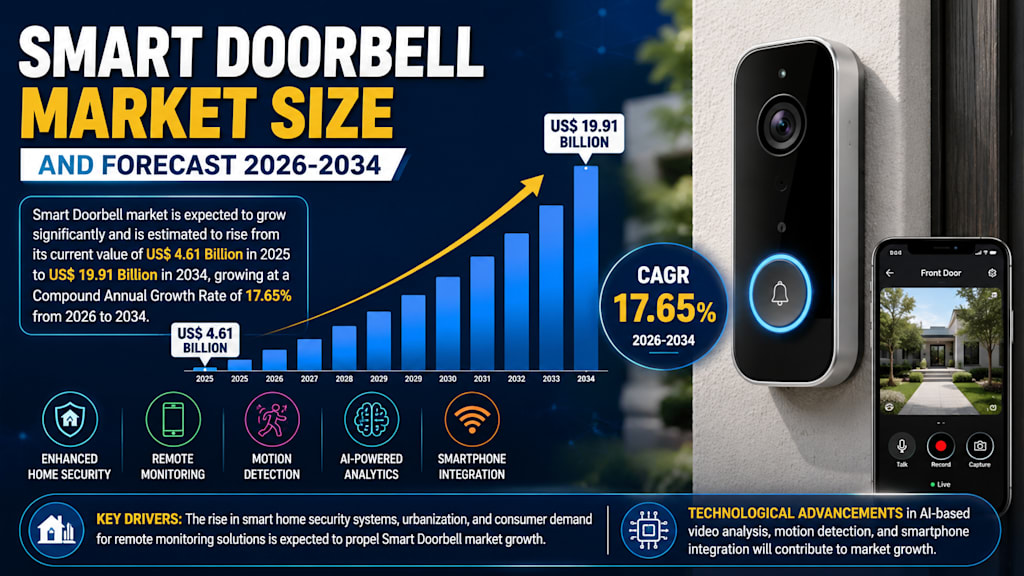
The growing popularity of smart homes, increasing security concerns, and rapid technological innovation are creating strong opportunities for manufacturers worldwide. According to Renub Research, the global Smart Doorbell Market is expected to grow from US$ 4.61 billion in 2025 to US$ 19.91 billion by 2034, registering an impressive compound annual growth rate (CAGR) of 17.65% during the forecast period from 2026 to 2034. The market's remarkable growth reflects the increasing importance of connected security solutions in modern households.
Smart Doorbells Are Redefining Home Security
A smart doorbell is much more than a traditional doorbell. Equipped with cameras, microphones, speakers, motion sensors, and wireless communication technology, these devices enable homeowners to see, hear, and communicate with visitors through their smartphones or tablets.
When someone approaches the door or presses the doorbell, users receive instant notifications through dedicated mobile applications. Live video feeds allow homeowners to monitor activity in real time, while two-way audio functionality enables direct communication with visitors regardless of location.
Many modern smart doorbells also include advanced features such as night vision, motion-triggered recording, cloud storage, facial recognition capabilities, and integration with broader smart home systems.
These capabilities provide homeowners with a greater sense of security and control, making smart doorbells one of the most popular smart home devices available today.
Growing Security Concerns Are Fueling Demand
One of the primary factors driving market growth is the increasing concern regarding residential security.
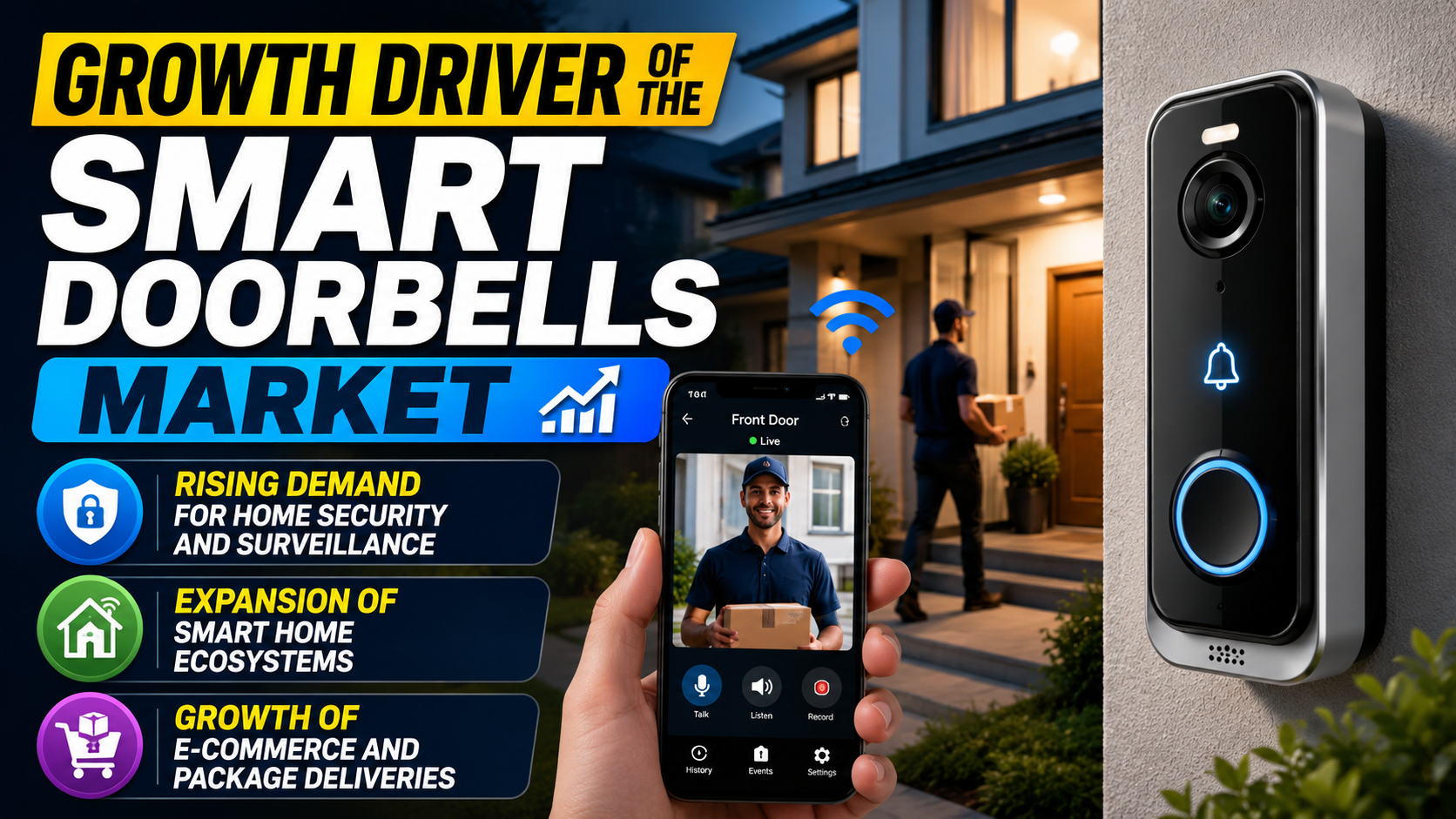
As urban populations continue to expand, homeowners are becoming more aware of security risks associated with theft, unauthorized access, and property crime. Consumers are actively seeking solutions that allow them to monitor their homes and respond quickly to suspicious activities.
Smart doorbells address these concerns by providing continuous visibility of entry points and real-time alerts whenever motion is detected near the front door. The ability to record video footage and review activity later adds another layer of protection.
For many homeowners, the presence of visible security devices can also serve as a deterrent against potential criminal activity. This preventative benefit has contributed significantly to the popularity of smart doorbell systems.
As awareness of home security continues to increase globally, demand for intelligent monitoring solutions is expected to remain strong.
Smart Home Ecosystems Are Driving Adoption
The rapid expansion of smart home ecosystems is another major contributor to market growth.
Consumers increasingly invest in connected devices such as smart locks, lighting systems, thermostats, surveillance cameras, and voice assistants. Smart doorbells fit naturally into these ecosystems by acting as a central security and communication component.
Integration capabilities allow homeowners to automate multiple functions simultaneously. For example, a smart doorbell can trigger outdoor lighting when motion is detected or communicate with smart locks to provide controlled access after visitor verification.
Voice assistant compatibility further enhances convenience by allowing users to view doorbell camera feeds on smart displays or communicate with visitors using voice commands.
As smart home adoption continues to accelerate worldwide, smart doorbells are becoming essential components of connected living environments.
E-Commerce Growth Creates New Opportunities
The rise of online shopping has significantly increased demand for smart doorbell technology.
Consumers now receive more home deliveries than ever before, creating concerns about missed deliveries, stolen packages, and unattended parcels. Smart doorbells help address these issues by enabling homeowners to monitor deliveries in real time.
Video communication capabilities allow users to speak directly with delivery personnel, provide instructions, and verify package arrivals even when they are away from home. Motion detection features ensure homeowners are alerted whenever activity occurs near delivery areas.
The increasing importance of secure package management has become a key factor influencing purchasing decisions. As e-commerce continues expanding globally, smart doorbells are expected to play an increasingly important role in residential security strategies.
Artificial Intelligence Is Enhancing Functionality
Artificial intelligence is transforming the capabilities of smart doorbells and creating new opportunities for innovation.
Modern devices increasingly incorporate AI-powered video analytics capable of distinguishing between people, animals, vehicles, and other types of motion. These intelligent systems help reduce false alerts while improving overall accuracy.
Facial recognition technology is also becoming more sophisticated, enabling doorbells to identify familiar visitors and customize notifications accordingly. AI algorithms can analyze behavioral patterns and provide more meaningful security insights to users.
Advanced motion detection systems improve surveillance effectiveness while minimizing unnecessary interruptions. These innovations are enhancing user experiences and strengthening the value proposition of smart doorbell technology.
As artificial intelligence continues evolving, its integration into smart doorbells is expected to become even more widespread.
Wireless Smart Doorbells Continue to Gain Popularity
Wireless smart doorbells have become one of the fastest-growing segments within the market.
Unlike traditional wired systems, wireless models rely on battery power and Wi-Fi connectivity, making installation significantly easier. Consumers appreciate the flexibility and convenience these systems offer, particularly in apartments, rental properties, and older homes.
Wireless smart doorbells typically provide many of the same features found in wired systems, including video streaming, motion detection, cloud storage, and mobile app integration.
The simplicity of installation appeals to consumers seeking do-it-yourself security solutions that do not require professional assistance. As wireless connectivity continues improving globally, this segment is expected to maintain strong growth momentum.
Wired Smart Doorbells Remain Important
Despite the popularity of wireless solutions, wired smart doorbells continue to play a significant role in the market.
These systems connect directly to existing electrical infrastructure, providing a continuous power supply without requiring battery replacements. This reliability makes them particularly attractive for homeowners seeking uninterrupted monitoring capabilities.
Wired doorbells often support advanced features such as high-definition video streaming, enhanced connectivity, and extended recording functionality. Their consistent power source can improve performance in demanding applications.
New residential construction projects and home renovation activities frequently incorporate wired smart doorbells as part of broader home automation systems.
The segment remains important for consumers prioritizing long-term reliability and comprehensive security coverage.
Hardware Innovation Is Accelerating Market Growth
Hardware advancements continue to enhance the performance and appeal of smart doorbells.
Manufacturers are investing heavily in camera technology, motion sensors, microphones, speakers, processors, and weather-resistant materials. Modern smart doorbells offer higher video resolutions, wider viewing angles, improved night vision, and more accurate motion detection capabilities.
The incorporation of artificial intelligence processors and advanced sensors enables better object recognition and smarter alert systems. Improved battery efficiency and durable construction materials further enhance product reliability.
Design has also become a key consideration. Consumers increasingly seek smart doorbells that complement modern home aesthetics while delivering advanced functionality.
Continuous hardware innovation remains one of the most important factors supporting long-term market growth.
Residential Applications Dominate the Market
The residential segment represents the largest and fastest-growing application area for smart doorbells.
Homeowners increasingly view smart doorbells as essential components of comprehensive home security systems. Families, frequent travelers, remote workers, and individuals living alone all benefit from the enhanced visibility and control these devices provide.
The growing awareness of home security, combined with the popularity of smart home technologies, continues to drive residential adoption. New housing developments increasingly incorporate smart security features as standard offerings.
As consumers prioritize convenience, safety, and connectivity, residential demand is expected to remain the primary driver of market expansion.
Regional Markets Show Strong Growth Potential
United States
The United States remains one of the most mature and technologically advanced smart doorbell markets globally. High smart home adoption rates, strong consumer awareness, and the rapid growth of e-commerce continue to support demand. Integration with voice assistants and broader home automation systems has become increasingly common.
United Kingdom
The United Kingdom is experiencing steady market growth driven by increasing awareness of home security and strong internet connectivity. Consumers increasingly prefer smart doorbells as affordable and convenient security solutions.
India
India represents a rapidly expanding market due to growing urbanization, increasing smartphone penetration, and rising awareness of smart home technologies. The expansion of e-commerce and home delivery services is further supporting demand.
Saudi Arabia
Saudi Arabia's investment in smart cities, modern housing developments, and digital infrastructure is creating favorable conditions for market growth. Rising disposable incomes and interest in advanced home technologies continue to support adoption.
Challenges Facing the Industry
Despite its strong growth outlook, the smart doorbell market faces several challenges.
Privacy and data security concerns remain among the most significant issues. Because smart doorbells continuously record video and often utilize cloud storage services, consumers are increasingly concerned about how their data is stored, accessed, and protected.
Potential cybersecurity risks, unauthorized access, and regulatory compliance requirements present ongoing challenges for manufacturers. Building consumer trust will require continued investment in security technologies and transparent data management practices.
Cost also remains a consideration for some consumers. Premium smart doorbells often require significant upfront investment, while subscription fees for cloud storage services can increase long-term ownership costs.
Addressing these concerns will be essential for sustaining widespread adoption.
Market Forecast: Strong Growth Through 2034
According to Renub Research, the global Smart Doorbell Market is projected to increase from US$ 4.61 billion in 2025 to US$ 19.91 billion by 2034, reflecting a CAGR of 17.65% between 2026 and 2034. Growth will be supported by rising security concerns, expanding smart home ecosystems, increasing e-commerce activity, and continued innovation in artificial intelligence, wireless connectivity, and video analytics technologies.
The market's rapid growth trajectory highlights the increasing importance of connected security devices within modern residential environments.
Final Thoughts
The smart doorbell market is reshaping home security by combining convenience, connectivity, and advanced surveillance capabilities into a single device. As consumers seek greater control over their living environments, smart doorbells are becoming indispensable tools for monitoring homes, managing deliveries, and enhancing personal security.
With Renub Research forecasting growth from US$ 4.61 billion in 2025 to US$ 19.91 billion by 2034, the industry is positioned for remarkable expansion. Continued advances in artificial intelligence, wireless communication, smart home integration, and security technologies will further strengthen the market's growth potential.
As connected living becomes the norm rather than the exception, smart doorbells are expected to remain at the forefront of the smart home revolution, helping homeowners stay informed, protected, and connected no matter where they are.
Source: Market size, forecasts, technology trends, segment analysis, regional insights, and industry developments are based on the uploaded Renub Research Smart Doorbell Market report.
About the Creator
Enjoyed the story? Support the Creator.
Subscribe for free to receive all their stories in your feed.
Comments
There are no comments for this story
Be the first to respond and start the conversation.