
SimpleSwap Platform for Secure Wallet-to-Wallet Crypto Exchanges
A practical SimpleSwap review for wallet-to-wallet crypto swaps.

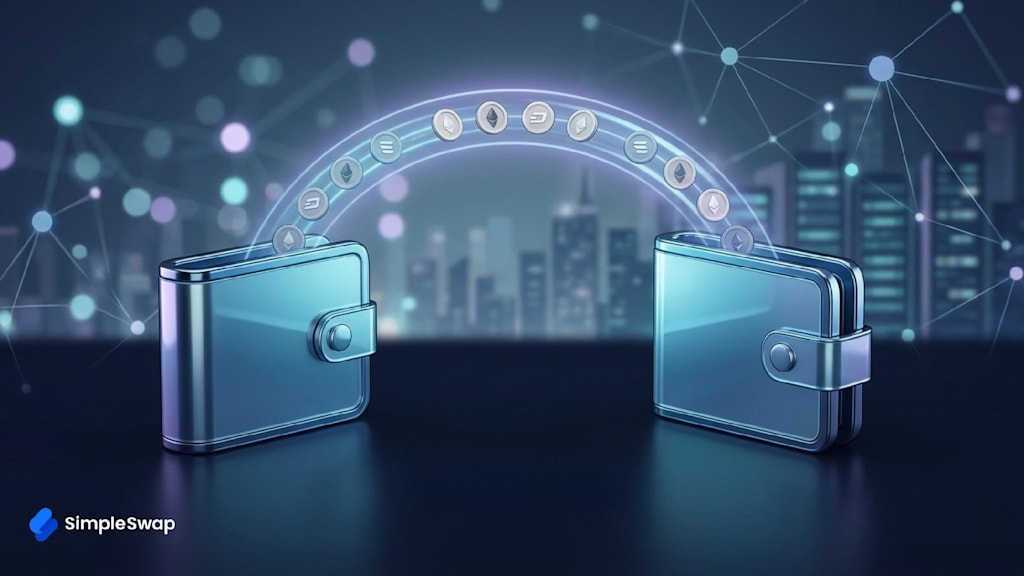
The cryptocurrency industry has always been defined by a central tension: the trade-off between security and convenience. For years, the easiest way to trade digital assets was through centralized exchanges (CEXs). However, relying on these custodial platforms meant surrendering control of your private keys a risk that became glaringly obvious during the high-profile platform collapses of 2022.
As a result, the crypto community saw a massive migration back to self-custody. Hardware wallets and decentralized storage solutions became the norm. But this shift brought back an old problem: how do you efficiently exchange one asset for another without sending your funds back to a centralized trading desk?
This friction paved the way for a specific niche in decentralized finance (DeFi): the self-custodial multi-source swap aggregator. SimpleSwap is one of the longer-running examples of this model—the company says it has operated for more than eight years, served more than 10 million users, and built a partner network of more than 6,000 integrations, including wallet providers like Exodus and Tangem. By examining how a platform with this kind of track record operates, we can better understand the current infrastructure of wallet-to-wallet trading.
Is It a Legitimate Way to Swap Assets?
Before trusting any wallet-to-wallet platform with a transaction, the natural question is whether it holds up under scrutiny — is simple swap legit enough to send real funds through? A fair answer rests on a few concrete things: how long the service has operated, who it partners with, how support responds when something goes wrong, and how clearly its rate terms are spelled out.
SimpleSwap is not a trading venue—there are no order books, margin tools, custody accounts, or charting suite. It functions as a routing layer between wallets, which means its credibility rests less on trading features and more on operating history, transparency around fees, and consistency of execution.
The Mechanics of a Swap Aggregator
To understand wallet-to-wallet exchanges, you have to look under the hood. Traditional exchanges rely on internal order books—matching buyers and sellers within their own walled gardens.
Aggregators operate differently. Platforms like SimpleSwap do not hold user funds or maintain internal order books. Instead, they act as routing layers. When a user initiates a trade, the platform’s algorithm scans across multiple liquidity providers (both centralized and decentralized) to find an optimal path for the exchange.
According to its operating data, SimpleSwap connects to over 20 different liquidity providers to support swaps across roughly 2,800 digital assets. The goal of this infrastructure is to prevent the user from having to manually cross-reference rates across a dozen different decentralized exchanges (DEXs), which is a time-consuming and often confusing process for retail users.
How the Exchange Flow Works
One of the defining characteristics of aggregator platforms is the complete removal of the traditional trading terminal. There are no candlestick charts, margin tools, or user balances. The process is stripped down to a transactional layer:
- Select the asset you want to send and the asset you want to receive.
- Choose between a floating rate or a fixed rate.
- Enter your destination wallet address.
- Review the deposit address, network, and swap details before confirming.
- Send the deposit and wait for the exchange to be processed through the selected route/liquidity provider.
Floating rates move with the real-time market. If the market is highly volatile, the final received amount may differ from the initial estimate.
Fixed rates lock in a specific exchange rate for a short window (typically 20 minutes), absorbing the risk of sudden price drops but usually carrying a slightly higher premium.
The entire process happens without creating a traditional exchange account or maintaining a platform balance —though registered users can unlock loyalty perks, including fee discounts of up to 20% and cashback of up to 0.4% in USDT, according to the platform’s published terms.
The Risks and Realities of Non-Custodial Swaps
While this technology offers autonomy, it is not without strict risks. In the traditional banking system, or even on a centralized crypto exchange, a customer support team can often reverse a mistaken transaction. In the realm of self-custody aggregators, that safety net does not exist.
The legitimacy and safety of a platform like SimpleSwap rely heavily on user accuracy. Address accuracy cannot be outsourced. If a user inputs an incorrect receiving address, selects the wrong blockchain network, or forgets to include a mandatory memo tag (which is frequently required for assets like XRP, EOS, or Cosmos), the funds are permanently lost in the blockchain void.
Furthermore, users dealing with high-volume transactions must navigate the concept of slippage. When exchanging larger sums (for example, between $1,000 and $5,000), a single liquidity pool might not be deep enough to absorb the trade cleanly. Aggregators attempt to mitigate this by splitting the trade across multiple providers, but market movement during the routing process can still impact the final payout.
A short pre-swap checklist tends to prevent most of the trouble users run into:
- Confirm the receiving address and network before sending.
- Check whether the destination asset requires a memo, destination tag, or extra identifier.
- Review whether the offered rate is fixed or floating, and for how long it holds.
- Test an unfamiliar wallet route with a smaller transaction first.
- Keep the exchange ID on hand until the payout is confirmed.
A slower-than-expected transaction does not automatically signal a problem—network congestion can stretch confirmation times well beyond the platform’s control.
Who Does This Technology Serve?
Ultimately, wallet-to-wallet swap services are not designed for cryptocurrency beginners or high-frequency day traders. Day traders require instant execution and advanced charting, while beginners generally need the custodial safety nets provided by major corporate exchanges.
Aggregators serve a very specific demographic: the crypto-native holder. This includes investors who operate entirely out of hardware wallets, Web3 developers who need B2B swap infrastructure for their own projects, and users who prefer self-custody and do not want to maintain a custodial exchange balance.. Reading through simpleswap reviews from this group, the recurring theme is less about flashy features and more about whether the routing simply works when it matters.
The Future of Decentralized Routing
The digital asset landscape is continually evolving, and the survival of platforms like SimpleSwap—which has maintained operations for over eight years and integrated with major hardware providers like Tangem and Exodus—shows that there is a sustained demand for infrastructure that respects the “not your keys, not your coins” ethos.
For those willing to take total personal responsibility for their wallet addresses and network choices, swap aggregators offer a compelling, streamlined bridge between decentralized assets. They represent a maturing market where control and convenience are finally beginning to coexist.
About the Creator
Enjoyed the story? Support the Creator.
Subscribe for free to receive all their stories in your feed.
Comments