
ShinyHunters Leaks Florida DMV Data After Ransom Refusal: A Deepening Crisis for State Identity Infrastructure
The publication of hundreds of thousands of vehicle and driver records from Florida’s DAVID database marks a catastrophic failure in state cybersecurity, exposing sensitive personal information after hackers exploited compromised law enforcement credentials and highlighting the growing vulnerability of government identity systems to organized cybercrime.

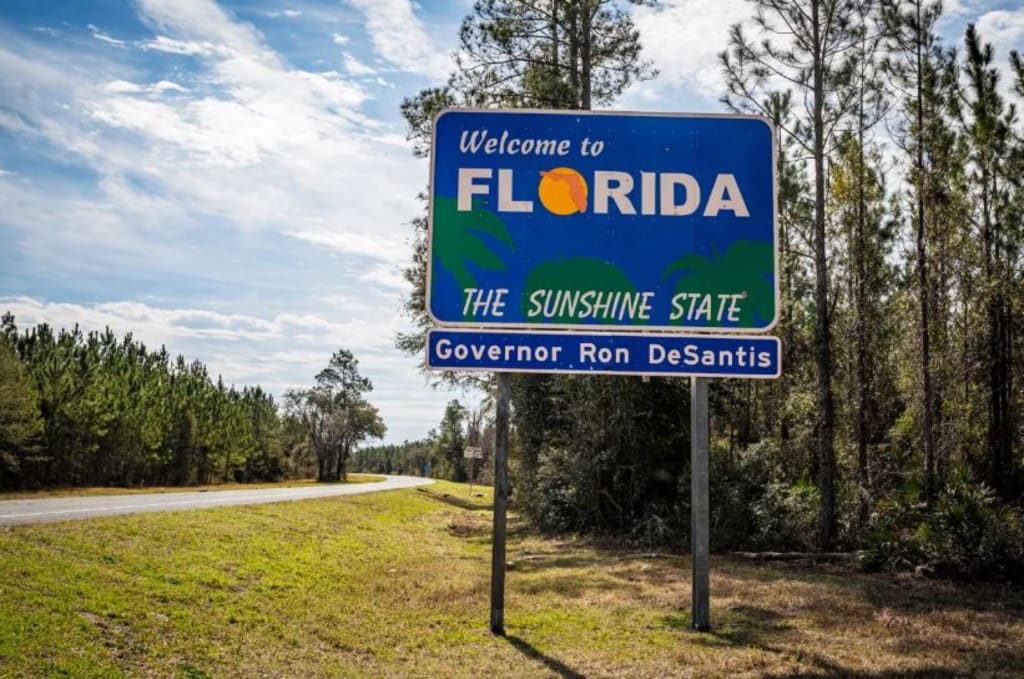
ShinyHunters hacking group has publicly released a massive trove of stolen data from Florida’s Department of Highway Safety and Motor Vehicles (FLHSMV), confirming one of the most significant breaches of state-level motor vehicle infrastructure in recent history. The hackers stated on their leak site that the publication was a direct consequence of the victim’s refusal to pay a ransom or cooperate with their demands, framing the release as punitive retaliation rather than mere financial extortion. According to the group, they initially breached the DAVID (Driver and Vehicle Information Database) system earlier in September and provided proof of access by publishing a screenshot of a record associated with deceased sex offender Jeffrey Epstein, who maintained a residence in Palm Beach. This high-profile reference served both as verification of the breach’s authenticity and as a psychological tactic to pressure state officials into compliance. Despite the escalation, FLHSMV did not capitulate, leading to the full public dump of sensitive records that now threatens the privacy and security of hundreds of thousands of Floridians.
The breach originated through a surprisingly low-tech vector: compromised credentials belonging to a police officer that were stored on a personal device. This detail underscores a persistent and critical weakness in government cybersecurity posture the human element. Even as agencies invest millions in network defenses, encryption, and intrusion detection systems, the reuse of passwords, lack of multi-factor authentication on personal devices, and insufficient endpoint security protocols continue to serve as primary entry points for sophisticated threat actors. Once inside, ShinyHunters accessed the DAVID database, which serves as the central repository for vehicle registration, title transfers, and ownership histories across the state. According to TechCrunch’s review of the stolen files, the exfiltrated data includes hundreds of thousands of vehicle ownership certificates containing names, physical addresses of buyers and sellers, and Vehicle Identification Numbers (VINs). While VINs alone are not directly exploitable for identity theft, when combined with names and addresses, they create a rich dataset for targeted phishing, vehicle cloning, insurance fraud, and stalking. More alarmingly, a subset of the leaked files contains Social Security numbers, non-U.S. passports, and immigration documents, information that can facilitate synthetic identity creation, tax fraud, and unauthorized border crossings. Notably absent from the leak are driver’s license images and photographs, suggesting either that the attackers lacked access to that specific subsystem or deliberately excluded it to avoid triggering immediate federal intervention.
This incident arrives at a particularly precarious moment for U.S. identity infrastructure. Just weeks prior, identity verification company IDScan.net suffered a separate but equally devastating breach that exposed over 150 million images of driver’s licenses and other government-issued IDs. Together, these two breaches represent a pincer movement against the foundational layers of American digital identity: one compromising the backend databases that verify legitimacy, the other stealing the biometric and documentary proofs themselves. For Florida residents, the combination is especially dangerous; criminals now possess both the static identifiers (SSNs, addresses) and, potentially through cross-referencing with the IDScan leak, the visual documentation needed to impersonate them convincingly. The timing also raises urgent questions about inter-agency coordination and shared threat intelligence. Did FLHSMV’s security team have visibility into the IDScan compromise? Were there indicators of compromise that could have been correlated? The silence from FLHSMV spokespersons following TechCrunch’s inquiry suggests either ongoing investigation constraints or institutional reluctance to acknowledge the full scope of exposure a dynamic that further erodes public trust.
Beyond individual harm, this breach exposes systemic vulnerabilities in how state governments manage legacy systems like DAVID. Built decades ago, such databases often lack modern API security, granular access controls, and real-time anomaly detection. They were designed for administrative efficiency, not adversarial resilience. The fact that a single compromised credential granted unfettered access to such a sensitive repository indicates a failure of zero-trust architecture principles that should now be standard in any system handling PII. Moreover, the reliance on personal devices for official access reflects broader cultural and budgetary challenges within public sector IT: underfunded training programs, outdated hardware policies, and resistance to behavioral change among personnel accustomed to legacy workflows. ShinyHunters’ success here is not an anomaly; it is a predictable outcome of deferred modernization.
As affected individuals face years of potential identity monitoring and credit freezes, policymakers must recognize that protecting citizen data is no longer solely a technical challenge; it is a governance imperative. This means mandating MFA for all government accounts regardless of device type, conducting regular third-party penetration tests of legacy systems, establishing rapid-response protocols for cross-breach correlation, and creating transparent communication channels with the public during active incidents. Most importantly, it requires treating identity infrastructure as critical national infrastructure, worthy of the same investment and scrutiny as power grids or water systems. Until then, breaches like Florida’s will remain not exceptions, but inevitabilities and ShinyHunters’ next target may already be waiting behind another unsecured login screen.
About the Creator
Mark Lim
Hi I am mark an automotive student and a car, tech and food enthusiast ! Im gonna try and post daily & hope you enjoy what I write and do share my page with people you know. I would gladly appreciate it! Cheers
Enjoyed the story? Support the Creator.
Subscribe for free to receive all their stories in your feed.
Comments
There are no comments for this story
Be the first to respond and start the conversation.