
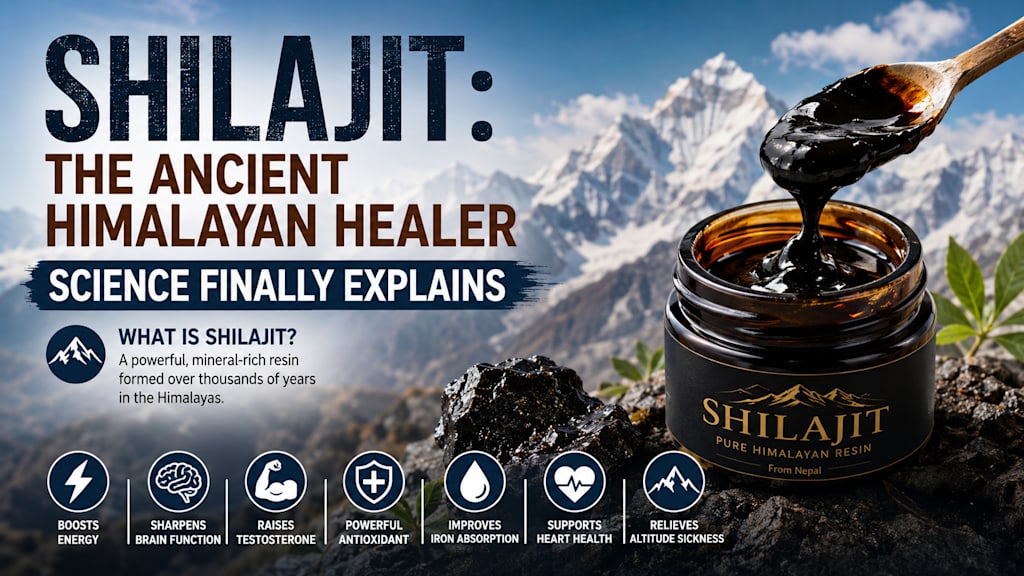
Shilajit: The Ancient Himalayan Healer Science Finally Explains
From energy and testosterone to brain health and anti-ageing — everything you need to know about the world's most potent natural resin, backed by research.
What Is Shilajit?
Shilajit (pronounced shee-lah-jeet) is a thick, tar-like resin that seeps out of rock crevices in high-altitude mountain ranges — primarily the Himalayas, Altai, Caucasus, and Andes. Formed over thousands of years from the slow decomposition of plant matter under extreme geological pressure, it is one of nature's most concentrated superfoods.
In Ayurvedic medicine, Shilajit has been called Destroyer of Weakness and Conqueror of Mountains for over 3,000 years. Modern science is now catching up, with clinical research validating many of the traditional claims around energy, cognitive function, and hormonal health.
Key Compounds in Shilajit
The power of Shilajit comes from its remarkably complex mineral and organic profile. At its core are:
- Fulvic Acid (60–80%): The master compound. Transports minerals into cells, acts as a powerful antioxidant, and supports gut health.
- Humic Acid: Supports immune function and chelates heavy metals from the body.
- 85+ Ionic Minerals: Including iron, zinc, magnesium, copper, selenium, and manganese.
- Dibenzo-α-pyrones (DBPs): Unique compounds that enhance mitochondrial function and ATP production.
- Amino Acids, Vitamins & Triterpenes: Supporting repair, immunity, and inflammation control.
No synthetic supplement can replicate this naturally bioavailable complexity — which is exactly why quality sourcing matters so much.
Top 7 Health Benefits of Shilajit
⚡Boosts Energy & Fights Fatigue
Fulvic acid and DBPs enhance mitochondrial ATP production, giving cells more energy to work with — reducing chronic fatigue at its root.
🧠Sharpens Brain Function
Research suggests Shilajit may slow cognitive decline by preventing tau protein aggregation — a hallmark of Alzheimer's disease.
💪Raises Testosterone Naturally
A 90-day clinical trial found supplementation significantly increased testosterone and DHEA levels in healthy male participants.
🛡️ Powerful Antioxidant
Fulvic acid neutralises free radicals and reduces oxidative damage linked to ageing, inflammation, and chronic disease.
🩸Improves Iron Absorption
Highly effective for iron-deficiency anaemia — Shilajit increases haemoglobin, haematocrit, and ferritin levels when taken alongside iron.
❤️Supports Heart Health
Animal studies show Shilajit reduces cardiac damage and may protect against lipid peroxidation in cardiovascular tissue.
🏔️Altitude Sickness Relief
Traditionally used by Himalayan travellers to adapt to high altitude. It improves oxygen delivery and reduces acute mountain sickness symptoms.
Shilajit for Men vs. Women
For Men
Shilajit is perhaps best known for its androgenic benefits. It naturally raises testosterone, improves sperm count and motility, reduces muscle fatigue after workouts, and supports prostate health. Men dealing with low energy, poor gym performance, or reproductive health concerns are among its biggest beneficiaries.
For Women
Often overlooked, Shilajit is equally powerful for women. It helps regulate iron levels (critical during menstruation), supports bone density, reduces menopausal fatigue, and its adaptogenic properties help manage stress and hormonal fluctuations. Women with PCOS or thyroid concerns should consult a doctor before use, but the compound's mineral density makes it a genuine women's wellness supplement.
Shilajit Dosage: Forms, Timing & Tips
Shilajit comes in three forms. Resin is the gold standard — least processed and most bioavailable. Powder and capsules are convenient but less potent.
Form Recommended Dose Best Taken With Notes
Resin 150–300 mg/day (pea-sized) Warm milk or water Highest potency; dissolve fully
Powder 300–500 mg/day Water or smoothie Easy to measure; quality varies
Capsules Per label (usually 250–500 mg) Water, morning or evening Most convenient; check purity
Pro Tips: Take it on an empty stomach in the morning for maximum absorption. Cycle your usage — 6–8 weeks on, 1–2 weeks off. Never exceed 500 mg per day without medical supervision. Avoid taking it with chlorinated tap water, as it may degrade bioactive compounds.
Side Effects & Who Should Avoid It
Pure, high-grade Shilajit is generally safe for healthy adults. However, there are important caveats:
⚠️ Proceed with Caution If You Have:
- Sickle cell anaemia, haemochromatosis (iron overload), or thalassaemia
- Active gout (Shilajit may increase uric acid levels)
- Hormone-sensitive conditions — consult your doctor about testosterone effects
- Pregnancy or breastfeeding — insufficient safety data available
- Kidney disease — high mineral loads need careful management
The most commonly reported side effects from poor-quality or excessive use include nausea, dizziness, and increased heart rate. These are almost always linked to contaminated or raw (unprocessed) Shilajit containing heavy metals and mycotoxins — which is why buying purified, lab-tested products is non-negotiable.
How to Spot Fake Shilajit
The market is flooded with adulterated products. Here's how to verify what you're buying:
The Water Test: Real Shilajit resin dissolves slowly in warm water, turning it golden-brown. It should not foam or leave residue.
The Flame Test: Authentic resin does not burn. It will bubble and expand but not catch flame.
Texture: At room temperature it should be pliable and sticky. In the fridge it becomes hard and brittle. Fake products often stay the same regardless of temperature.
Third-Party Lab Certificates: Any reputable brand will provide a Certificate of Analysis (COA) confirming fulvic acid content and absence of heavy metals.
Smell: Genuine Shilajit has a distinct earthy, bituminous odour. If it smells like nothing — or strongly artificial — walk away.
Frequently Asked Questions
How long does it take for Shilajit to work?
Most users notice improved energy within 1–2 weeks. Benefits like increased testosterone and cognitive improvements typically become more noticeable after 4–8 weeks of consistent use.
Can I take Shilajit every day?
Yes, daily use is safe for most healthy adults within the recommended dose range. Cycling — 6–8 weeks on, 1–2 weeks off — is often recommended to prevent tolerance buildup and maintain effectiveness.
Is Shilajit safe for teenagers?
Shilajit is not recommended for individuals under 18 without medical supervision, as its hormonal and developmental effects have not been adequately studied in younger populations.
Which is better — Shilajit resin or capsules?
Resin is generally superior due to minimal processing and higher bioavailability of fulvic acid. Capsules offer convenience but may contain fillers that dilute potency. Look for standardised extracts if choosing capsules.
Can Shilajit be taken with ashwagandha?
Yes — this is actually one of Ayurveda's most popular combinations. Both are adaptogens and their effects on stress, energy, and testosterone are considered synergistic by practitioners.
The Bottom Line
Shilajit is not a trend — it is a time-tested, science-validated adaptogen with a unique ability to deliver energy, mineral density, cognitive clarity, and hormonal support in a single daily dose. The key is quality: buy purified resin from verified sources, stay within dosage guidelines, and give it 4–8 weeks to demonstrate its full effect. For most healthy adults, it is one of the most worthwhile natural supplements you can add to your routine.
About the Creator
Enjoyed the story? Support the Creator.
Subscribe for free to receive all their stories in your feed.
Comments
There are no comments for this story
Be the first to respond and start the conversation.